
Midnight Chlorine Leak at Defunct Pune Plant Leaves 24 Hospitalised, Area Evacuated
In the quiet early hours of Thursday, a sudden chlorine gas leak turned into a frightening ordeal for residents of Pune’s Kondhwa area, sending 24 people to hospital and triggering an emergency response that lasted through the night.
The incident unfolded around 1 am in the Gangadham locality , where an abandoned water purification plant godown became the source of the leak. According to fire officials, the gas escaped from a neglected tank containing chlorine , which had been left behind after the facility was shut down.
As the pungent gas spread through nearby residential pockets, people woke up struggling to breathe. Several residents reported breathlessness, irritation, and panic , forcing authorities to act swiftly. Fire brigade teams rushed to the spot soon after receiving distress calls and began evacuation operations to move people to safety.
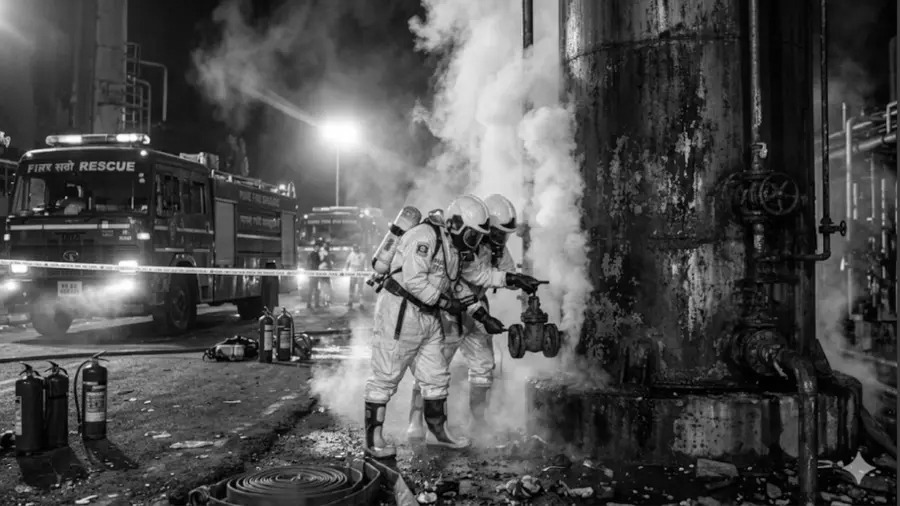
Using specialised safety equipment, firefighters managed to seal the leaking tank , preventing further spread of the hazardous gas. However, during the rescue effort, 22 local residents and two fire personnel experienced breathing difficulties and were immediately taken to hospital.
All those affected were admitted to Sassoon General Hospital , where officials later confirmed that everyone is out of danger and currently under observation.
What has raised concern, however, is the origin of the leak. A man who had previously operated the water purification plant revealed that while the unit had been dismantled, the chlorine tank was left unattended , eventually developing a leak. The incident has now sparked questions about safety oversight and the risks posed by abandoned industrial materials in residential areas.
While disaster was narrowly avoided, the episode serves as a stark reminder of how negligence in handling hazardous substances can quickly escalate into a public safety emergency.
Authorities are expected to investigate the matter further to determine accountability and ensure such incidents are not repeated.