
Middle East War, Day 39: The Clock Is Ticking and Iran Is Not Blinking
The deadline is almost here. By 5:30 AM IST on Wednesday , the world will know whether Donald Trump's most explosive ultimatum of this war was a bluff, a bargain, or the beginning of the most devastating escalation yet. As the hours drain away, both sides are locked in a posture that looks far less like negotiation and far more like a high-stakes standoff with civilization as the collateral .
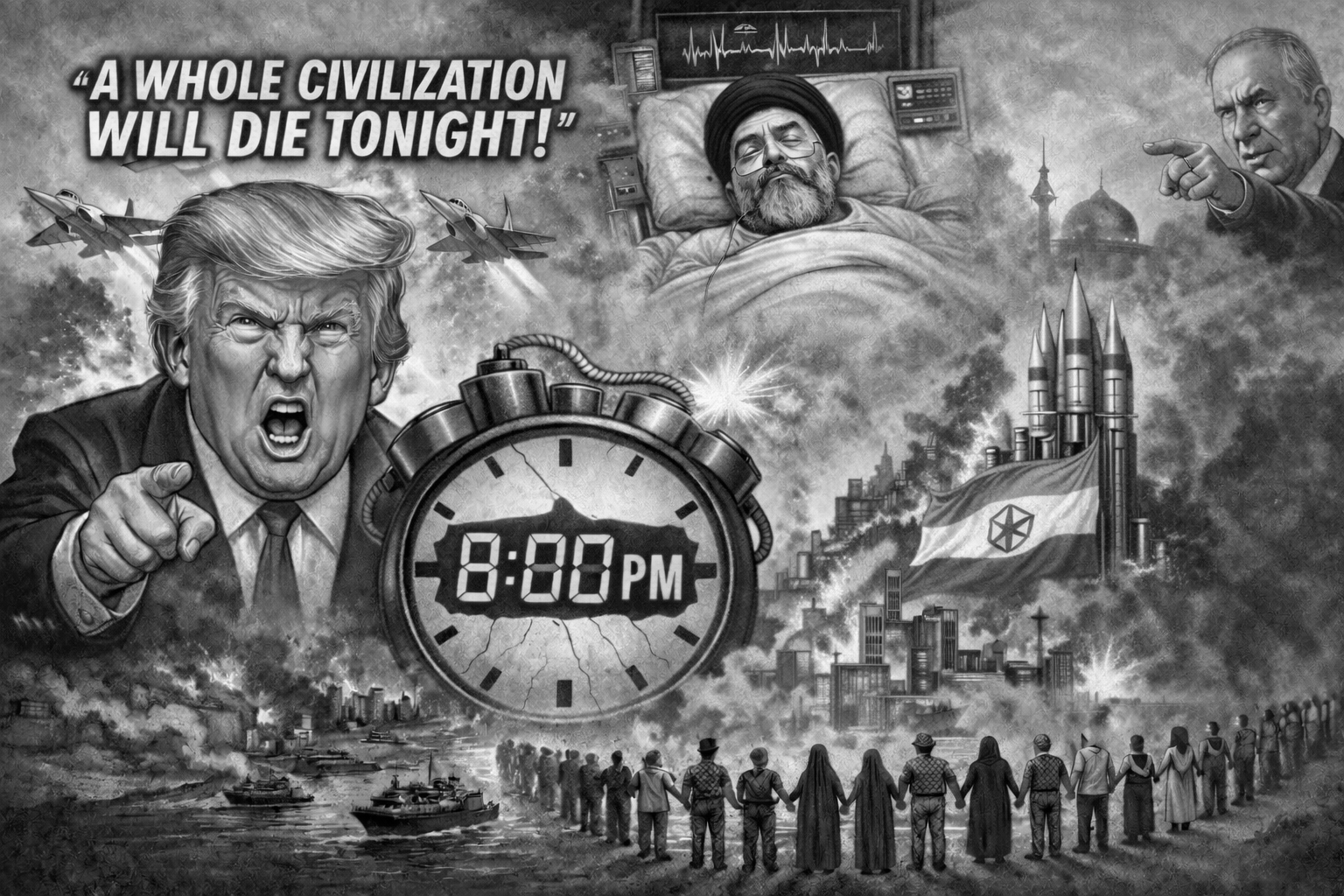
Trump has made the terms brutally simple: reopen the Strait of Hormuz , or face the complete destruction of Iran's critical infrastructure. He is not merely threatening anymore, he is laying the groundwork in real time. He declared that every bridge in Iran would be "decimated," every power plant burning and "never to be used again" by midnight. On social media Tuesday morning, Trump wrote that " a whole civilization will die tonight, never to be brought back again. "
When a president says he doesn't want that to happen but then adds "it probably will," you are no longer reading a threat. You are reading a trailer. The strikes have already begun in everything but name. An intense wave of attacks was reported on bridges across Iran and on Kharg Island , the country's key oil export hub, with the U.S. military striking dozens of military targets on the island overnight. Kharg is not a peripheral target, it is described by U.S. officials as the "nexus for all the Iranian oil supply," handling roughly 90% of the country's crude oil exports. Hitting it again, even its military infrastructure, is Washington showing Iran the trailer of what comes next if the answer is still no . Israel, for its part, struck Iran's largest petrochemical complex, which serves the South Pars gasfield, the world's largest natural gas reserve.
And the message is not confined to oil facilities. Multiple bridges have been struck across Iran, including a railway bridge in Kashan where at least two people were killed, with strikes also reported on the Tabriz-Zanjan freeway and a railway in Karaj. Most strikingly, a key bridge in Qom , the religious capital of Iran, the very heart of Shia spiritual authority, was also reportedly struck. Israel issued a Farsi-language warning telling Iranians to avoid trains throughout the day . There is a calculated message embedded in that geography: Trump may not be saying it in those exact words, but he is showing Iran what the complete version looks like. These are not strikes in remote deserts. These are strikes in the places that matter most to the Iranian state and its identity.
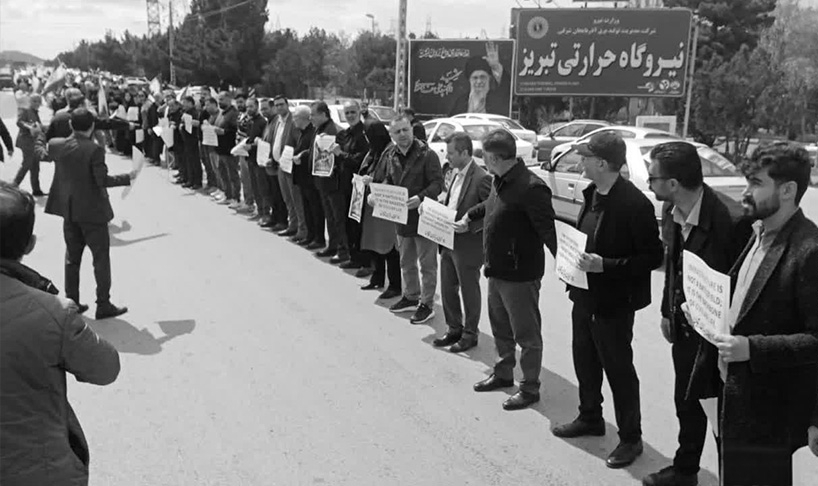
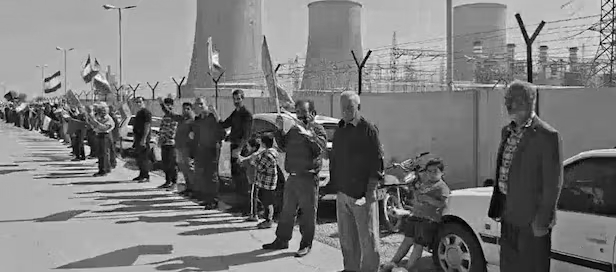
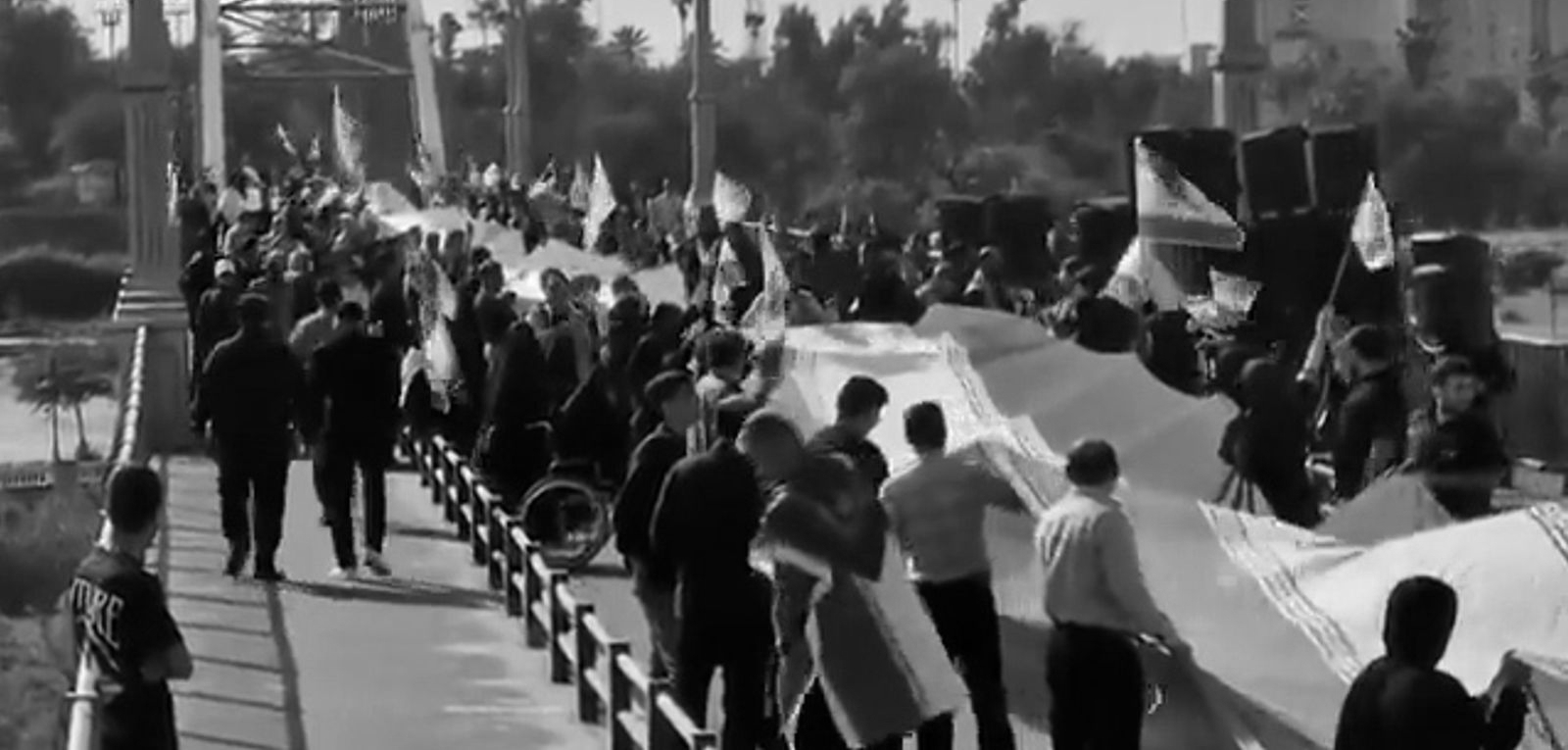
Yet Iran is not breaking. The Iranian military dismissed what they called Trump's "arrogant rhetoric and baseless threats," saying they would not change course. Iran's Revolutionary Guard doubled down, warning it would " deprive the U.S. and its allies of the region's oil and gas for years " if Trump follows through. Iran's deputy minister of youth and sports called on young people, athletes, artists, and cultural figures to form a nationwide human chain around the country's power plants, standing hand in hand against what Tehran is calling a war crime against civilians. With Trump showing little regard for the rising human toll, those who answered the call now find themselves in genuine danger , their bodies the last line between civilian infrastructure and the next strike.In the grinding collision between Trump's regime-change ambitions and a regime willing to pave its own people's graves to survive, Iranian lives have become the currency nobody seems to be counting anymore.
Iran's counter-proposal is on the table, but it is not what Washington wants. The Iranian proposal consisted of 10 clauses, including an end to conflicts in the region, a protocol for safe passage through the Strait of Hormuz, the lifting of sanctions, and reconstruction. Trump acknowledged it: "It's a significant proposal. It's a significant step. It's not good enough." Buried within that proposal is a clause that may define the next era of global shipping : Iran said it would reopen the strait while charging up to $2 million per vessel , a fee it would split with Oman and use the proceeds to reconstruct infrastructure damaged during the war . This is not simply a ceasefire demand. It is Iran attempting to permanently rewrite the rules of one of the world's most vital waterways, making Hormuz a managed corridor rather than a free passage.
The two LNG tankers that attempted to exit through Hormuz on Tuesday, in what would have been among the first loaded LNG carriers to leave the Gulf since the war began, turned back . The Strait remains, for all practical purposes, closed to the Western world. Of course many countries such as India, China, and Russia continue to move their ships through Hormuz every day. Trump should acknowledge that this closure is not real for the entire world; it is only being framed that way to fit U.S. priorities. But we know his problems always come first, U.S. problems take precedence and he will do whatever he thinks is necessary if he does not like the situation.
At the UN, the diplomatic door is also narrowing. Russia and China, along with France , vetoed earlier Security Council language that would have authorized countries to use "all necessary means" to secure the waterway. Bahrain's revised resolution, the one most directly aimed at reopening Hormuz, remains stalled. Iran rejected ceasefire proposals outright, with its diplomat in Cairo stating clearly: " We won't merely accept a ceasefire. We only accept an end to the war with guarantees that we won't be attacked again." India issued advisories to its citizens in the region. Saudi Arabia had seven ballistic missiles intercepted overnight, with debris falling in the vicinity of energy facilities, as fire broke out at a major petrochemical complex, the largest industrial zone in the Gulf and Saudi Arabia shut a key bridge linking it to Bahrain.
Pakistan's army chief was reportedly in contact "all night long" with Vance, special envoy Steve Witkoff, and Iran's Foreign Minister Abbas Araghchi as the so-called Islamabad Accord took shape in the background. Vance has publicly expressed confidence that Iran will make a deal before the deadline and Tehran has apparently signaled it prefers dealing with him directly over other intermediaries. Whether that preference translates into a deal before 5:30 AM IST is the question that has the entire world holding its breath.
Then there is the shadow war happening inside Washington itself. Trump has vowed to hunt down the "leaker" who revealed to the media that a second U.S. airman was still missing inside Iran after their F-15E Strike Eagle was shot down. But Trump's fury over the leak reveals something about the information environment around this war. His threats to jail journalists unless they reveal their sources represent the most direct assault on press freedom seen in a U.S. wartime context in decades .
The irony is rich. The man hunting for a mole has himself presided over an administration that leaked classified war plans on a Signal group chat , one that famously included journalists. Everything leaks in Washington , as the saying goes. The Epstein files have not . But the rescue operation, the number of personnel deployed, the movements inside Iranian territory, those made it out within hours. Trump is the most transparent president in American history, sometimes to his own peril, and the mole he's hunting may well be the culture of impunity he himself helped build.
Meanwhile, the question hanging over Tehran's own leadership is darker still. According to a diplomatic memo based on U.S. and Israeli intelligence, Iran's new supreme leader Mojtaba Khamenei is unconscious and receiving treatment for a "severe" medical condition in the holy city of Qom, reportedly unable to participate in any decision-making. He has never once appeared publicly since being appointed. Statements are issued in his name. Decisions are attributed to him. One Iranian official told reporters: "No one knows anything about Mojtaba, whether he is alive or dead or how badly injured. He has no control over the war because he is not here." Iran's UN representative insists he is healthy and governing. The body of his father, the late Ayatollah Ali Khamenei , is being prepared for burial in Qom, the same holy city where the son reportedly lies incapacitated. If the supreme leader cannot lead, then who is actually running Iran's war? The answer, most analysts believe, is a loose collective of IRGC commanders , men with no political incentive to back down and every military incentive to hold the line.
That is perhaps the most unsettling truth of Day 39. Iran is not negotiating from a position of weakness. It is not bending, not budging, not blinking. It has a dying or incapacitated supreme leader, a nation under bombardment, its internet cut off, its bridges falling, its shrines under threat and it is still saying no. What that tells you is that whoever is truly in charge in Tehran has decided that capitulation would be more dangerous than annihilation . The Strait remains closed. The deadline is almost up. And the world is waiting to find out whether Donald Trump meant every word or whether, as has happened twice before, he will find a reason to extend the clock one more time.