
Middle East War, Day 38: Iran Kills the Deal Before It Breathes
Day 38 of the Middle East war arrived not with the silence of diplomacy, but with the roar of missiles and the acrid smoke of burning petrochemicals, a grim tableau that perfectly captured just how far apart Washington and Tehran remain, even as a flurry of mediators burn the midnight oil trying to prevent this conflict from spiralling into something far more catastrophic.
The most consequential development of the day was a draft ceasefire plan, quietly assembled by Pakistan, Egypt, and Turkey, that was delivered overnight, sent simultaneously to Iranian Foreign Minister Abbas Araghchi and US special envoy Steve Witkoff . The plan has not been released to the public in full, but its broad contours are now known: Phase One proposes a 45-day ceasefire and the reopening of the Strait of Hormuz; Phase Two, running in parallel, would aim to lock in a permanent peace settlement within 15 to 20 days. Pakistan's army chief was in contact "all night long" with US Vice President JD Vance, special envoy Steve Witkoff, and Iranian Foreign Minister Abbas Araghchi, as mediators hoped this framework could be enacted before Trump's latest deadline.
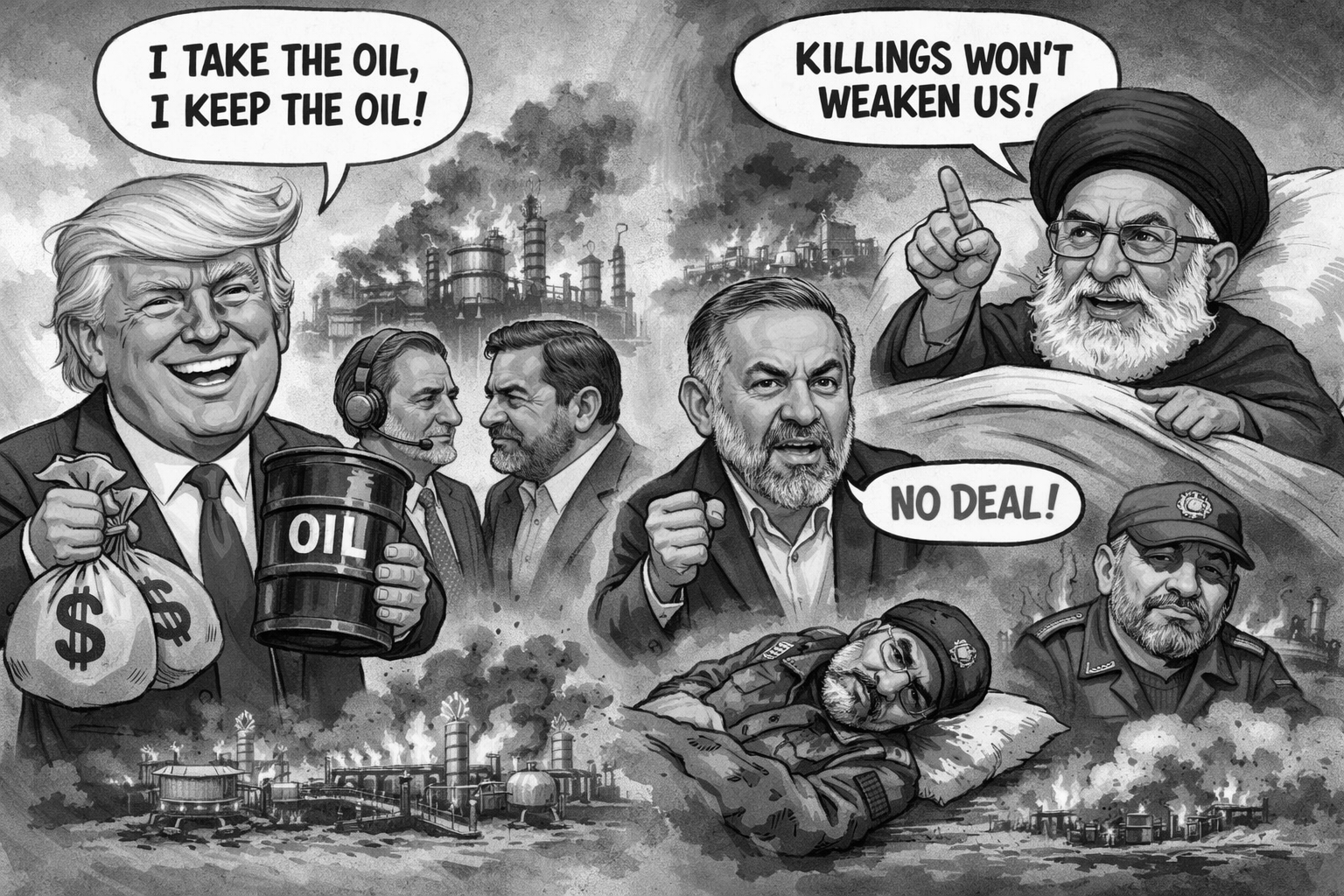
Iran's answer was swift, unambiguous, and damning. Foreign Ministry spokesperson Esmaeil Baghaei said a ceasefire means nothing more than a pause to rebuild forces for renewed attacks, and that " no rational actor would accept that ." Tehran's position is not merely tactical foot-dragging, it is rooted in a deep and historically earned trust deficit . Iran has watched two rounds of diplomacy under the Trump administration collapse into military action. Iran has a " very bitter experience of negotiating with the US ," with its foreign ministry describing the latest proposal as "extremely excessive, unusual, and illogical." In the Iranian calculus, a temporary ceasefire is not a step toward peace, it is a loaded gun pointed at their own head, giving the US and Israel time to rearm and re-target.
What Tehran is demanding is far more sweeping than Washington has been willing to offer. Iran's five conditions for ending the war include a permanent halt to all acts of aggression, ironclad guarantees against any future attack, war reparations, security for all resistance groups across every front, and full Iranian sovereignty over the Strait of Hormuz. On that last point, Iran has drawn a line in the sand: a senior Iranian official said that Tehran will not reopen the Strait as part of a temporary ceasefire , nor would it accept deadlines or any form of external pressure to reach a deal. This is the crux of the entire standoff. The Strait of Hormuz is not just a waterway to Tehran . It is their single most potent strategic leverage point, and they have no intention of surrendering it for a 45-day pause and a promise.
Today at the White House Easter Egg Roll, an unlikely backdrop for war commentary, Trump delivered what may have been his most candid, and revealing, remarks yet about where his head is on this conflict. "If I had my choice, what would I like to do? Take the oil , because it's there for the taking. There's not a thing they can do about it," Trump told reporters, before catching himself: "Unfortunately, the American people would like to see us come home. If it were up to me, I take the oil, I keep the oil, I would make plenty of money, and I'd also take care of the people of Iran much better than they've been taken care of. " He also cast doubt on the very ceasefire framework his own mediators spent the night crafting: " The only one that's going to set a ceasefire is me . I haven't said any ceasefire, but they would like to have a ceasefire," he said, once again projecting confidence while the diplomatic ground continued to shift beneath him.
On the other side of the divide, Iran’s Supreme Leader Mojtaba Khamenei issued a defiant response to the wave of targeted killings and military strikes, saying that assassinations and strikes “ will not weaken ” Iran’s armed forces or disrupt its resolve, dismissing such attacks as crimes that cannot deter the nation’s defence posture.
The battlefield did not pause for the diplomats . Overnight, Iranian missiles struck the northern Israeli city of Haifa with devastating effect. Four civilians were killed when a direct Iranian missile strike caused a partial collapse of their residential building, the victims caught in a stairwell, unable to reach shelter in time. Kuwait, the UAE, and Saudi Arabia all scrambled their air defenses as Iran kept up pressure across the Gulf. Israel, for its part, was anything but passive. Israel attacked a key petrochemical plant at Iran's massive South Pars natural gas field and killed a top Revolutionary Guard commander , with Israeli Defense Minister Israel Katz confirming a strike on what he called the largest petrochemical facility in the country, responsible for roughly half of Iran's petrochemical output. The irony cuts deep: Trump had previously, publicly promised that Israel would not strike South Pars again . That promise evaporated overnight. Israel's military spokesperson made the position crystalline, declaring there would be "no immunity" for Iran as talks progress.
Israel also killed the head of the IRGC's intelligence apparatus, and separately targeted military sites across Tehran and southern Beirut , destroying dozens of Iranian aircraft in strikes on three airports in the Tehran area. In Lebanon , the toll has been staggering, with more than 1,497 dead since the war's expansion into that front. The combined death toll across the broader conflict now exceeds 2,000.
The political picture in Washington is no less turbulent than the battlefield one. Trump entered this war projecting the image of a victorious dealmaker, a president who would end the conflict swiftly, reopen the Strait, bring oil prices down, and claim a historic win. None of that has materialized. The pressure mounting on him, from global energy markets, from spooked allies, from a domestic public watching fuel and food prices climb is palpable. Iran cannot win on the battlefield. But Tehran has understood something crucial: it does not need to win militarily to win strategically. It only needs to make the cost of this war unbearable enough that Washington blinks first at the negotiating table.
And that is the central question hanging over Day 38 like a storm cloud: who blinks first?