
Middle East War, Day 37: Behind enemy lines, how America pulled its man out of Iran’s mountains
It was Easter Sunday, and the most consequential day of the war yet began just after midnight with three words from the President of the United States: "WE GOT HIM!"
The missing weapons systems officer from a downed US F-15E Strike Eagle, a colonel who had spent nearly 48 hours alone, wounded, and hunted in the mountains of southwestern Iran , had been pulled to safety in one of the most audacious special operations missions in recent American history. By the time the sun rose over the Gulf, both crew members of the downed jet had been confirmed rescued, Iran had struck four neighbouring countries in coordinated waves, Trump had threatened to destroy Iran's power plants and bridges by Tuesday, a back-channel in Oman was quietly trying to prevent all of it, and the region was on fire in ways both literal and metaphorical.
The colonel, the WSO of an F-15E from the US Air Force's 48th Fighter Wing , had ejected over Kohgiluyeh and Boyer-Ahmad province in southwestern Iran on Friday when Iranian air defences brought the jet down. He was wounded on ejection but could still walk. He climbed a 7,000-foot mountain ridgeline , pressed himself into a crevice in the rock face , and activated his emergency beacon. He had with him a pistol, a communication device, and a tracking beacon and nothing else. Tehran had posted a $60,000 bounty on his head. IRGC units and local militia were combing the valleys below. MQ-9 Reaper drones circling overhead were already doing lethal work on his behalf, striking Iranian military-aged males who came within three kilometres of his position . An officer monitoring the rescue operation from the command centre captured the situation in a single bleak sentence: "He evaded up a 7,000-foot ridge. They've been hitting guys chasing him all day."
Before the colonel had even been precisely located, the CIA launched a deception campaign deep inside Iran. Agency operatives spread false information that US forces had already found the colonel and were moving him overland for ground exfiltration - a calculated lie designed to send IRGC search teams chasing a ghost in the wrong direction. While Iranian forces scrambled in confusion, the CIA used what officials called "unique, exquisite capabilities" to locate the colonel precisely. His exact coordinates were immediately passed to the Pentagon, CENTCOM, and the White House . Critically, Israeli intelligence also assisted , helping verify the colonel's location and rule out the possibility of an Iranian trap and Israel halted its own strikes in the immediate area to clear the airspace for the operation.
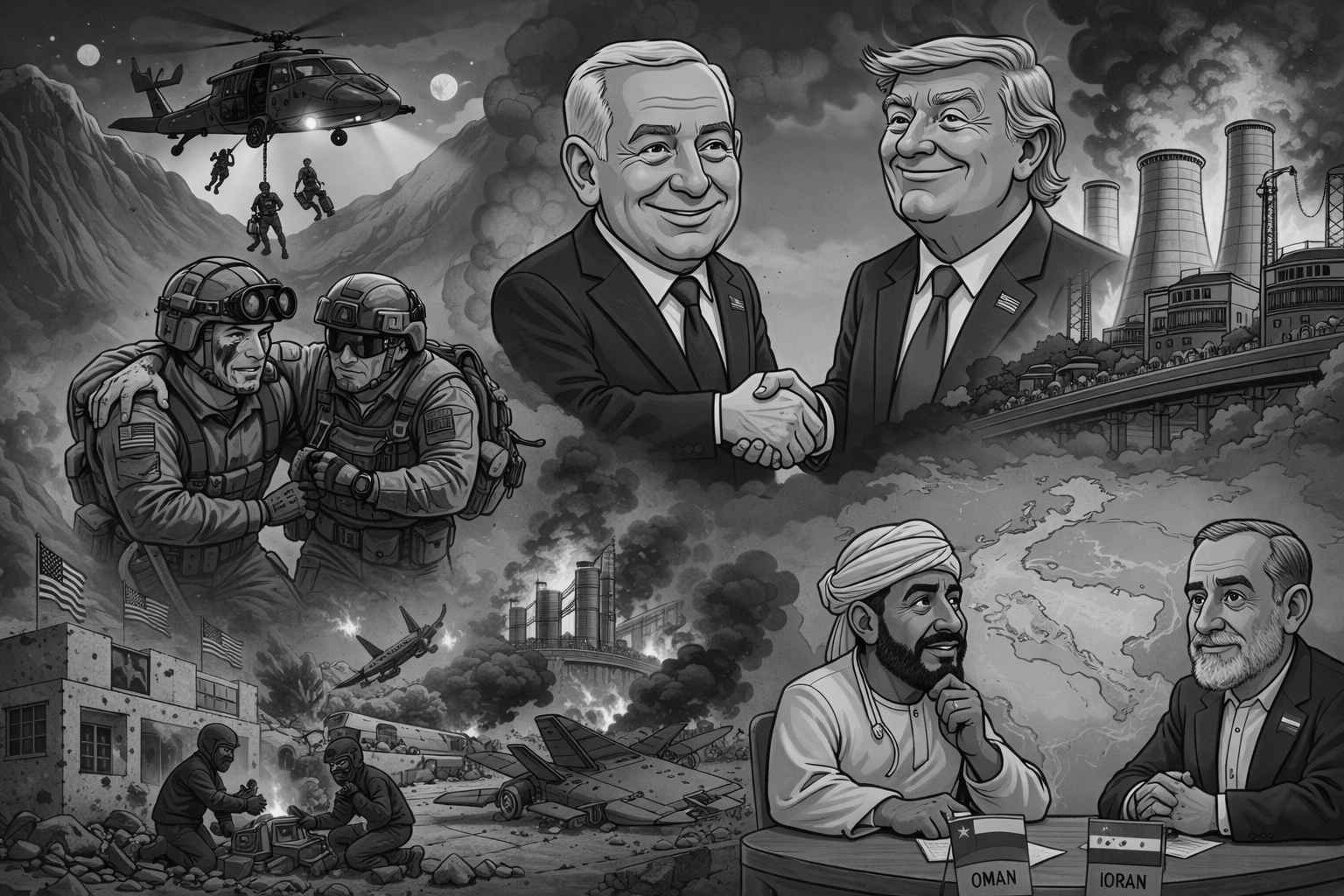
What converged on those mountains was enormous: hundreds of special operations troops and intelligence personnel , HH-60W Jolly Green II rescue helicopters , HC-130J Combat King aircraft , MC-130J Commando II transports , fighter jets flying top cover, surveillance drones, and dozens of additional support platforms. Aircraft dropped bombs ahead of the rescue team to clear Iranian forces from the immediate area. When commandos reached the colonel's position, a fierce firefight erupted with Iranian forces who had pushed dangerously close. The team fought through it. The colonel was pulled from his crevice and loaded aboard a rescue aircraft.
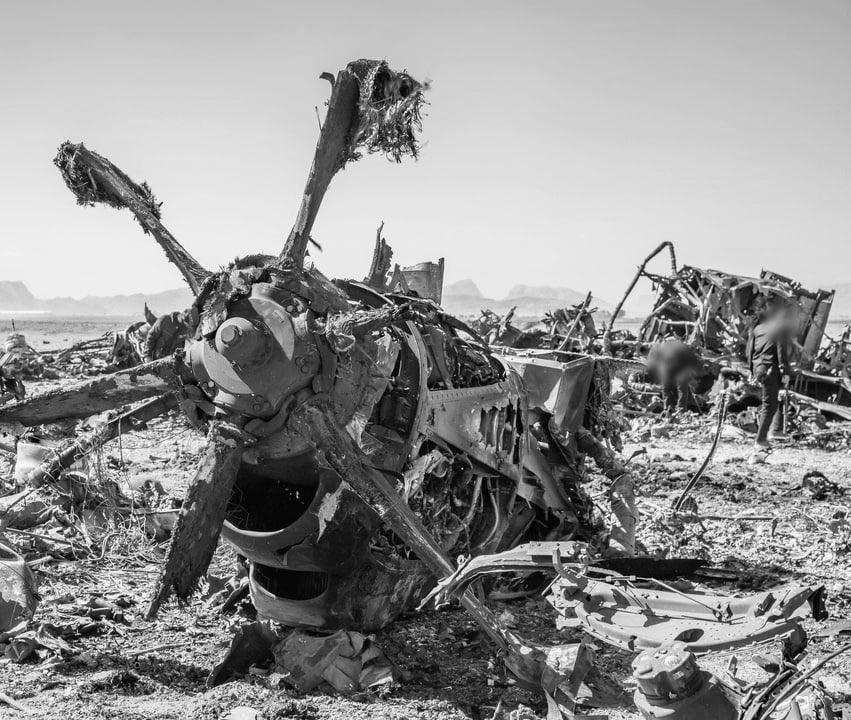
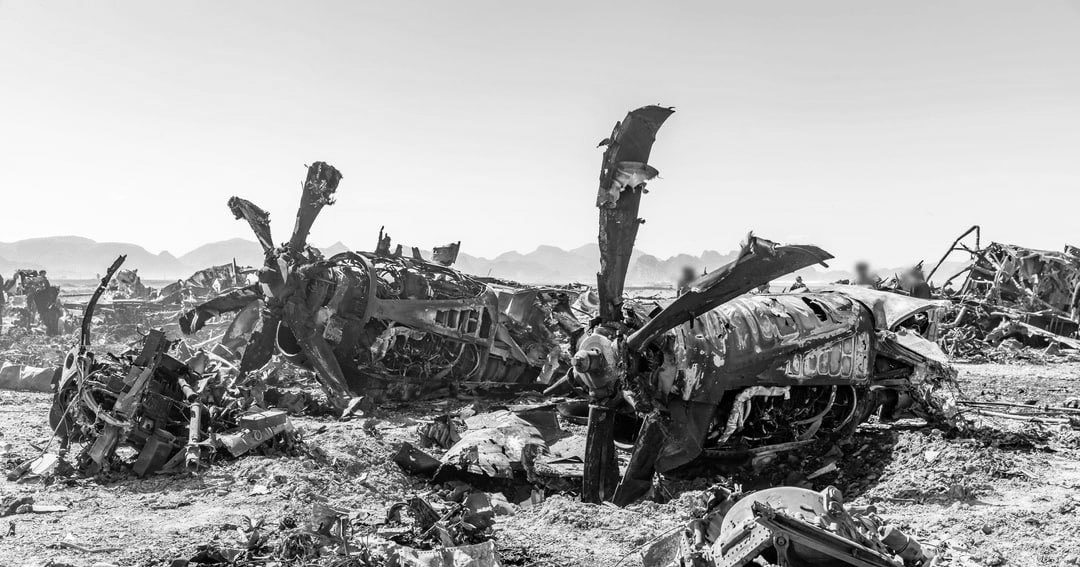
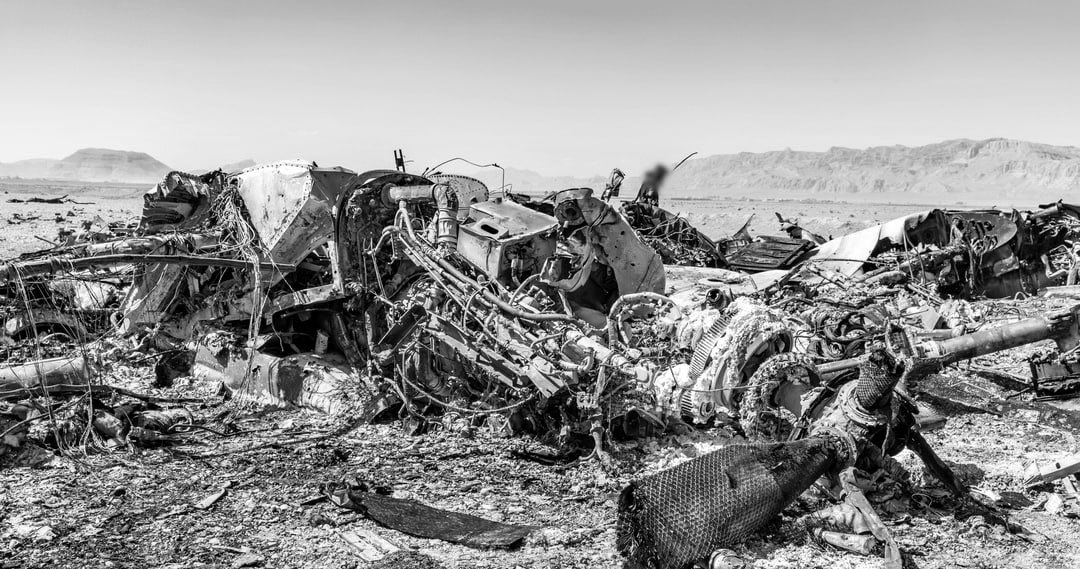
Then came a complication that nobody had planned for. Two MC-130J Commando II aircraft became stuck in soft sand on an improvised forward airstrip the US had established inside Iran, south of Isfahan. Each aircraft weighs more than 75,000 pounds loaded. The desert terrain won. With Iranian forces closing in and the timeline collapsing, commanders made the only call available: three additional aircraft were dispatched to extract all US personnel . The two immobilised MC-130Js were demolished in place , blown up by US forces to deny their technology to the enemy. At least one MH-6 Little Bird helicopter that could not be loaded aboard the replacement aircraft in time was also destroyed on the ground. Iran's IRGC subsequently released footage of wreckage in southern Isfahan province, claiming it had shot down two C-130 aircraft, two Black Hawk helicopters, and an MQ-9 Reaper drone during the operation. Trump, in his Truth Social posts, made no mention of aircraft losses and confirmed that no US service members were killed or injured in the rescue.
Trump announced the colonel's rescue just after midnight and described him as "seriously wounded" but stable. Israeli Prime Minister Benjamin Netanyahu congratulated Trump, writing that the rescue "proves that when free societies muster their courage and their resolve, they can confront seemingly insurmountable odds."
The euphoria, however, lasted precisely as long as it took Trump to open Truth Social again. Less than an hour after announcing the rescue, he posted one of the most incendiary messages of the entire war: "Tuesday will be Power Plant Day, and Bridge Day, all wrapped up in one, in Iran. There will be nothing like it!!! Open the Fin' Strait, you crazy baards, or you'll be living in Hell JUST WATCH! Praise be to Allah." The "Power Plant Day" threat was not abstract. Trump had previously paused US strikes on Iranian energy infrastructure for ten days . That pause expires on Monday, April 6 . And then, in a statement that stunned observers, he confirmed that the US had sent weapons to Kurdish forces and Iranian protesters , saying plainly: "We sent them a lot of guns."
Iran's military joint command rejected every word of it. Their spokesman warned: "We once again repeat - if you commit aggression again and strike civilian facilities, our responses will be more forceful." The IRGC framed its coordinated Gulf strikes that day as explicitly the "first phase" of retaliation for the Israeli attack on the Mahshahr Special Petrochemical Zone and the US bridge strike near Tehran, language that unmistakably implies further phases to come. Iran's central military command had already on Saturday called Trump's ultimatum "a helpless, nervous, unbalanced and stupid action."
While Trump thundered , quieter diplomacy unfolded. Omani and Iranian deputy foreign ministers met to discuss a "safe passage protocol " for Strait of Hormuz shipping, talks ongoing for two weeks, Omani sources confirmed. No agreement was announced.
The Strait remained largely closed , with traffic dropping from 150 vessels a day to just 10–20. Two ships made the crossing: the Green Sanvi, a Japanese-owned, Indian-flagged LPG tanker, and the Green Asha , the ninth Indian-flagged vessel. An Iraqi crude tanker passed after Tehran exempted Iraq, though the country faces severe economic distress due to its reliance on the route for oil exports .
Iran’s strikes on Day 37 were not limited to words. In the most geographically expansive single day since the war began, coordinated drone and missile attacks hit Kuwait , Bahrain, the UAE, and Qatar simultaneously. In Kuwait, two power and water plants were struck, forcing shutdowns, while a government building had been hit the previous evening. Kuwait Petroleum reported serious material losses. Bahrain’s Gulf Petrochemical Industries and Bapco Energies suffered strikes and fires, with Bapco already under force majeure. In the UAE, Borouge suspended operations after three fires damaged its aluminium facilities. Qatar confirmed drone and cruise missile attacks, all intercepted, while QatarEnergy remains under force majeure. The IRGC claimed an oil refinery strike in Haifa, framing the wave as the "first phase" of retaliation for the Mahshahr and Tehran attacks.
Inside Iran, US-Israeli strikes on the Mahshahr Special Petrochemical Zone killed five and wounded 170, hitting Fajr 1 & 2, Rejal, and Amir Kabir plants. Ardabil province strikes killed three more. Over 30 universities, including Shahid Beheshti University, have been targeted.
Russia evacuated 200 more personnel from Iran's Bushehr Nuclear Power Plant* , with Rosatom chief *Alexey Likhachev* confirming workers had departed by bus *minutes before the facility was struck* , an Iranian security guard was killed in the attack on the plant's perimeter. Iranian Foreign Minister *Abbas Araghchi* delivered the war's starkest nuclear warning, stating that continued strikes near nuclear infrastructure risked *ending life across the entire region* through radioactive contamination. Former IAEA Director General Mohamed ElBaradei addressed Gulf leaders directly on X, writing: *"Please, once again, do everything in your power before this madman turns the region into a ball of fire."
Planet Labs* , the commercial satellite imaging company, announced it would *indefinitely withhold all imagery of Iran and the conflict zone* at the Trump administration's request, significantly limiting independent visual documentation of the war's destruction. The *Tehran Prosecutor's Office ordered the seizure of assets and freezing of bank accounts* of more than 100 prominent individuals accused of supporting Iran's enemies from abroad. Secretary of State *Marco Rubio confirmed* that *Hamideh Soleimani Afshar* , the *niece* of slain Iranian commander Qassem Soleimani and *her daughter* , both green card holders living in the US, had been placed in *ICE custody pending removal* after their legal status was revoked. Rubio stated Afshar had *"celebrated attacks on Americans and referred to our country as the 'Great Satan.'"
In Israel, air raid sirens blared across the north, including Haifa, as Iranian missiles struck. At least six explosions were reported over Jerusalem. Earlier strikes on Tel Aviv wounded five. Yemen's Houthis, alongside Iranian forces and Hezbollah , claimed a joint long-range attack on Lod Airport and key military installations , marking the most coordinated multi-actor strike of the war. Israel intercepted a missile from Yemen, the fifth launch since the war began. A factory in Ramat Hovav was hit, and a hazardous materials incident occurred at Ben Gurion Airport. Hezbollah claimed a strike on an Israeli warship off Lebanon’s coast.
In Lebanon, Israeli strikes killed seven, including a four-year-old in Kfar Hatta, plus one Lebanese army soldier. Additional strikes hit Maarakeh, Siddiqine, Jnah, and Tyre, damaging a hospital . The Masnaa border crossing was evacuated after alleged Hezbollah activity. Israel claimed 90 fighters killed in southern Lebanon. UN peacekeepers protested Israeli destruction of security cameras . Hundreds of Israelis protested in Tel Aviv, Jerusalem, and Haifa; 17 were arrested despite court authorization.
Italian Prime Minister Giorgia Meloni , usually one of Trump's most reliable European allies, and in the region specifically to secure energy supplies for Italy, publicly broke with Washington, telling Italian broadcaster RAI: "When we disagree, we must say so. And this time, we disagree." Pope Leo XIV , in his Easter Sunday address, called on "those who have weapons to lay them down" and urged dialogue over domination, words that landed with particular weight on a day when the Gulf was burning and a US president was threatening to darken an entire country by Tuesday.
The colonel is safe. The strait is still closed. And Tuesday is coming.