
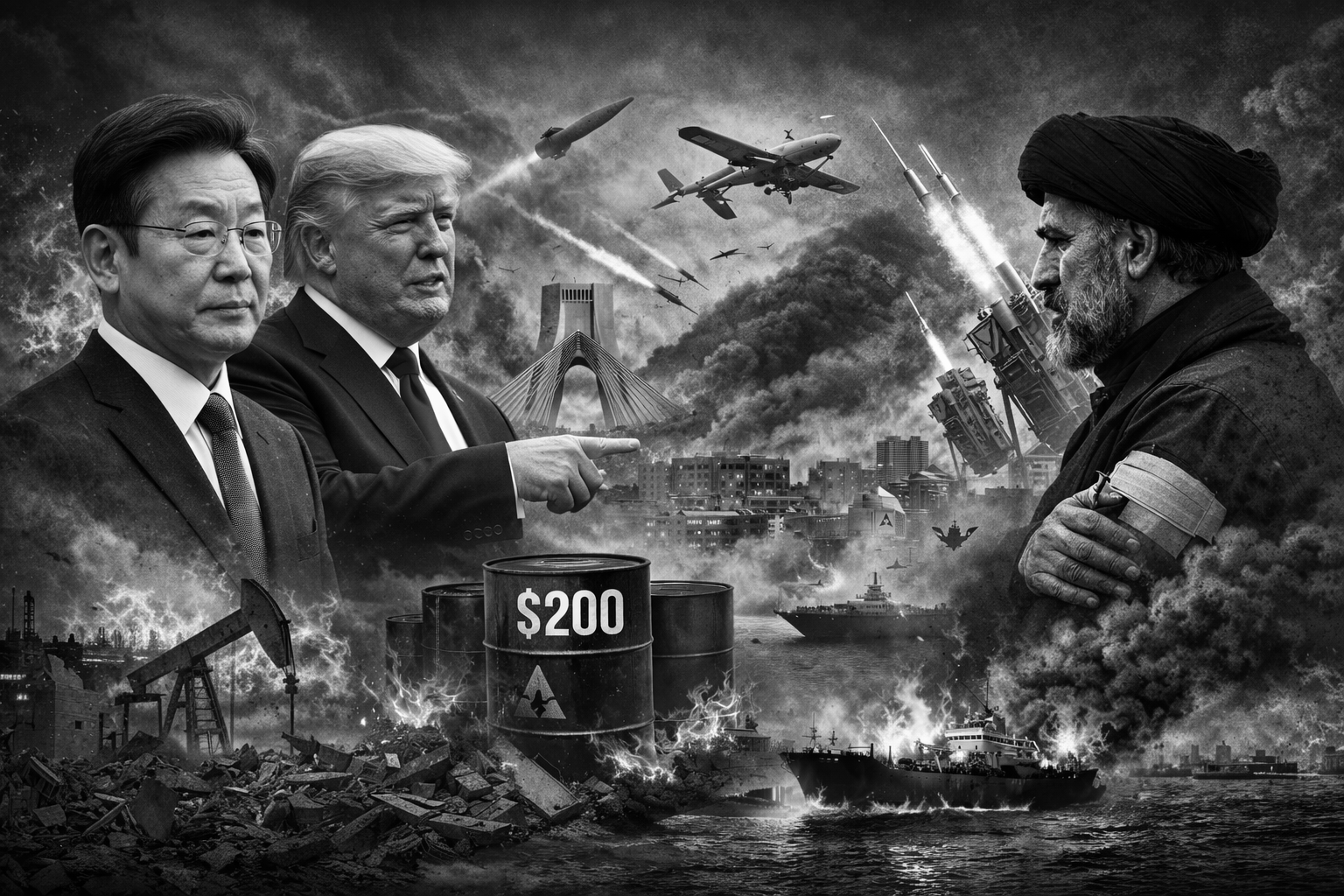
Middle East War, Day 12: Iran Warns Oil Prices Could Hit $200 a Barrel
There is a haunting significance to this date. Exactly one year ago, during June 2025’s escalation between Israel and Iran, Day 12 saw a fragile ceasefire take hold. That war ended because both sides had defined, limited objectives nuclear sites, missile infrastructure — and Oman provided a diplomatic channel. This time, the opening salvo assassinated a sitting head of state. There are no channels left, no Oman waiting in the wings. There is only fire.
The path to this war was paved not by failed diplomacy, but by deliberately abandoned diplomacy . In February 2026, Iran and the US were engaged in indirect nuclear talks, and an Omani mediator had just reported major progress, including Iran’s agreement to eliminate its enriched uranium stockpile — when the bombs fell on Tehran. The strikes did not follow a breakdown in talks; they came the night after a breakthrough. Whether by coincidence or calculation, history will decide. The world lives with the consequences either way.
On Wednesday, an Iranian official said Mojtaba Khamenei was lightly wounded in the same strike that killed his father, injuring his legs, hand, and arm. He has made no public appearances or statements since being named supreme leader, creating a rare and unstable scenario: a wounded, invisible leader commanding a nation under bombardment. Asked if Mojtaba had a “target on his back,” Trump declined to answer, underlining the US’s de facto influence over Iran’s leadership.
On Day 12, Tehran shifted its military posture. Ebrahim Zolfaqari, spokesperson for Iran’s Khatam al-Anbiya Central Headquarters, announced an end to limited “reciprocal strikes,” pledging continuous, unrestricted attacks. He specifically warned that no oil would reach the US, Israel, or their allies, declaring every vessel bound for them a legitimate target. The threat to markets was immediate: “Get ready for the oil barrel to be at $200, because the oil price depends on the regional security which you have destabilised.” This is not bluster. Wood Mackenzie analyst Simon Flowers told clients this week that Gulf producers together export 15 million barrels per day — volumes that have effectively been removed from the global market. "The industry has never faced a loss of supply volumes of this magnitude," he wrote. "$200 per barrel is not outside the realms of possibility in 2026." The International Energy Agency has already triggered the release of a record 400 million barrels of crude from strategic reserves — a global emergency intervention of historic proportions. Gas prices in the United States have risen 17 percent in twelve days. The war is costing an estimated $1 billion per day , and the US spent $5.6 billion in munitions in the first two days alone — 95 percent of it unbudgeted.
Iran says US and Israeli forces have bombed nearly 10,000 civilian sites across the country since February 28. The White House confirmed the US has struck over 5,000 targets in Iran, including an Iranian girls’ school in Minab near a naval base on Day One, killing around 175 students. Emerging photos suggest a US missile was responsible. Trump tried to deflect blame, claiming without evidence that other countries use Tomahawk-style missiles. Senate Minority Leader Chuck Schumer shot back from the floor: “Iran doesn’t have Tomahawk missiles, Donald Trump! The claim is beyond asinine.” An investigation is underway, with accountability at risk of being lost amid the chaos of war.
Strikes have devastated Tehran’s Mehrabad Airport, destroyed 16 Quds Force cargo planes, hit a Qeshm Island desalination plant cutting water to 30 villages, and targeted detention centers in Mariwan, reportedly triggering a jailbreak, while Russia’s Rosatom evacuated staff near Bushehr Nuclear Plant after losing contact with Iranian officials, raising nuclear safety fears. Iran has fired cluster munitions nearly daily, killing civilians in Israel and prompting Home Front warnings, while attacking all six Gulf Cooperation Council states, including drone and missile strikes on Saudi Arabia, Qatar, UAE, Bahrain, Kuwait, and Oman , causing deaths, injuries, and infrastructure disruptions. Espionage networks, such as IRGC cells in Qatar, underscore Iran’s broader offensive. Attacks have spilled beyond the Gulf, striking Azerbaijan and Turkey , prompting NATO consultations, and threatening escalation into a wider regional war. The Strait of Hormuz has become a flashpoint, with IRGC mine-laying vessels destroyed by the US, endangering global oil flows. Iraq and Lebanon have also suffered, with US, Israeli, and Iranian-linked forces striking across their territories, killing hundreds and displacing hundreds of thousands, while Hezbollah faces domestic backlash. The scale, intensity, and cross-border reach of Iran’s operations mark an unprecedented regional escalation with civilian, military, and geopolitical consequences.
The Pentagon has confirmed eight US deaths and roughly 140 wounded in Operation Epic Fury, marking the first American combat fatalities against Iran, while deploying a third aircraft carrier, moving THAAD missile components from South Korea , and approving a $151 million arms sale to Israel. Political pressure is mounting in Washington as Congress blocks War Powers Resolutions, with senators demanding hearings on the war’s objectives, duration, and strategy, while voices like Sen. Murphy and Sen. Warren warn the conflict risks empowering an even harder-line Iranian regime. Trump offers conflicting narratives , calling the war a “short-term excursion” while demanding Iran’s “unconditional surrender,” even as the IRGC insists it will decide the war’s end. Diplomatically, allies fracture: the UK avoids strikes, France seeks to reopen the Strait of Hormuz, and G7 ministers plan energy releases, while China and Russia criticize the attacks. Regional and global ripples include North Korea resuming missile tests, Asian nations conserving energy, and Iran withdrawing from the World Cup over security, with Australia granting visas to seven Iranian women footballers—symbolizing the human dimension of a conflict now stretching from Tehran to the global stage.
The war is costing the world a billion dollars a day and the exit - any exit - is nowhere visible.The architects of Operation Epic Fury believed they were writing a short, decisive chapter. They may instead have opened the longest, darkest book the Middle East has seen in a generation.