
Mexico and El Salvador seize over 10 tonnes of Cocaine as U.S. drug boat strikes kill 11
Mexico and El Salvador have reported major drug seizures in the Pacific Ocean this week, intercepting more than 10 tonnes of cocaine in separate operations, while deadly U.S. military strikes on suspected trafficking vessels have triggered regional concern.
Mexico announced on Thursday that it seized nearly four tonnes of suspected narcotics from a semi-submersible craft about 250 nautical miles south of Manzanillo and detained three suspects. Security Secretary Omar García Harfuch said the seizure brought Mexico’s weekly total close to 10 tonnes. Authorities said the operation relied on intelligence shared by US Northern Command and the Joint Interagency Task Force South , a U.S.-led multinational unit that coordinates military, law enforcement and intelligence agencies to monitor and disrupt drug trafficking routes across the Caribbean and Pacific regions.
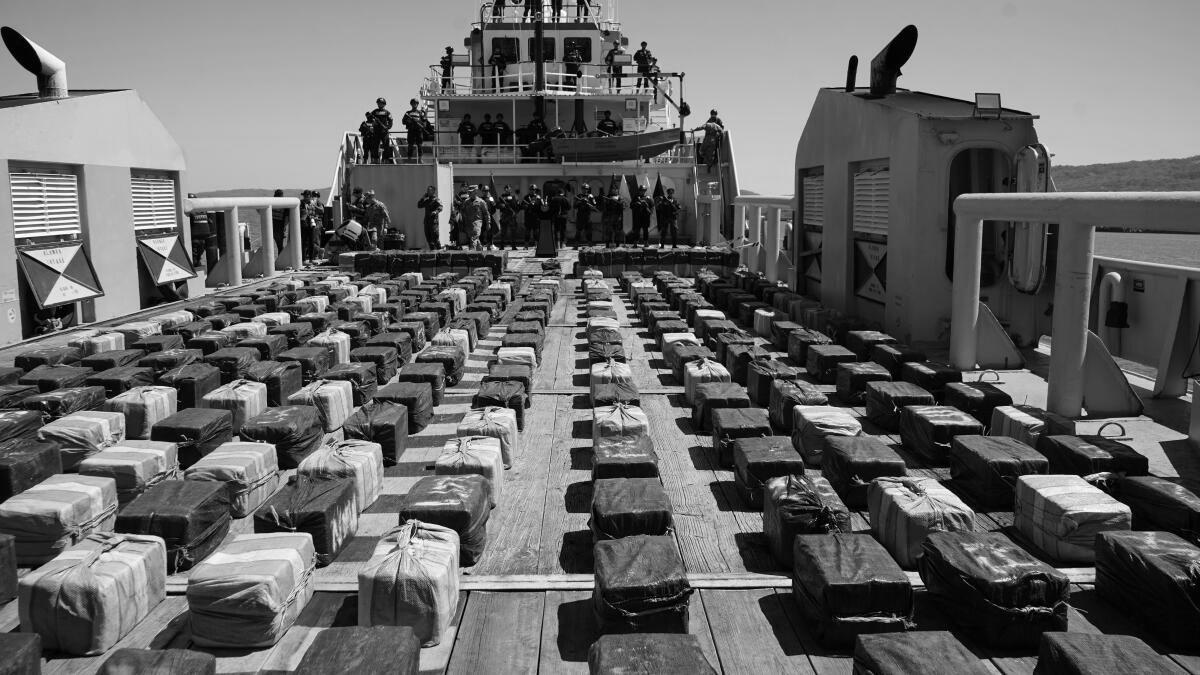
Earlier, El Salvador’s navy reported the largest drug seizure in its history , intercepting a vessel registered in Tanzania, about 380 miles southwest of its coast . Divers discovered 330 packages of cocaine hidden in ballast tanks, totaling 6.6 tonnes . Ten suspects from Colombia, Nicaragua, Panama and Ecuador were arrested. The ship, FMS Eagle, was later displayed at the port of La Unión with hundreds of wrapped bundles visible on deck.
The seizures come as Washington presses Mexico to curb drug trafficking, particularly the flow of fentanyl and cocaine. President Claudia Sheinbaum has adopted a tougher stance against cartels, including extraditing prisoners to the United States, but has criticized U.S. military strikes on suspected drug boats in the Caribbean and Pacific.
At least 145 people have been killed in such strikes since September, including 11 this week, though U.S. authorities have released no evidence proving the vessels carried drugs.
Across the American continent, drug trafficking continues to fuel violence, political tension and public health crises, highlighting the contrast between seizure-based enforcement and increasingly militarized counter-narcotics tactics.