
Merz Vows Reforms Will Continue As AfD Pushes CDU To Historic Low In Germany
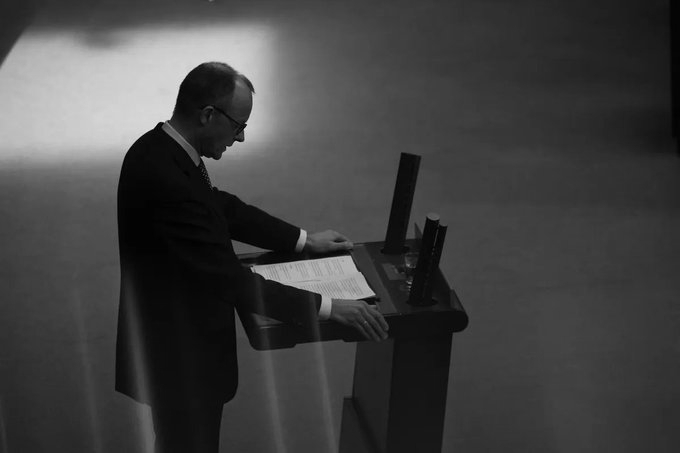
German Chancellor Friedrich Merz has vowed to remain in office and press ahead with economic reforms despite a historic defeat for his Christian Democratic Union (CDU) in two state elections, as the far-right Alternative for Germany (AfD) surged to victory in Mecklenburg-Western Pomerania and the Left emerged as the strongest party in Berlin.
The CDU suffered its worst-ever result in Mecklenburg-Western Pomerania, winning just 4.9 per cent and falling below the 5 per cent threshold required to enter the state legislature. The AfD secured about 38.2 per cent to finish first, followed by the centre-left Social Democrats (SPD) with 35.5 per cent.
In Berlin, the CDU also suffered a major setback. Die Linke won about 25.7 per cent, ahead of the CDU at 18.8 per cent and AfD at 16.3 per cent. The result means the previous CDU-SPD governing arrangement in the German capital no longer has a majority.
The defeats come just two weeks after the AfD emerged as the largest party in Saxony-Anhalt, adding to pressure on Merz, who has been chancellor for about 16 months. The latest results have intensified speculation about his political future, although Merz has rejected calls to step aside.
Merz described the CDU result in Mecklenburg-Western Pomerania as a “disaster” but struck a defiant tone after the elections.
“What needs to be done now requires backbone, steadfastness, and patience,” Merz said. “I will demonstrate these qualities as chairman of the CDU and, above all, as chancellor of our country.”
He argued that Germany’s economic difficulties made reforms more urgent rather than less necessary. His government is seeking changes involving pensions, taxes, healthcare and reducing bureaucracy as it tries to revive an economy that has struggled with weak growth and high energy costs.
Merz also warned about growing support for authoritarian politics, describing his reform programme as an “antidote to the poison of authoritarianism” entering German society.
The AfD, meanwhile, celebrated its latest breakthrough. Party co-leader Alice Weidel said the result showed that the party had “displaced the CDU as the people's party” and called for political change. AfD co-leader Tino Chrupalla separately criticised Merz for refusing to draw consequences from the election results and called on him to resign.
Despite winning Mecklenburg-Western Pomerania, the AfD is unlikely to govern because Germany’s mainstream parties maintain a “firewall” against forming coalitions with it. The SPD could seek to continue governing with the Left and Greens, although coalition negotiations are expected to be complicated.