
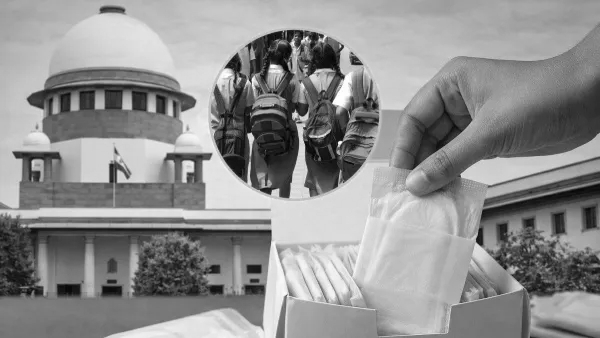
Menstrual Health Is a Fundamental Right: SC Orders Free Pads in All Schools
The Supreme Court has delivered a landmark judgment declaring that menstrual health is an essential component of the Right to Life under Article 21 , transforming it from a welfare concern into a constitutional entitlement . The ruling mandates that all schools across India, government, aided, and private, must provide free sanitary napkins to girls and ensure the availability of separate toilets for girls , marking a major step toward gender justice and educational equality . The Court emphasized that the absence of menstrual hygiene facilities affects girls’ dignity , attendance, and academic performance, and can lead to long-term setbacks in education and empowerment.
A bench comprising Justice J.B. Pardiwala and Justice R. Mahadevan issued comprehensive directions aimed at removing physical and social barriers faced by adolescent girls. Schools must install vending machines near toilets or appoint designated staff for pad distribution, while also guaranteeing continuous water supply , soap, and proper maintenance. The judgment further requires disability-friendly toilets designed with privacy and hygiene in mind, ensuring inclusivity for all students. In addition, institutions must set up Menstrual Hygiene Management Corners to provide emergency supplies, guidance, and awareness materials, helping girls manage their health without stigma or embarrassment.
The Court clarified that responsibility does not end with infrastructure creation; authorities must ensure sustained implementation and monitoring. Private schools that fail to comply risk derecognition, while state governments will be held accountable for lapses in public institutions. By linking menstrual hygiene to Article 14 (Right to Equality) as well, the Court recognized that lack of facilities amounts to discrimination, undermining equal access to education.
Experts note that effective implementation will require coordination between health and education departments. Existing schemes under the National Health Mission and school education programs can support pad supply, toilet upgrades, and awareness drives. Environmental aspects also require attention, as the Court encouraged eco-friendly sanitary products, making safe disposal systems an important part of school planning.
The verdict originated from a Public Interest Litigation filed by social activist Jaya Thakur in 2024, highlighting gaps in school sanitation for girls. Educationists believe this decision could be transformative, ensuring that no girl’s schooling is interrupted due to a natural biological process. By placing menstrual health within the framework of fundamental rights, the Supreme Court has set a powerful precedent that connects health, dignity, and education in the pursuit of an inclusive future.