
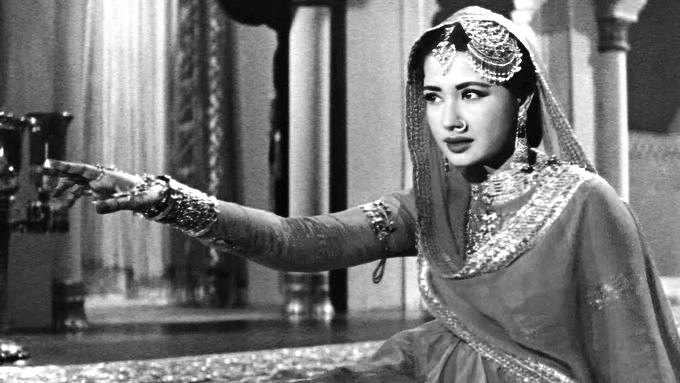
Meena Kumari’s ‘Pakeezah’ Returns in 4K Restoration at Global Film Festivals
The 1972 classic “Pakeezah,” starring legendary actor Meena Kumari and directed by Kamal Amrohi, is set to return to the international spotlight with a new 4K restoration. The restored film will have its world premiere at the Festival Lumière in Lyon, France, before travelling to London for a gala screening at the BFI London Film Festival.
The restoration was spearheaded by the Film Heritage Foundation (FHF) in association with the Amrohi family. The painstaking project took two years and aimed to revive the film in a form as close as possible to Amrohi’s original vision.
The Lyon premiere will be led by Thierry Frémaux, Cannes Film Festival and Festival Lumière chief. In London, the restored film will receive a gala screening at the BFI IMAX, presented by FHF director Shivendra Singh Dungarpur, alongside Amrohi’s children Tajdar and Rukhsaar and grandson Bilal Amrohi.
Dungarpur described the restoration as one of his most challenging projects, revealing that the original camera negative had almost melted, while other surviving elements suffered from faded colours, scratches and mould. Original film stills discovered during research helped the restoration team reconstruct visual details and preserve the filmmaker’s intended aesthetic.
The restoration also marks another milestone for FHF, which has placed restored Indian classics at major international festivals, including Berlin, Cannes and Venice, over the past year.
Conceptualised in the mid-1950s, Pakeezah endured nearly 15 years of production delays, including casting changes, script revisions and a studio fire that destroyed part of its original black-and-white negatives. Filming began in 1956 before shifting to Eastmancolor.
The film finally released on February 4, 1972, and became a major box-office success following widespread critical acclaim. Meena Kumari, who played courtesan Nargis and her daughter Sahibjaan, died less than two months later at the age of 38.
Today, Pakeezah is regarded as a cinematic masterpiece, with songs such as “Chalte Chalte” and “Inhin Logon Ne” remaining deeply embedded in Indian popular culture.