
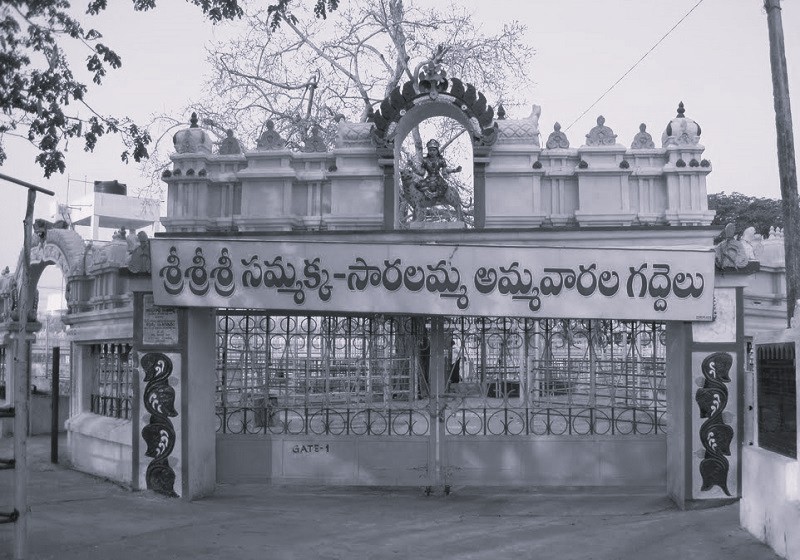
Medaram Jatara: Tapestry of Faith, Courage, and Tribal heritage
Verdant embrace of Telangana’s Eturnagaram Wildlife Sanctuary, the quaint village of Medaram transforms every two years into a pulsating epicenter of devotion, culture, and history. The Medaram Jatara, also known as the Sammakka Saralamma Jatara, is Asia’s largest tribal festival, a biennial celebration that draws millions of devotees from across India and beyond. Often dubbed the "Kumbh Mela of Telangana," this four-day spectacle, held in the month of Magha (February) on the full moon day, is a mesmerizing blend of spirituality, tribal traditions, and communal unity. The festival is a testament to the enduring legacy of two legendary tribal heroines, Sammakka and Saralamma, whose courage and sacrifice continue to inspire generations.
Legend Woven in Courage
The heart of Medaram Jatara lies in a gripping tale from the 13th century, a story of resistance and divine transformation that resonates deeply with the Koya tribe and other indigenous communities. According to legend, Sammakka, a tribal queen, was discovered as a newborn, glowing with a divine aura, amidst tigers in the forest. Adopted by a Koya tribal chief, she grew into a figure of wisdom and valor, marrying Pagididda Raju, a fellow tribal leader. Together, they had two daughters, Saralamma (Sarakka) and Nagulamma, and a son, Jampanna. When the Kakatiya rulers imposed oppressive taxes on the tribal communities, Sammakka led a fierce rebellion.
The battle was brutal,her husband was killed, her son Jampanna perished in a stream now named Jampanna Vagu, and Saralamma fell fighting alongside her mother. Sammakka, wounded but unyielding, retreated into the forest and mysteriously vanished, believed to have transformed into a divine vermilion casket.
The tribal communities, awestruck by their sacrifice, began worshipping Sammakka and Saralamma as goddesses. Every two years, they honor this legacy by bringing sacred caskets representing the deities from a bamboo grove and Kannepalli village to Medaram, where they are placed under an ancient Indian elm tree for devotees to offer prayers. This narrative of courage, sacrifice, and divine intervention forms the spiritual backbone of the festival, making it a powerful symbol of resistance against injustice.
A four day Symphony of Rituals
Medaram Jatara unfolds over four days, each marked by distinct rituals that weave together devotion, tradition, and celebration. The festival begins with a grand procession, as the idol of Saralamma is brought from Kannepalli village to the sacred platform, or Gadde, in Medaram, accompanied by the rhythmic beats of traditional instruments like the doli (cylindrical drum), akkum (brass blowing instrument), and thootha kommu (bison horn). On the second day, Sammakka’s idol arrives from Chilakala Gutta, a nearby hillock, drawing lakhs of devotees who await her divine presence with fervent anticipation.
The third day is the festival’s crescendo, where millions offer prayers and tributes. Devotees present bangaram (jaggery), often equivalent to their own weight, as a sacred offering symbolizing gold and devotion. Piles of jaggery surround the idols, alongside coconuts, turmeric, vermilion, and, in some cases, animal blood, reflecting the festival’s raw, unfiltered connection to tribal traditions. A holy dip in Jampanna Vagu, believed to be tinged red with the blood of Sammakka’s son (though scientifically attributed to soil composition), is a cherished ritual, thought to cleanse sins and imbue courage. The festival concludes on the fourth day with a solemn farewell, as the deities’ caskets are returned to their forest abodes, leaving devotees with blessings and a renewed sense of purpose.
Cultural Extravaganza
Medaram Jatara is not just a religious even, it is a vibrant celebration of Telangana’s tribal heritage. The air resonates with soulful tribal songs, pulsating drumbeats, and captivating dance performances that showcase the Koya tribe’s rich cultural tapestry. Unlike many Hindu festivals, Medaram Jatara is free of Vedic or Brahmanic influence, with all rituals led by Koya priests, known as Koya Doras, who preserve ancient customs with unwavering dedication. This authenticity, coupled with the festival’s scale drawing an estimated 10 to 15 million people makes it a global phenomenon, attracting not only devotees but also tourists, anthropologists, and scholars eager to witness its unique traditions.
The festival’s setting, amidst the dense Dandakaranya forest, adds to its mystique. Medaram, a village of just 300 residents in normal times, swells to host millions, transforming into a bustling hub of faith and festivity. The natural surroundings, including the sacred Jampanna Vagu and nearby attractions like Laknavaram Lake and Bogatha Waterfall, enhance the festival’s allure, offering visitors a chance to connect with both spirituality and nature.
A Celebration of Unity and Resilience
Medaram Jatara transcends religious boundaries, uniting tribal and non-tribal communities from Telangana, Andhra Pradesh, Chhattisgarh, Maharashtra, Odisha, and beyond. The festival’s inclusive spirit is evident in its massive turnout, second only to the Kumbh Mela in India, and its recognition as a state festival since 1996. The Telangana government, alongside the Ministry of Tribal Affairs, invests heavily in infrastructure roads, temporary shelters, medical services, and sanitation to manage the influx of devotees, ensuring a safe and seamless experience. In recent years, efforts to promote eco-friendly practices, such as plastic bans and waste recycling, reflect a commitment to preserving the festival’s natural setting.
The festival also holds profound social significance, particularly for women. Sammakka and Saralamma, revered as symbols of feminine power and resistance, inspire countless women to embrace their strength and agency. The absence of Brahmin priests underscores the festival’s roots in tribal autonomy, reinforcing the Koya tribe’s central role in its rituals and organization.
A Global Beacon of Tribal Heritage
Medaram Jatara is more than a festival, it is a living testament to the indomitable spirit of India’s tribal communities. Its recognition as a potential UNESCO Intangible Cultural Heritage of Humanity underscores its global significance, shining a spotlight on the Koya tribe’s traditions and the universal values of courage, sacrifice, and unity. Whether you’re a devotee seeking divine blessings, a traveler chasing cultural immersion, or a scholar exploring indigenous heritage, Medaram Jatara offers an unparalleled experience a vibrant tapestry woven with faith, history, and the unbreakable bond between a people and their goddesses.
By Bus:
From Hyderabad (6 to 7 hours, 240 to 259 km):
Boarding Points:
Mahatma Gandhi Bus Station (MGBS), Jubilee Bus Station (JBS), Uppal, KPHB, or Lingampally.
By Train:
Nearest Stations:
Warangal or Kazipet (93 km from Medaram).
By Road:
From Hyderabad (6 to 7 hours, 240 to 259 km):
Route:
Hyderabad to Bhongiri to Aler to Jangaon to Ghanpur to Warangal to Mulugu to Pasra to Narlapur to Medaram.