
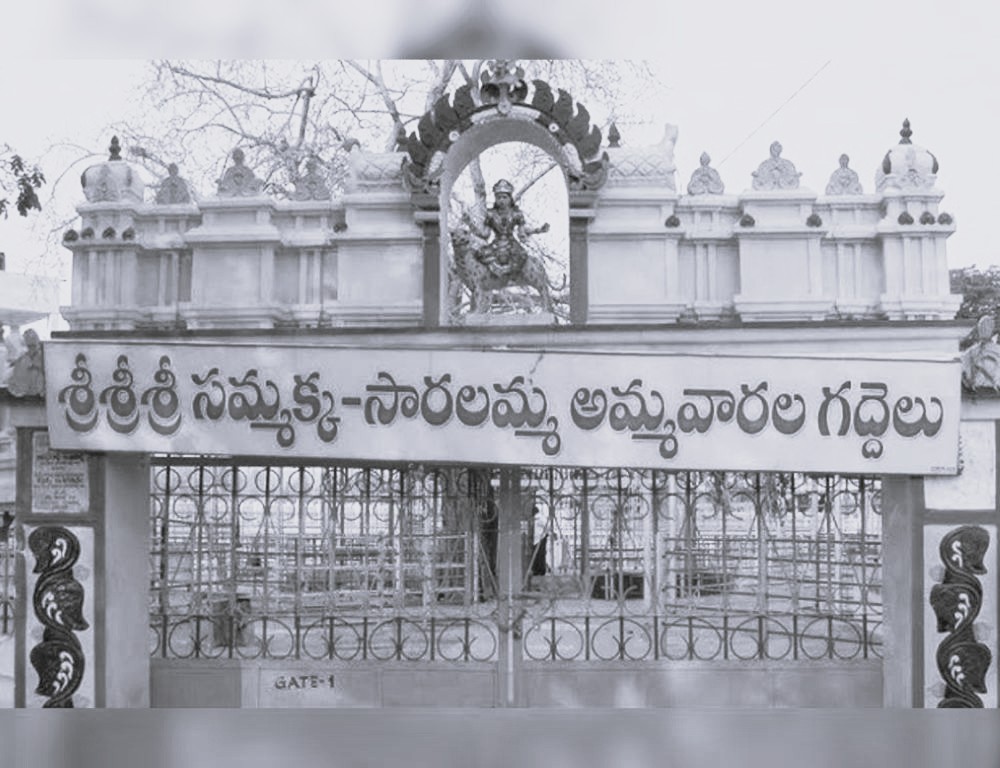
Medaram Jatara: A Symbol of Tribal Heritage
The Eturnagaram Wildlife Sanctuary in Telangana is now immersed in the spirituality of indigenous communities. Nestled within this forest lies the tribal village of Medaram, a place of extraordinary natural beauty. Once every two years, this region transforms into a vibrant center of devotion, culture, and history. The Medaram Jatara, also known as the Sammakka, Saralamma Jatara, is Asia’s largest tribal festival. It is a biennial celebration that attracts millions of devotees from across India and abroad. Often referred to as the “Telangana Kumbh Mela,” this four-day spectacle is held during the full moon day of the month of Magha (February). It is a captivating confluence of spirituality, tribal traditions, and communal harmony that mesmerizes devotees.
This festival stands as a living testament to the eternal legacy of two legendary tribal heroines Sammakka and Saralamma, whose courage and sacrifice continue to inspire generations.
A Tale Woven with Courage
The Medaram Jatara is rooted in a gripping 13th-century legend, deeply resonating with the Koya tribe and other indigenous communities. According to folklore, the tribal queen Sammakka was found as a newborn glowing with a radiance like the sun amid the forest and wild animals. Adopted by a Koya tribal leader, she grew into a woman of great wisdom and valor and later married Pagididda Raju, another tribal chieftain. They had two daughters, Saralamma (Sarakka) and Nagulamma, and a son, Jampanna.
When the Kakatiya rulers imposed oppressive taxes on the tribal communities, Sammakka led a fierce rebellion. The battle was brutal: her husband was killed, her son Jampanna fell into a stream that is now known as Jampanna Vagu, and Saralamma died fighting alongside her mother. Though grievously wounded, Sammakka refused to surrender and disappeared into the forest, believed by devotees to have transformed into a divine vermilion casket. Moved by their sacrifice, the tribal communities began worshipping Sammakka and Saralamma as goddesses.
Every two years, this legacy is honored by ceremonially bringing sacred caskets symbolizing the goddesses from Kannepalli village and the bamboo groves to Medaram, where they are placed beneath an ancient tree for worship. This story has become a powerful symbol of resistance against injustice.
Four Days of Sacred Rituals
The Medaram Jatara spans four days. The festival begins with the procession of Saralamma’s idol from Kannepalli village to the sacred platform at Medaram, accompanied by rhythmic beats of traditional instruments such as doli, akkum, and tuta horn. On the second day, Sammakka’s idol arrives from the nearby hillock known as Chilakala Gutta, drawing millions of devotees eagerly awaiting her divine presence.
The third day marks the peak of the festival, when devotees gather in massive numbers to offer prayers. Many devotees offer jaggery equal to their body weight as a sacred offering, which is regarded here as gold. Surrounding the idols are heaps of jaggery, coconuts, turmeric, vermilion, and in some instances, animal blood, reflecting deep-rooted traditional practices.
A sacred bath in the Jampanna Vagu, believed to be reddened by Jampanna’s blood, is considered highly auspicious and is thought to cleanse sins and instill courage. The festival concludes on the fourth day with a ceremonial farewell, as the sacred caskets are returned to their forest abodes, leaving devotees spiritually renewed.
A Cultural Extravaganza
The Medaram Jatara is not merely a religious event; it is a vibrant celebration of Telangana’s tribal heritage. The air resonates with enchanting tribal songs, the thunderous beats of drums, and captivating dance performances showcasing Koya tribal culture. Unlike many Hindu festivals, the Medaram Jatara is conducted without the involvement of Brahmin priests. All rituals are led by Koya priests, known as Koya Doras, who preserve ancient customs with unwavering dedication.
This authenticity elevates the festival’s stature, drawing an estimated 10 to 15 million people, transforming Medaram into a global tribal hub that attracts not only devotees but also tourists, anthropologists, and scholars.
Set amid the dense Dandakaranya forest, the festival’s mystical atmosphere is further enhanced. A village that normally houses around 300 residents becomes a bustling center of faith and festivity. Natural attractions such as Jampanna Vagu, Laknavaram Lake, and Bogatha Waterfalls add to the allure, offering visitors a rare blend of spirituality and nature.
The Medaram Jatara transcends religious boundaries, uniting tribal and non-tribal communities from Telangana, Andhra Pradesh, Chhattisgarh, Maharashtra, Odisha, and beyond. Recognized as a state festival since 1996, it is considered second only to the Kumbh Mela in scale within India.
Social and Spiritual Significance
The festival holds profound social importance, particularly for women. Sammakka and Saralamma, revered as symbols of feminine power and resistance, inspire women to embrace strength and leadership. The absence of Brahmin priests underscores tribal autonomy and reinforces the central role of Koya traditions and customs.
The Telangana Kumbh Mela
The Telangana government, in coordination with the Tribal Welfare Department, makes extensive arrangements to ensure a safe and spiritually fulfilling experience for devotees. Massive investments are made in roads, temporary shelters, medical services, sanitation, and security. Recent initiatives also emphasize eco-friendly practices such as plastic bans and waste recycling, reflecting a commitment to preserving the region’s natural environment.
This year, the government allocated over ₹250 crore for Jatara arrangements, including infrastructure development, drinking water facilities, sanitation, accommodation, and public services. A 50-bed hospital, mobile medical camps, special transport services, drinking water stations, sanitation facilities, and temporary rest areas have been established. Roads are being upgraded, permanent structures and sacred platforms constructed, and security strengthened with police deployment, CCTV surveillance, and guidance personnel. An innovative initiative, home delivery of prasadam has been launched through TGSRTC, enabling devotees unable to attend the Jatara to receive prasadam at home.
Jatara Schedule
The Medaram Jatara in 2026 will be held from January 28 to January 31. Major events include the arrival of the deities, darshan, and forest rituals. The government aims to elevate Telangana’s culture and traditions to international recognition through this festival.
A Global Symbol of Tribal Heritage
The Medaram Jatara is far more than a festival; it is a living symbol of the indomitable spirit of India’s tribal communities. Recognition as UNESCO Intangible Cultural Heritage underscores its global significance. Rooted in the values of courage, sacrifice, unity, and tradition of the Koya tribe, the Jatara offers an unparalleled experience. Whether one is a devotee seeking blessings, a traveler exploring cultural depth, or a scholar studying indigenous heritage, Medaram presents a powerful bond between faith, history, people, and their deities.
Transport and Accommodation
From Hyderabad, Medaram is approximately 240 - 259 km away (6-7 hours by road). Buses are available from Mahatma Gandhi Bus Station, Jubilee Bus Station, Uppal, KPHB, and Lingampally.
By rail, the nearest stations are Warangal or Kazipet (93 km from Medaram).
Road connectivity is available from Hyderabad, Bhuvanagiri, Aleru, Jangaon, Ghanpur, Warangal, Mulugu, Pasra, and Narlapur.
To accommodate millions of devotees, the Telangana government has arranged extensive lodging and food facilities. Temporary shelters, dormitories, and tents have been set up in Medaram and surrounding areas, with special rest centers for the elderly, women, and children. Free meals, drinking water stalls, and community kitchens are provided with the support of voluntary organizations. Dedicated teams monitor hygiene and price regulation at food outlets, ensuring devotees can participate in the Jatara without inconvenience.
The Sammakka - Saralamma Maha Jatara is not just a religious event; it is a symbol of Telangana’s tribal culture, faith, and unity. Through permanent sacred platforms, improved infrastructure, and comprehensive arrangements for accommodation, food, and security, the Telangana government has elevated the Jatara to new heights. By harmonizing tradition with modern facilities, these efforts have enriched the devotees’ spiritual experience. The ongoing development initiatives inspire confidence that the Sammakka - Saralamma Jatara will continue to gain global recognition, carrying faith and spirituality forward for generations to come.