
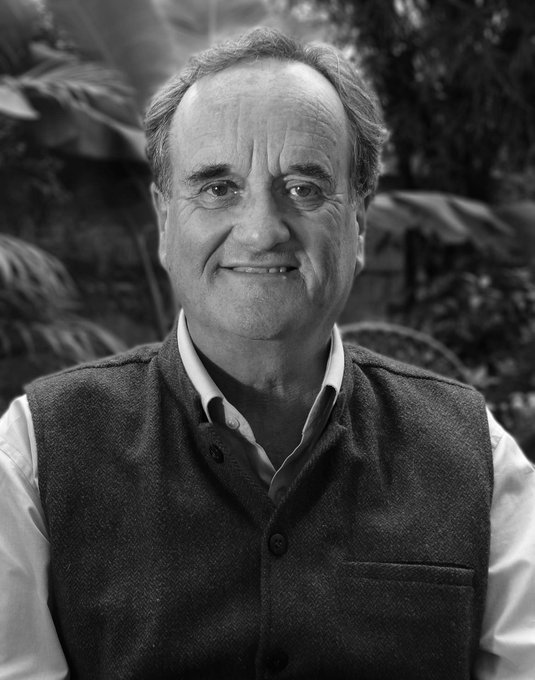
Mark Tully passes away at 90, Chronicler of India for over four decades
The passing of veteran journalist and author Mark Tully at the age of 90 marks the end of an era in foreign correspondence on India. For over four decades, Tully was not just a reporter covering India for the BBC, but a perceptive chronicler who captured the country’s complexities with rare empathy, balance and depth.
Born in Calcutta (now Kolkata) on October 24, 1935, Tully developed an early and enduring bond with India. He joined the British Broadcasting Corporation (BBC) in the 1960s and went on to serve as its New Delhi Bureau Chief for 22 years, becoming one of the most recognisable and trusted international voices reporting from South Asia.
During his long tenure, Tully reported on some of India’s most defining moments the Emergency of 1975–77 , the Punjab militancy and Operation Blue Star, the assassination of Prime Minister Indira Gandhi, the Babri Masjid demolition, and the country’s evolving political and economic landscape. His reporting stood apart for its refusal to sensationalise events and for its focus on ordinary people affected by extraordinary circumstances.
Unlike many foreign correspondents, Tully immersed himself deeply in Indian society. He travelled extensively through rural India, listened closely to diverse viewpoints, and consistently challenged simplistic or stereotypical portrayals of the country in Western media. His journalism combined factual rigour with cultural understanding, making his work influential both within India and abroad.
Beyond broadcast journalism, Tully was a prolific and respected author, whose books remain essential reading for those seeking to understand modern India. Titles such as No Full Stops in India , India in Slow Motion , The Heart of India , and Amritsar: Mrs Gandhi’s Last Battle blended reportage, history and social commentary, offering nuanced insights rather than definitive judgments.
He also reached global audiences through his role as a presenter of the BBC Radio 4 programme ‘Something Understood’, where he reflected on faith, values and the human condition, earning admiration for his calm, thoughtful tone.
In recognition of his contributions, Tully was knighted in 2002 by the British Crown. Three years later, he received the Padma Bhushan from the Government of India a rare honour for a foreign journalist acknowledging his lifelong service in portraying India with fairness, depth and respect.
Tributes poured in from journalists, writers and readers across India and beyond, many describing him as a bridge between cultures and a journalist who believed more in listening than lecturing. Media colleagues remembered him as a voice of credibility at a time when trust in journalism was paramount.
Mark Tully’s legacy lies in the standards he set of patient reporting, moral clarity and intellectual honesty. In an age increasingly dominated by noise and speed, his work stands as a reminder that understanding a country requires time, humility and genuine engagement.