
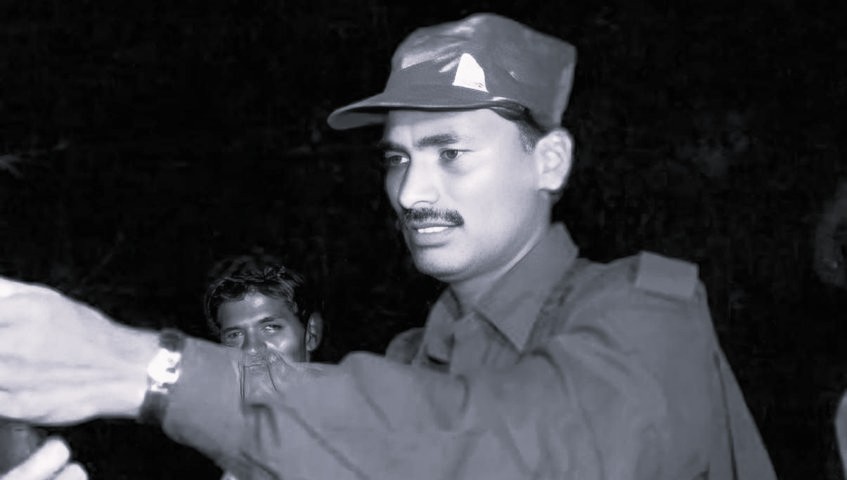
Maoist Highest Leader and General Secretary Devji Alias Tirupati Surrenders, Formal Call for Laying Down Arms Awaited
In a development of exceptional significance, Thippiri Tirupati alias Devji (62) , believed to be the highest leader and General Secretary of the banned CPI (Maoist) , has surrendered before Telangana Police , a move security agencies view as the formal surrender of the armed insurgent movement itself . Devji is widely believed to have taken over the reins of the organisation after the death of former General Secretary Nambala Keshava Rao alias Basavaraju , who was killed in an encounter with security forces in May 2025 in Chhattisgarh.
Devji, a native of Korutla town in Jagtial district of Telangana , surrendered along with senior politburo leader Malla Rajireddy alias Sangram and several cadres in the forest region of Komaram Bheem Asifabad district . Police officials said the surrender will be officially recorded shortly, and a formal press conference is expected today or tomorrow once verification and procedural formalities are completed.
A veteran of the movement for over four decades, Devji joined the underground armed struggle in the early 1980s after being drawn to radical student politics. Over the years, he emerged as one of the principal military architects of the CPI (Maoist), playing a central role in building the People’s Liberation Guerrilla Army (PLGA) . He later rose to the Central Committee , the Politburo , and eventually headed the Central Military Commission , directing armed operations across Maoist strongholds in central India. With a ₹1 crore reward on his head, Devji was considered the most powerful operational leader still active in the organisation.
Given his position as the highest surviving leader, security officials believe Devji may soon issue a formal appeal to remaining Maoist cadres to lay down arms and surrender , a move that could hasten the end of residual armed formations. Officials stress that his surrender is not rooted in ideological disagreements but reflects the strategic exhaustion of the organisation , mounting security pressure, and the shrinking operational space for armed squads.
The surrender also comes against the backdrop of recent high-profile setbacks to Maoist leadership. Madvi Hidma , the feared commander of Battalion No. 1, was killed in an encounter on November 18, 2025 , during a security operation in the Maredumilli forest area of Alluri Sitharama Raju district in Andhra Pradesh . Analysts suggest Hidma may have been attempting to move through Andhra Pradesh at the time, possibly to reach Telangana, but the operation pre-empted any such possibility. Security observers link the uncompromising operational response to the enduring institutional memory of the April 6, 2010 Dantewada ambush , in which 76 CRPF personnel were killed , one of the deadliest attacks on Indian security forces.
With Devji’s surrender, attention has now turned to Muppala Lakshmana Rao alias Ganapathi , the erstwhile General Secretary of CPI (Maoist) , who stepped down from the top post in 2018 , citing health reasons. Ganapathi is the only senior-most leader whose status remains unclear. However, with no confirmed operational updates or public sightings for nearly a decade, security agencies believe he is either fully underground without command influence or no longer alive .
Devji’s surrender has also brought a deeply personal moment of relief for his family. His younger brother, Thippiri Gangadhar , said the family had not seen Devji since he left home decades ago to join the underground movement. “We are very happy that we will be able to see him after such a long time,” Gangadhar said, recalling that the family’s only contact over the years had been through photographs published in the media. He added that repeated attempts to trace Devji had failed as he was operating across multiple states, underscoring the personal cost of a life spent in armed insurgency.
Officials say Devji’s surrender marks a decisive inflection point in India’s decades-long battle against Left-Wing Extremism and may well signal the closing chapter of organised Maoist armed resistance, particularly as the Union government’s March 2026 deadline to eliminate Naxalism draws closer.