
Mamata Banerjee slams Centre over SIR, warns against ‘British-style’ interference
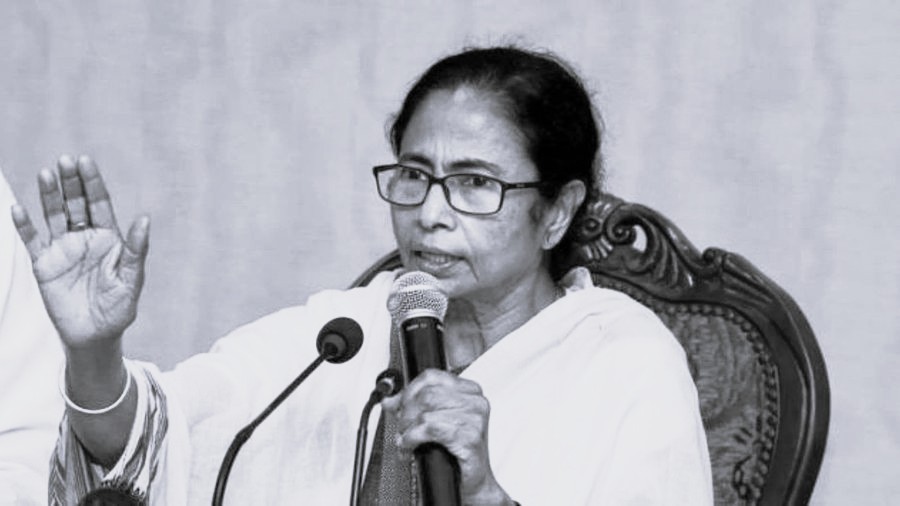
West Bengal Chief Minister Mamata Banerjee on Tuesday launched a fierce attack on the BJP-led Centre over the ongoing Summary Inquiry and Revision (SIR) of electoral rolls, accusing it of “behaving like British rulers” by imposing directives on states, and reiterating that her government would neither allow detention camps nor accept communal politics.
Speaking at a programme at the state secretariat Nabanna, where she highlighted her government’s work over the past 14-and-a-half years, Banerjee alleged that the SIR had been initiated “at the behest of the BJP to save its vote bank”. She accused the Union government of attempting to disrupt state administrations under the guise of electoral reforms.
“I do not run detention camps in Bengal. We do not torture people. We do not disturb others, so why is the Centre disturbing the states?” she said. Urging the Union government not to “behave like the British and forcefully impose anything”, Banerjee added, “We are committed to the Constitution. I practise secular politics. For me, all religions are the same.”
Her comments come amid rising political tension over the SIR, an Election Commission–mandated exercise to verify voter lists ahead of the 2026 Assembly elections by identifying deceased, shifted or duplicate voters. The exercise has triggered protests by booth-level officers (BLOs), street demonstrations by political parties and fresh allegations of partisan intent.
BLOs across several districts have been agitating against what they describe as an “inhuman workload”, claiming they are being asked to conduct extensive door-to-door verification within unreasonable deadlines while also managing their regular duties as teachers or clerical staff. They say frequent changes in instructions, inadequate logistical support and unsafe field conditions have worsened their difficulties. Over the past week, large groups of BLOs gathered outside the CEO’s office in Kolkata, leading to clashes when police moved in to disperse the crowds. While BLOs allege overwork and under-compensation, the administration has maintained that the SIR is a statutory exercise that must continue.
The CEO’s office has held meetings with teacher associations and BLO representatives, offering general assurances that workload norms will be reviewed. Senior officials are examining household allocations and deadlines, though no major relaxations have been announced. The state has appealed for cooperation and made it clear that the process will not be halted.
Political observers note that the dispute has further strained Centre–state relations, which have been marked by frequent clashes between the TMC government and the BJP-led Centre, especially over electoral and citizenship matters. Banerjee has consistently opposed a nationwide NRC and refused to implement the Citizenship Amendment Act (CAA), calling both discriminatory and asserting that they could render vulnerable communities stateless. The state has also declared it will not build detention camps.
Relations have been further affected by disagreements over the deployment of central forces during elections, confrontations with governors appointed by the Centre, and investigations by agencies such as the CBI and ED. While the TMC accuses the Union government of undermining federalism, the BJP contends that the state has obstructed lawful processes.
Reacting to Banerjee’s remarks, Leader of the Opposition Suvendu Adhikari accused her of “peddling falsehoods” to divert attention from what he termed the TMC’s reliance on “ghost voters”. “The SIR is an ECI-mandated national exercise. Why is she afraid? Because thousands of fake and illegal voters have been sheltered by the TMC for years,” he alleged. He said comparing the Centre to the British was “an insult to democracy”.
The ongoing confrontation is expected to influence broader national debates on electoral reforms and the federal balance of power. The controversy may renew scrutiny of the Election Commission’s autonomy, strengthen demands for consultative decision-making with states and revive proposals to professionalise electoral fieldwork to reduce dependence on teachers as BLOs. More broadly, the episode is likely to push federalism to the forefront of election-related policymaking, with opposition-ruled states expected to seek clearer frameworks to prevent unilateral directives and reinforce cooperative federalism.