
Major leap for LVM3: ISRO demonstrates 22-tonne cryogenic engine at Sea level
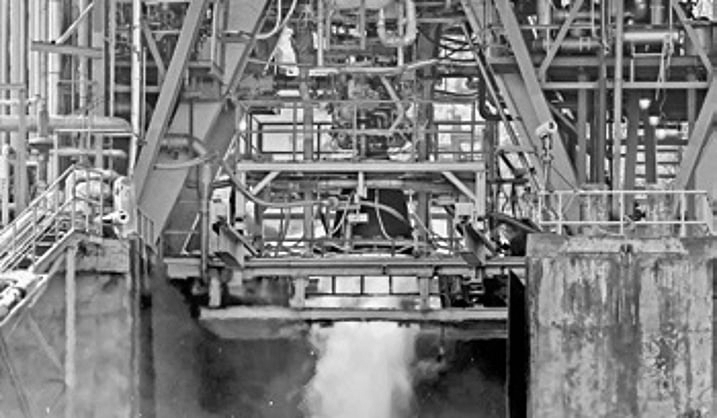
In a significant advancement for India’s space programme, the Indian Space Research Organisation (ISRO) has successfully conducted a high-thrust sea-level hot test of its CE20 cryogenic engine , a development that could substantially enhance the carrying capacity of the country’s heaviest rocket.
The test, carried out on March 10 at ISRO’s Propulsion Complex in Mahendragiri, Tamil Nadu, demonstrated the engine operating at 22-tonne thrust , an increase from the earlier 19-tonne level. The CE20 engine powers the upper cryogenic stage of the Launch Vehicle Mark-3 (LVM3), the rocket used for key missions including lunar launches and the upcoming human spaceflight programme.
According to ISRO, the upgraded thrust capability will support future missions featuring an “uprated” C32 cryogenic stage , enabling the LVM3 to place heavier satellites into orbit and expand India’s deep-space and commercial launch ambitions.
The hot test lasted 165 seconds and employed a Nozzle Protection System along with a multi-element igniter. Officials reported that the engine performed as expected throughout the test, successfully validating both the hardware and testing facility for operations at the higher thrust level.
Testing such engines at sea level poses complex engineering challenges. Cryogenic nozzles are designed for near-vacuum conditions in space, and operating them at ground level can cause flow separation inside the nozzle , leading to severe vibrations, thermal stress, and potential structural damage. ISRO said the newly demonstrated protection system mitigates these risks, marking a crucial technological achievement.
Notably, the engine used in the trial has already undergone a record 20 successful hot tests , allowing engineers to validate several critical technologies using a single unit. These include ignition using a multi-element igniter and performance stability across a wide range of propellant pressures capabilities essential for the safety and reliability of future crewed missions under the Gaganyaan programme.
Experts say the successful test represents more than an incremental upgrade. A higher-thrust cryogenic stage can translate directly into greater payload capacity, longer mission lifetimes for satellites, and the ability to undertake more ambitious interplanetary missions.
With global demand for heavy satellite launches rising, the breakthrough could strengthen India’s position in the competitive commercial space market while advancing its long-term human spaceflight and exploration goals.