
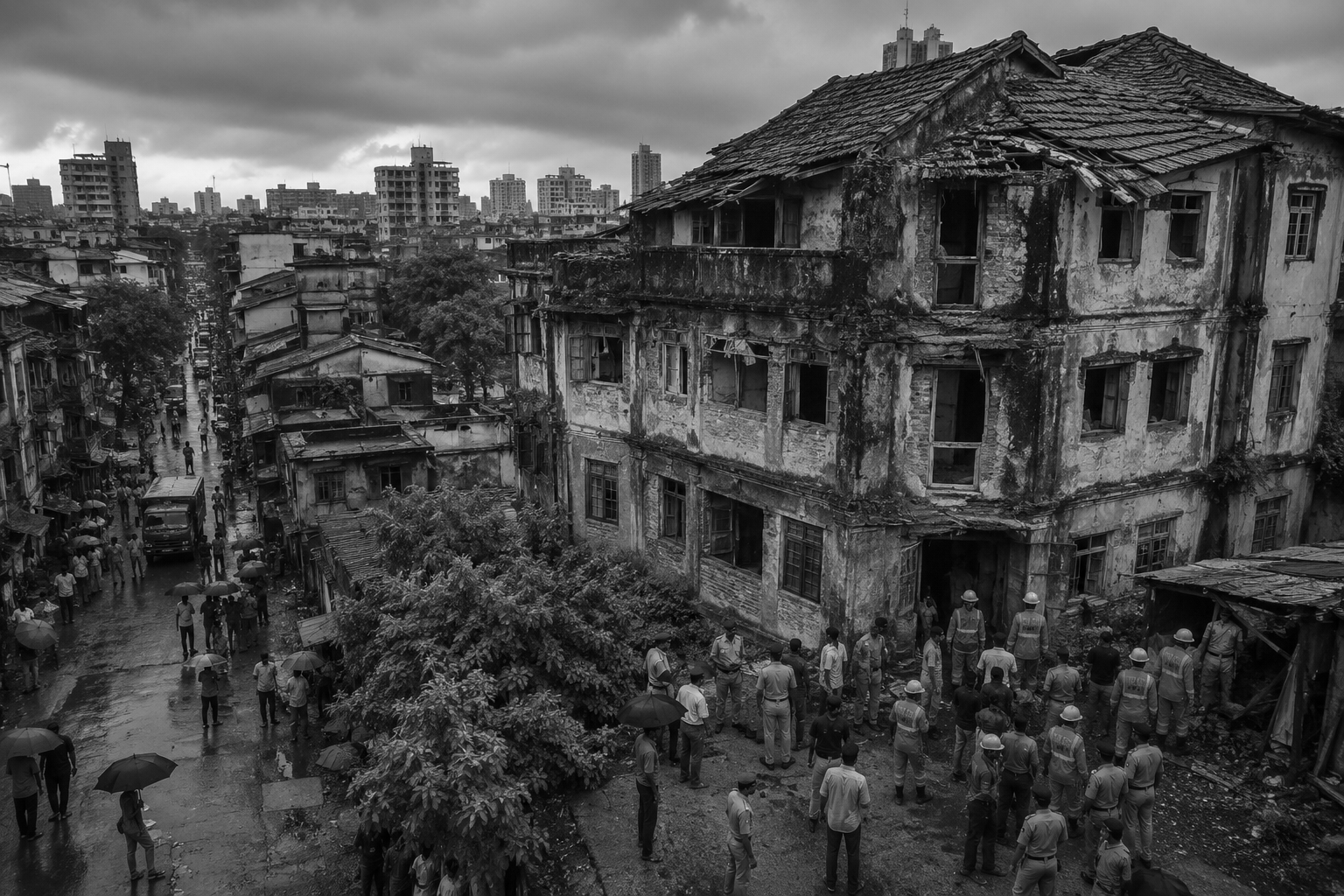
Maharashtra Housing Authority Flags 82 Unsafe Buildings, Begins Pre-Monsoon Relocation
As Mumbai prepares for the monsoon, the Maharashtra Housing and Area Development Authority (MHADA) has identified 82 cessed buildings in the city’s island area as “highly dangerous,” triggering a fresh round of evacuations and drawing attention to India’s recurring urban housing safety crisis. The annual exercise, aimed at preventing building collapses during heavy rains, highlights a larger challenge confronting many Indian cities where ageing structures, delayed redevelopment projects and housing shortages continue to put thousands of lives at risk.
According to MHADA, the buildings house 2,736 occupants , including 2,256 residential and 480 non-residential tenants and residents. The survey, conducted by the authority’s Mumbai Building Repairs and Reconstruction Board , found that 43 of the 82 buildings had already been classified as dangerous last year, underscoring how long-standing structural risks often remain unresolved.
The housing authority said notices have been served to 176 residential occupants directing them to vacate the premises. Of these, 29 tenants have shifted to MHADA transit camps, while 36 residents have arranged accommodation independently. Eviction notices are now being issued to the remaining occupants, and arrangements are being made to accommodate around 2,102 people in transit housing.
The identified structures are located in some of Mumbai’s oldest neighbourhoods, including Girgaum, Kalbadevi, Kamathipura, Khetwadi, Mazgaon, Dadar and Prabhadevi . MHADA has urged residents to cooperate with evacuation efforts and report any signs of structural distress to avoid accidents during the monsoon season.
Urban experts say the situation reflects a broader national problem. Every year, cities such as Mumbai, Kolkata, Ahmedabad, Chennai and Delhi conduct pre-monsoon surveys and identify unsafe buildings. However, many structures continue to remain occupied because residents have limited housing alternatives and redevelopment projects often face delays due to legal disputes, funding constraints and rehabilitation challenges.
The scale of the problem is particularly evident in Mumbai, where a Bombay High Court-appointed committee recently noted that nearly four lakh residents continue to live in more than 12,500 ageing cessed buildings . Many occupants are reluctant to move out due to concerns over displacement, tenancy rights and uncertainty surrounding redevelopment timelines.
Experts also warn that climate change is amplifying the risks. Increasingly intense rainfall events, urban flooding, poor drainage systems and ageing infrastructure are placing additional stress on vulnerable buildings. Several fatal building collapses in recent years have highlighted how structural weaknesses, delayed repairs and weak enforcement of safety norms can turn into tragedies during heavy rains.
While annual surveys and evacuation drives help reduce immediate risks, urban planners argue that long-term solutions are needed. Faster redevelopment, expanded transit housing, stricter structural audits and climate-resilient urban planning are increasingly seen as essential to addressing a crisis that returns with alarming regularity every monsoon season.