
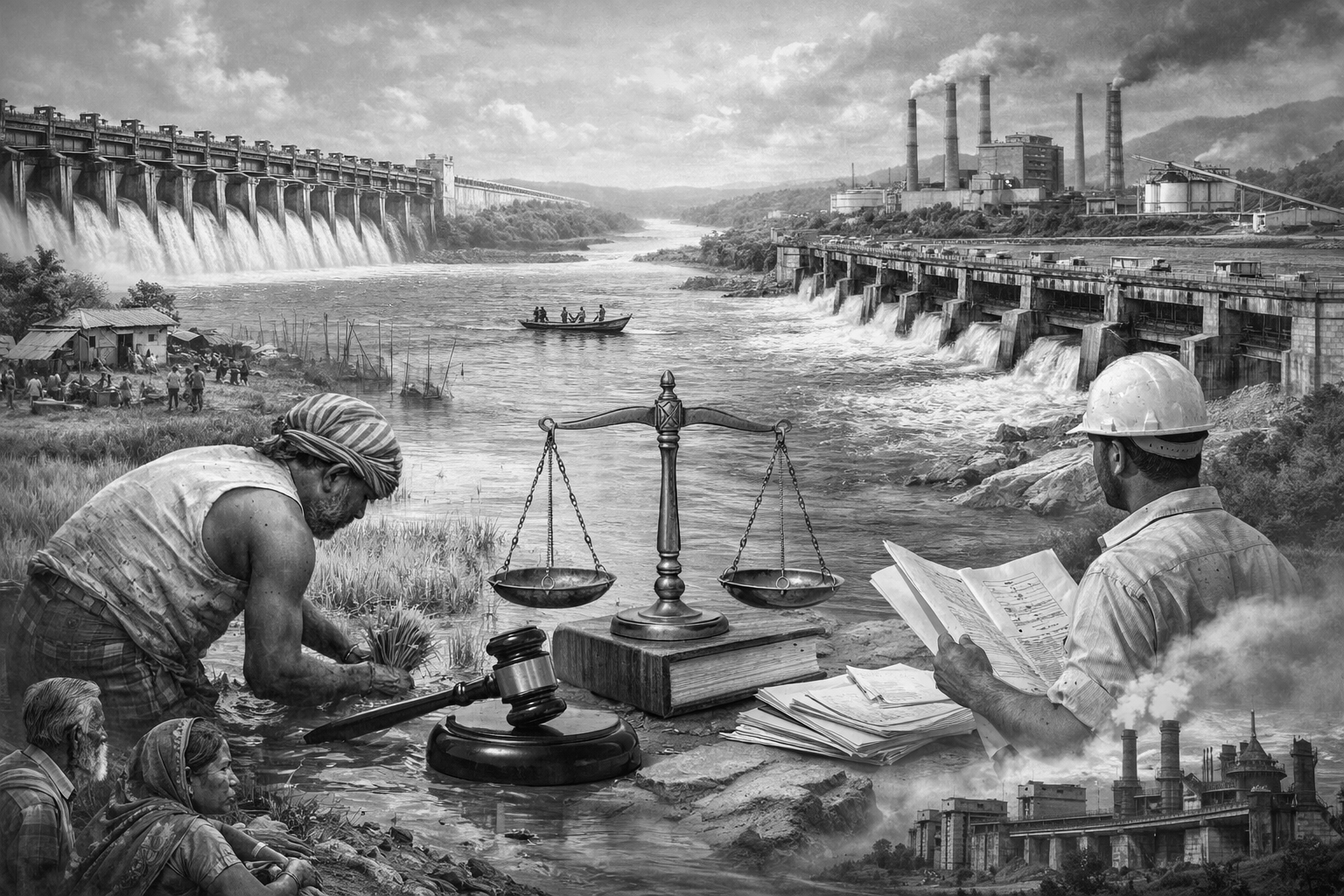
Mahanadi Dispute Enters Final Phase as Tribunal Gets Nine-Month Extension
The Central Government has extended the tenure of the Mahanadi Water Disputes Tribunal (MWDT) by nine months , providing a crucial window to resolve the prolonged interstate water dispute between Odisha and Chhattisgarh . The decision, notified by the Ministry of Jal Shakti , allows the tribunal to continue proceedings until January 2027 , ensuring that the adjudication process does not lapse without a final verdict. The extension comes after a joint request by both states, which pointed to delays caused by the COVID-19 pandemic , procedural setbacks, and the absence of a permanent chairperson for several months.
The conflict revolves around the Mahanadi River , which originates in Chhattisgarh and flows downstream into Odisha before draining into the Bay of Bengal, creating a classic upper riparian and lower riparian dynamic. The dispute intensified around 2016 when Odisha accused Chhattisgarh of constructing multiple barrages, dams, and diversion structures upstream without adequate consultation. According to Odisha, these projects have reduced water flow during the lean season, affecting irrigation systems and the Hirakud reservoir , a lifeline for agriculture and drinking water supply. Chhattisgarh, however, maintains that it is utilising water within its legitimate share for irrigation, industry, and development, highlighting the absence of a formal water-sharing agreement between the two states.
The scale of the issue is immense, with the Mahanadi basin supporting nearly 2.5 crore people in Odisha alone and irrigating around 48 lakh hectares of agricultural land. The dispute directly impacts farmers, fisherfolk, and tribal communities , particularly in downstream regions where agriculture depends heavily on controlled water release. Reduced flows disrupt crop cycles, especially paddy cultivation, and threaten rural incomes, while also affecting drinking water availability and ecological balance. Across hundreds to thousands of villages linked to the basin, even minor fluctuations in water flow can have significant socio-economic consequences.
The tribunal, constituted in 2018 under the Inter-State River Water Disputes Act, 1956 , functions as a quasi-judicial body tasked with determining an equitable sharing formula based on river yield, usage patterns, and basin needs. Over the years, it has conducted hearings, cross-examinations, and field visits across both states, examining technical data on river flow and the impact of upstream infrastructure. However, progress has been slow due to administrative challenges and disruptions, prompting both states to also pursue parallel negotiations aimed at an amicable settlement.
The latest extension is therefore seen as a decisive opportunity to conclude a dispute that has far-reaching implications for water security, agriculture, and regional development. With millions dependent on the river and no agreement yet in place, the coming months will be critical in shaping a balanced resolution and reinforcing the principles of cooperative federalism in managing shared natural resources.