
Maha Shivaratri Significance: The Radiance of Shiva’s Essence
Lord Shiva is the embodiment of the life force that permeates the entire universe. Whether as the Destroyer (Layakara) or the Benevolent One (Bhola Shankar), the entire creation awaits His divine grace. As the sun sets and darkness prevails, the Shiva Lingam emerges as the divine light that awakens the world. To attain fulfillment in human life, one must overcome the six internal enemies ( Arishadvargas ) and merge into the Supreme Soul. In this spiritual journey, 'Maha Shivaratri' serves as a crucial milestone. This sacred festival in 2026 is not merely a celebration but a bridge connecting the individual soul ( Atma ) to the Supreme Soul ( Paramatma ).
Maha Shivaratri 2026
According to the Hindu calendar, Maha Shivaratri falls on Sunday, February 15, 2026 . The Chaturdashi Tithi of the Magha month's dark fortnight ( Krishna Paksha ) begins at 5:05 PM on February 15 and concludes at 5:34 PM on February 16. Since Shivaratri is primarily observed at night, the Nishita Kaala Puja (Midnight Puja) is most fruitful when performed between 11:55 PM and 12:56 AM on the night of the 15th. The ritual is completed by breaking the fast ( Parana ) on the following morning.
Shiva Mahima in Shiva Purana
According to the Shiva Purana, Lord Shiva manifested as the Jyotirlinga on Maha Shivaratri. When a dispute arose between Lord Brahma and Lord Vishnu regarding supremacy, Shiva appeared as an infinite pillar of fire to humble their egos. Unable to find its beginning or end, they sought refuge in Him. That day is celebrated as Shivaratri. It is also believed to be the day of the divine marriage of Shiva and Parvati, and the day Shiva consumed the Halahala poison to save the world during the churning of the ocean.
Fasting (Upavasa): Purification of Body and Mind
Fasting on Maha Shivaratri is not just about abstaining from food. 'Upa' means near, and 'Vasa' means to reside. It signifies "residing near the Divine." Just as fasting is considered a supreme medicine, it lightens the body and focuses the mind. Chanting Shiva's name throughout the day eliminates negative thoughts and enhances Sattva Guna (purity).
Vigil (Jagaran): From Darkness to Light
Staying awake at night ( Jagaran ) is a vital part of Shivaratri. It symbolizes conquering Tamo Guna (lethargy and ignorance) to embrace enlightenment. The prayers and Abhishekams performed during the four quarters ( Yamas ) of the night cleanse the mind of impurities and bestow wisdom.
The Beloved of Abhishekam
The scriptures state, "Alankara Priyo Vishnuh, Abhisheka Priyah Shivah" (Vishnu loves adornment; Shiva loves Abhishekam). Shiva is easily pleased by the pouring of sacred liquids. Offering pure water, milk, curd, honey, ghee, sugarcane juice, and coconut water to the Lord, who bears the Ganga on His head, removes planetary defects and brings mental peace. Abhishekam performed during the Lingodbhava time yields a million-fold merit.
The Sanctity of Bilva Leaves
Nothing equals the Bilva (Bael) leaf in the worship of Shiva. The Bilvashtakam describes it as having three leaves, symbolizing the three Gunas , the three eyes of Shiva, and the Trinity (Brahma, Vishnu, Maheshwara). It is believed that offering even a single Bilva leaf with devotion can destroy the sins of three lifetimes.
The Five Types of Shivaratri
Our tradition identifies five types of Shivaratri:
Nitya Shivaratri:
Daily worship of Shiva.
Paksha Shivaratri:
Worship on the 14th day of every fortnight.
Maasa Shivaratri:
Monthly worship on the 14th day of the dark fortnight.
Maha Shivaratri:
The great annual festival in the month of Magha.
Yoga Shivaratri:
The state where yogis perceive Shiva within their inner consciousness.
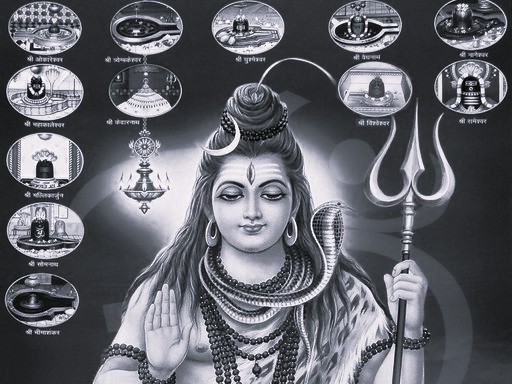
The Twelve Jyotirlingas of India
Visiting a Jyotirlinga on Maha Shivaratri is considered highly auspicious. A Jyotirlinga represents Lord Shiva as a self-manifested pillar of light. Witnessing these during the Lingodbhava time is believed to cleanse sins and grant victory over internal struggles. These twelve centers act as a spiritual shield for India, stretching from Kedarnath in the north to Rameshwaram in the south.
The Dwadasa Jyotirlingas are:
• Somnath (Gujarat)
• Mallikarjuna (Andhra Pradesh)
• Mahakaleshwar (Madhya Pradesh)
• Omkareshwar (Madhya Pradesh)
• Vaidyanath (Jharkhand)
• Bhimashankar (Maharashtra)
• Rameshwaram (Tamil Nadu)
• Nageshwar (Gujarat)
• Kashi Vishwanath (Uttar Pradesh)
• Trimbakeshwar (Maharashtra)
• Kedarnath (Uttarakhand)
• Grishneshwar (Maharashtra)
Science and Social Unity
Cosmic Influence
Scientifically, the planetary positions on this night in the Northern Hemisphere cause a natural upsurge of energy in humans. Keeping the spine erect during Jagaran allows this life force to flow toward the Sahasrara Chakra .
Equality
Shivaratri transcends barriers of wealth, caste, and creed. Everyone is equal in the temple. Whether one performs elaborate rituals or simply offers a pot of water with devotion, Shiva accepts it equally.
Shivoham
Shiva’s essence is auspiciousness and eternity. Let us celebrate this Maha Shivaratri 2026 by purifying our homes and minds. May the Lord remove the darkness of ignorance from our lives and bestow the light of knowledge.