
Maha Saptami Begins as Sacred Rituals Bring Durga Puja to Life
Maha Saptami, one of the most significant days of Durga Puja, is being observed today with traditional rituals, devotional ceremonies and vibrant community celebrations. The day marks the beginning of the main worship of Goddess Durga, bringing devotees together to participate in age-old customs that combine spirituality, nature worship and cultural traditions. From the sacred Nabapatrika ceremony at dawn to evening prayers and celebrations at decorated pandals, Maha Saptami holds a special place in the festival.
The day's most distinctive ceremony is Nabapatrika Snan, a ritual in which nine sacred plants are ceremonially bathed, dressed in traditional attire and carried in a procession to the place of worship. The ceremony reflects the connection between Goddess Durga and nature, highlighting the importance of vegetation, fertility and natural resources in sustaining life.
The Nabapatrika ritual generally takes place early in the morning, before or around sunrise. In Kolkata, priests and devotees traditionally take the plant bundle to a ghat along the Hooghly River for the ceremonial bath. In places without access to a river, a pond or water brought specifically for the ritual may be used. The ceremony is performed with sacred mantras, while dhakis play traditional drums, conch shells sound and women perform ulu, a distinctive celebratory sound associated with Bengali festivities.
The Nabapatrika consists of nine plants traditionally associated with different manifestations of the Goddess. These commonly include banana, colocasia, turmeric, jayanti, bel, pomegranate, ashoka, arum and paddy. The plants are tied together, often with an aparajita creeper and bel fruits, according to local customs. Each plant carries symbolic significance connected with prosperity, fertility, vegetation and the life-sustaining power of nature.
After the ceremonial bath, the Nabapatrika is dressed in a new sari, usually white or cream with a red border. Vermilion may be applied before the bundle is carried back to the Durga Puja pandal or traditional worship hall. In many traditions, an umbrella is held over it during the procession. The dressed plant bundle is popularly known as Kola Bou, meaning the banana bride, because its appearance resembles a veiled bride.
Kola Bou is traditionally placed beside Lord Ganesha, often on his right. This position has given rise to the popular belief that she is Ganesha's wife. However, in the ritual tradition, the Nabapatrika represents the Goddess herself in plant form. The ceremony therefore goes beyond its popular bridal association and highlights the relationship between the divine feminine and the natural world.
Following the installation of the Nabapatrika, the priest performs Prana Pratishtha, invoking the divine presence of Goddess Durga into the consecrated idol. The term refers to the establishment of life or vital presence. Some traditions also include a ritual associated with opening the eyes of the deity. This ceremony marks an important stage in the worship, after which devotees approach the idol as the living presence of the Goddess.
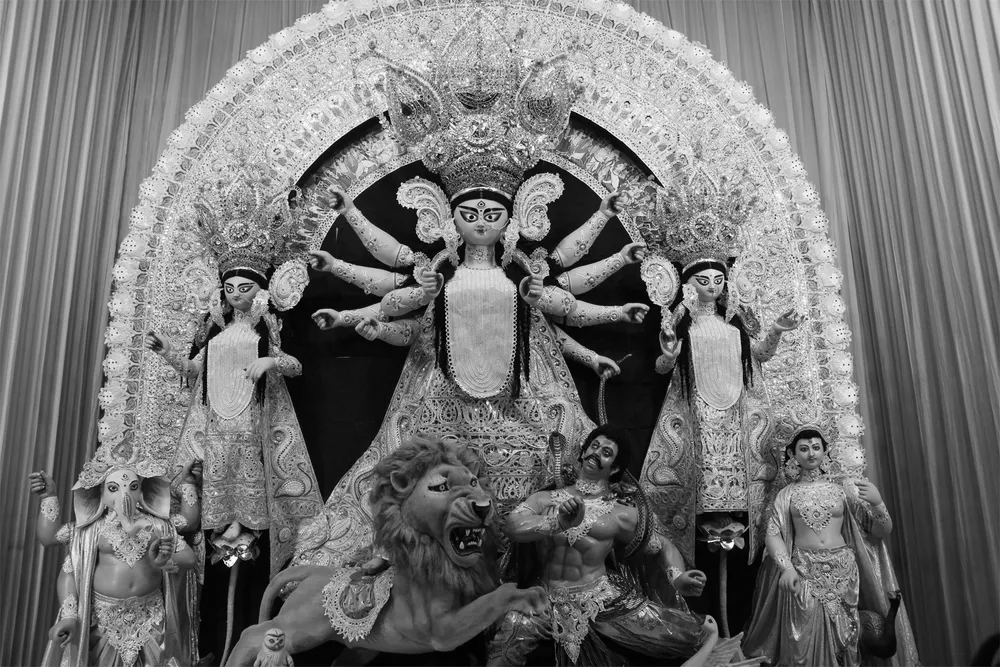
The main Saptami puja follows, with prayers and offerings of flowers, fruits, incense, sweets and other ritual items. Worship may also extend to the other deities represented alongside Durga, including Goddess Lakshmi, Goddess Saraswati, Lord Ganesha and Lord Kartikeya. The lion associated with Durga and the demon Mahishasura, against whom she battles, also form part of the traditional tableau. The exact sequence of ceremonies varies according to regional calendars, family customs and the traditions followed by individual puja committees.
Food offerings form another important part of Maha Saptami. Special bhog is prepared and offered to the Goddess before being distributed among devotees as prasad. Evening worship features sandhya aarti, performed with lamps and incense and accompanied by conch shells and traditional drums. Some pandals also organise dhunuchi naach, a devotional dance performed with incense burners, adding to the festive atmosphere.
Maha Saptami is equally important for families conducting Durga Puja at home. Household members prepare fruits, sweets, rice and other offerings, arranging them in the prayer room, commonly known as the thakur ghar. Some families prepare naibedya, consisting of uncooked rice, fruits and sweets, alongside cooked bhog. Many households follow vegetarian food customs during the principal days of the festival, although practices differ across communities and family traditions.
The festival also signals the beginning of more intensive social and cultural celebrations. Families wear new clothes, visit relatives and begin exploring decorated pandals in greater numbers. For many Bengalis, these visits are an essential part of Durga Puja, combining religious devotion with family gatherings, artistic displays and community celebrations.
Kolkata remains a major centre of Durga Puja, where historic family worship traditions coexist with elaborate community pandals. Riverfront ghats and procession routes become active during the morning Nabapatrika ceremony. Historic family pujas such as Sovabazar Rajbari, along with community celebrations in areas including Bagbazar and Ahiritola, offer opportunities to witness traditional worship and the city's religious heritage.
Visitors attending the ceremonies are encouraged to maintain a respectful distance, follow organisers' instructions and seek permission before taking close-up photographs. Morning and afternoon visits may be more comfortable for those wishing to avoid the larger crowds that generally gather at night. As the celebrations progress, pandals become important gathering places for residents and visitors, with devotional activities and cultural programmes continuing throughout the festival.
Beyond its religious ceremonies, Maha Saptami carries a broader message about the relationship between humanity and nature. The worship of nine plants reflects the importance of vegetation and agricultural resources, while the invocation of Goddess Durga represents divine power, protection and the removal of evil. The festival also reinforces community bonds by bringing together families, devotees and visitors through shared customs and celebrations.
The wider Durga Puja tradition celebrates the triumph of good over evil, recalling Goddess Durga's battle against Mahishasura. Maha Saptami follows Shashthi, associated with welcoming and awakening the Goddess, and leads into Maha Ashtami, which features important observances such as Pushpanjali and Sandhi Puja. The celebrations continue through the remaining days, culminating in Vijayadashami.
As devotees participate in the dawn rituals, offer prayers and gather at decorated pandals, Maha Saptami brings together faith, family traditions and cultural identity. Through the Nabapatrika ceremony, Prana Pratishtha and evening celebrations, the day marks a central moment in Durga Puja, honouring Goddess Durga and the enduring traditions associated with her worship.