
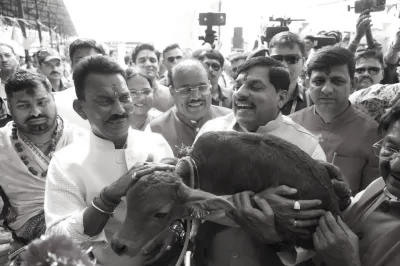
Madhya Pradesh renames veterinary department to Gaupalan Pashupalan
The Madhya Pradesh Government has renamed its veterinary department as the “Gaupalan and Pashupalan Department,” signalling an increased administrative emphasis on cow protection. The decision was taken at a cabinet meeting chaired by Chief Minister Mohan Yadav.
The department, previously known as the Pashupalan and Dairy Vikas Department, will now function under the revised nomenclature, while the Directorate of Pashupalan and Dairy has been renamed as the Directorate of Gaupalan and Pashupalan. The cabinet also approved amendments to the Madhya Pradesh Work (Allocation) Rules to formalise the change.
Alongside this decision, the cabinet cleared several proposals, including ₹4,525 crore for public works, a ₹40 per quintal bonus for wheat procurement for the 2026–27 Rabi marketing season, ₹945.20 crore for elevated corridor projects in Ujjain, and ₹228.42 crore for a micro-irrigation project in Rewa district.
The renaming comes amid a broader national context where cow protection has gained policy visibility in several states. India has an estimated cattle population exceeding 300 million, making it one of the largest in the world and a key contributor to the country’s dairy sector. At the same time, cow slaughter remains prohibited or restricted in most states, though permitted under regulation in some regions, with official estimates indicating that millions of cattle, largely buffaloes and other categories, are processed annually.
Experts and stakeholders have pointed to structural challenges in the livestock sector, including the management of stray and unproductive cattle, rising maintenance costs for farmers, and capacity constraints in shelters. In several regions, farmers have flagged economic pressures linked to maintaining ageing livestock, while gaushalas have reported funding and infrastructure gaps.
The policy focus has also found reflection in popular culture, with films such as Godaan highlighting themes of cow conservation and receiving support measures like tax exemptions in some states.
While the Madhya Pradesh government’s decision underscores a prioritisation of cow-related initiatives within administrative frameworks, it has also drawn attention to the need for addressing wider livestock management issues, including productivity, farmer support systems, and long-term sustainability of the sector.