
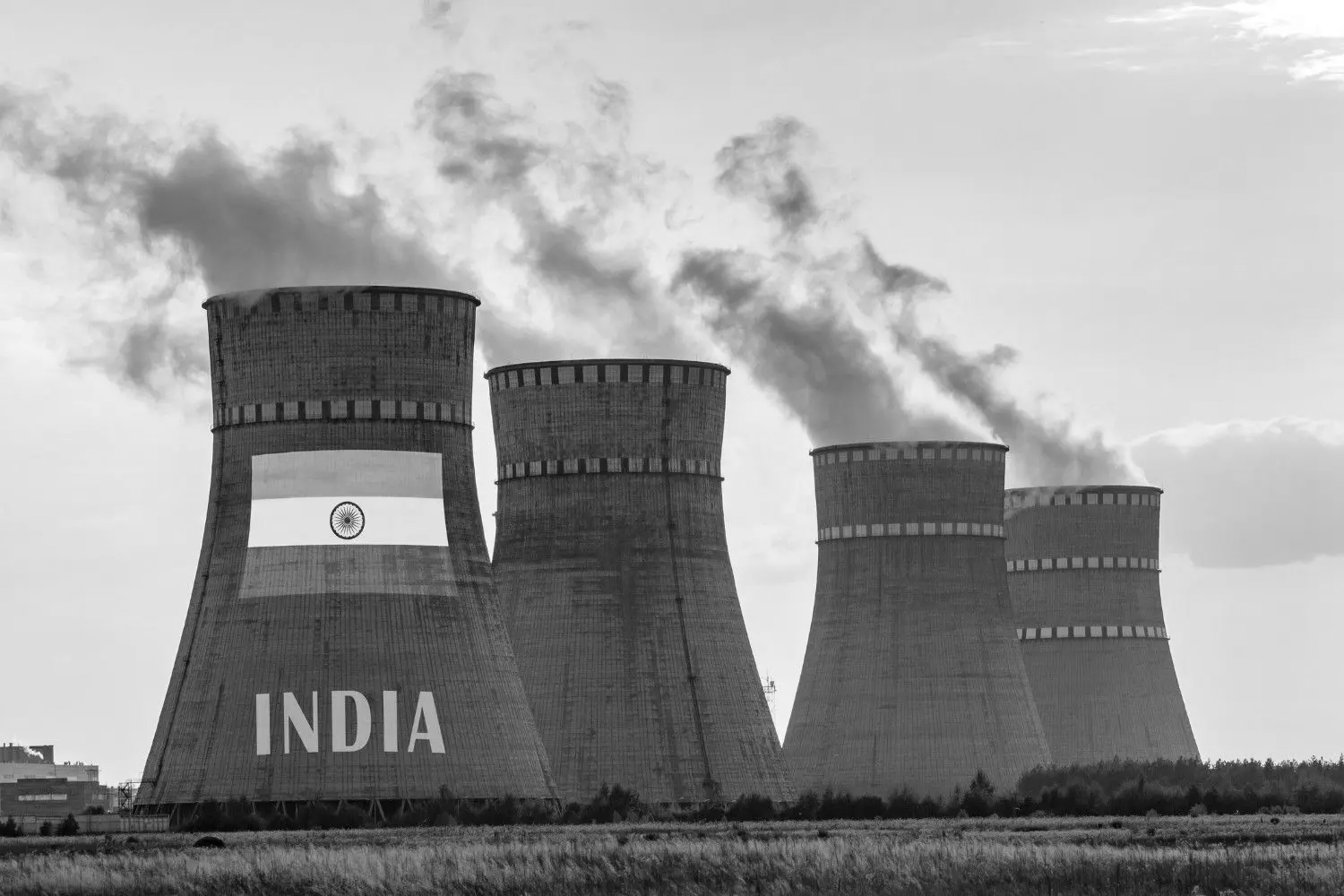
Made in India Nuclear Reactors? US Delegation Says Yes, Possible Soon After SHANTI Act
A senior US nuclear industry delegation visiting India has said that the recently enacted SHANTI Act, 2025 has opened a significant new pathway for India-United States cooperation in the civil nuclear energy sector , including potential collaboration on building nuclear reactors in India .
The delegation, part of the US Executive Nuclear Mission to India , is jointly led by the Nuclear Energy Institute (NEI) and the US India Strategic Partnership Forum (USISPF) and includes representatives from across the American nuclear value chain , including reactor developers and technology firms. The visit comes as both countries seek to expand cooperation in clean energy and advanced technologies.
Speaking to PTI, Maria Korsnick , president and CEO of NEI, said the SHANTI Act has created a more enabling framework for industry level engagement between the two sides. She said US companies are actively looking at partnerships with India across a wide range of reactor technologies, including large conventional plants as well as small modular reactors (SMRs) and advanced systems such as high temperature gas reactors and molten salt reactors .
The SHANTI Act , formally known as the Sustainable Harnessing and Advancement of Nuclear Energy for Transforming India Act, was enacted in 2025 as part of India’s effort to modernise its nuclear energy framework. It aims to streamline regulations, encourage private participation, and address long standing concerns around nuclear liability and investment risk that have previously slowed foreign participation in India’s nuclear sector.
India-US civil nuclear cooperation has been a major pillar of bilateral relations since the landmark 2008 civil nuclear agreement , which enabled nuclear commerce after decades of restrictions. The agreement, supported by the India-US 123 Agreement , allowed India access to global nuclear fuel and technology while placing its civilian reactors under international safeguards.
However, commercial reactor projects have remained limited due to differences over liability regimes and regulatory challenges, which discouraged large scale US industry entry into the Indian market.
The SHANTI Act is now being viewed as an attempt to address some of these barriers by creating a more investment friendly and predictable framework for nuclear expansion. It also aligns with India’s long term energy strategy to significantly scale up nuclear capacity as part of its clean energy transition .
During the visit, the delegation held meetings with Union ministers Manohar Lal Khattar and Jitendra Singh , discussing expanded cooperation in clean energy and critical technologies . Korsnick said the US nuclear sector now offers a wider range of reactor designs, giving India greater flexibility in choosing suitable options.
She added that while engagement efforts began nearly two decades ago, the current policy and technological environment marks what she called a new phase in India-US nuclear partnership , with stronger industry confidence and broader opportunities for collaboration.