
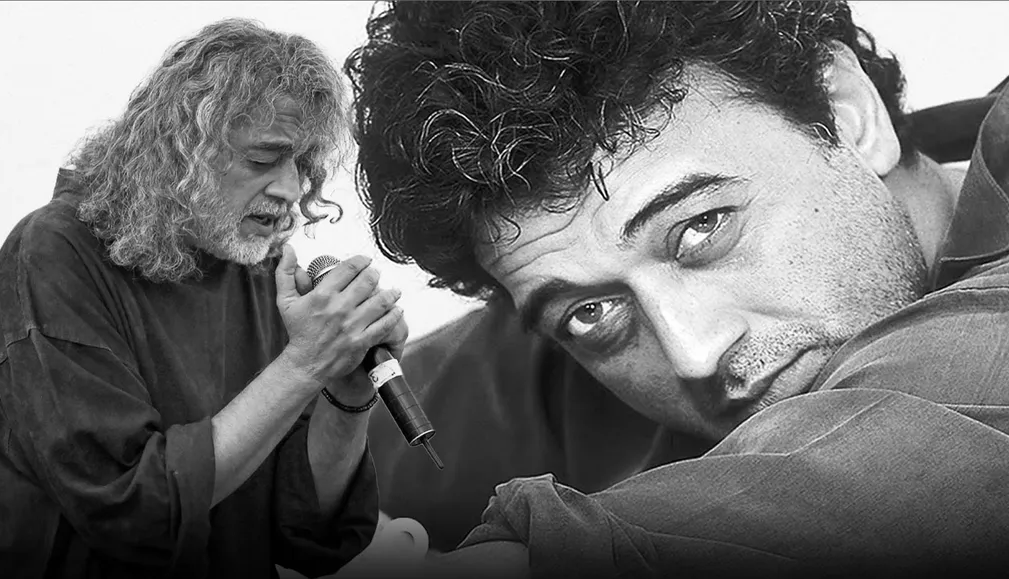
Lucky Ali marks 30 years in music, returns with heartfelt new song
Lucky Ali, the iconic singer‑songwriter whose voice has sound‑tracked decades of love, longing, and introspection, marks three remarkable decades in the music industry with humility and a new single, Tu Jaane Hai Kahan . Known for classics like Gori Teri Aankhein Kahen , Teri Yaad Jab Aati Hai , O Sanam , Ek Pal Ka Jeena , and Na Tum Jaano Na Hum , Ali reflects on a career that felt more like a calling than a conquest.
“I feel grateful to the Almighty that I’ve had this opportunity and the response I’ve received continuously over all these decades,” Ali said “I don’t think I deserve this. I feel it’s a gift , and I respect it. I’ve not abused my career in any way. It’s the greatness of the people who give you that love.”
Ali’s journey to musical immortality was anything but straightforward. Born Maqsood Mehmood Ali on September 19, 1958, into one of Bollywood’s most famous families, he grew up less as a protege and more as a wanderer searching for meaning. He spent parts of his youth on farms learning animal husbandry and horse breeding, and drifted through odd jobs - from selling carpets to working on an offshore oil rig - before discovering that music was the language that spoke to his soul.
For fans of Indian pop, Ali’s 1996 debut album Sunoh was seismic. Released when India’s pop scene was dominated by synth-pop and dance beats, Sunoh introduced a fresh acoustic sensibility. Its breakout track O Sanam stayed on the MTV Asia charts for more than a year and became one of the most enduring Indian pop songs of the era.
Even though he was the son of legendary actor and comedian Mehmood Ali , Lucky’s relationship with Bollywood was complicated. His father encouraged him to act and perform in films, and Ali appeared in movies such as Kaante and Sur – The Melody of Life in the early 2000s. Yet he later admitted that much of his film work was done partly to satisfy his father’s wishes, and that the film world often made him uncomfortable.
Musically, he bridged the gap between pop and film with memorable playback tracks. His work on Kaho Naa… Pyaar Hai — including Ek Pal Ka Jeena and Na Tum Jaano Na Hum — won mass appeal and critical recognition, earning him the Filmfare Award for Best Male Playback Singer.
Despite commercial success, Ali never saw music as a game of fame and charts. “Music isn’t something you do to impress,” he once said. “It’s a means of communication … it’s a language.” Whether in soulful albums like Sifar and Aks , or in soundtrack gems like Safarnama , Ali’s music resonated because it stayed true to his introspective heart.
His relationship with the film industry eventually cooled; around 2015, Ali stepped back from Bollywood citing a lack of inspiration and the growing rudeness he perceived in its culture.
Beyond music and films, Ali’s life has been shaped by travel, introspection, and personal relationships, including three marriages, which influenced his understanding of love and identity. With Tu Jaane Hai Kahan , he returns to soulful storytelling, emotional depth, and an intimate voice. “Whatever you hold inside eventually finds its way into a song. It’s a kind of relief,” he says. Three decades after Sunoh , Lucky Ali continues to inspire as a nomad who found his place in music and in the hearts of listeners.