
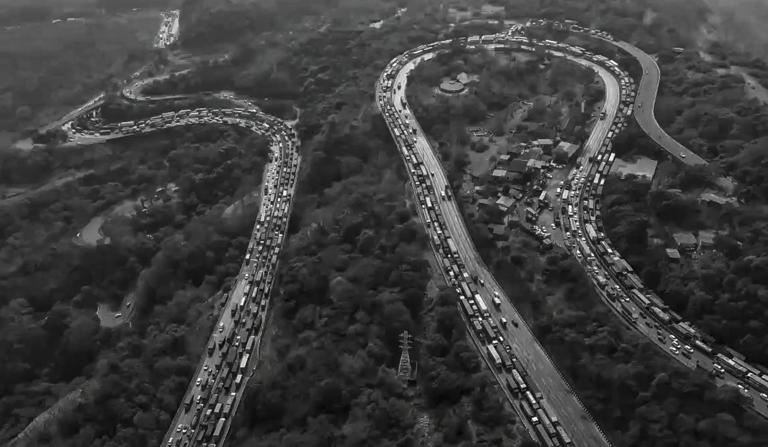
Long-term measures needed to avoid traffic jams on Mumbai–Pune Expressway, says minister
As a massive traffic snarl on the Mumbai–Pune Expressway continued for over 30 hours on Wednesday night, Maharashtra Minister of State for Public Works Department (PWD) Indranil Naik said long-term measures were required to prevent a recurrence of such incidents.
Traffic on the busy expressway came to a complete standstill after a gas tanker carrying propylene overturned near the Adoshi tunnel at around 5 pm on Tuesday, triggering safety concerns and forcing authorities to halt vehicular movement. Thousands of vehicles were stranded, causing severe inconvenience to commuters and significant losses to the transport industry.
Speaking to a Marathi news channel, Naik said he was in constant touch with senior officials, including the Home and PWD secretaries, to ensure that the traffic situation was brought under control at the earliest. He added that a probe would be conducted into the accident and stressed the need for long-term steps to ensure that such prolonged traffic disruptions do not occur again.
While the minister did not elaborate on the measures being considered, experts and transport sector representatives have pointed to the need for structural and systemic upgrades on the expressway. These include setting up dedicated emergency response infrastructure, such as permanent hazardous-material response units at critical locations, especially near tunnels, and stationing specialised equipment like gas detectors, foam tenders and heavy-duty cranes at regular intervals.
The incident has also highlighted the need for better alternate route planning, including the development of parallel service roads or emergency bypass lanes and clearly marked diversion corridors that can be activated immediately during emergencies.
Upgrading tunnel safety systems is another key area, with experts calling for advanced gas detection sensors, improved ventilation mechanisms and integrated control rooms capable of quickly assessing risks and allowing partial traffic movement where feasible.
Better coordination among multiple agencies, including traffic police, PWD, fire services and disaster management authorities, through a single integrated command system and clearly defined standard operating procedures for accidents involving hazardous cargo, has also been flagged as essential.
Meanwhile, Bal Malkit Singh, advisor and former president of the All India Motor Transport Congress (AIMTC), said the incident had once again exposed the lack of preparedness of authorities to deal with highway emergencies. In a release, he said the prolonged traffic jam caused massive financial losses to the transport sector and severe hardship to commuters.
Despite paying heavy tolls and multiple taxes, the transport fraternity continues to suffer due to inadequate infrastructure and poor emergency response mechanisms, Singh added.