
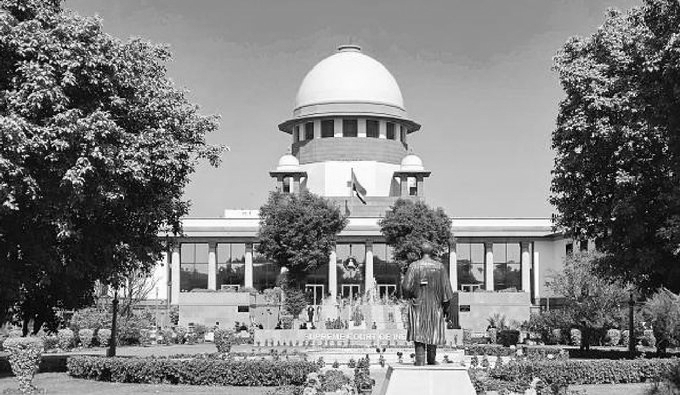
Lok Sabha Introduces Bill to Increase Supreme Court Judge Strength to 38
The Lok Sabha on Monday witnessed the introduction of a bill to replace an ordinance that increased the sanctioned strength of the Supreme Court from 34 to 38 judges, with the government asserting that expanding the bench is among the most effective measures to address the growing pendency of cases in the country's highest court.
Union Law Minister Arjun Ram Meghwal introduced the legislation amid slogan-shouting by Opposition members over the NEET paper leak and the alleged theft of donations meant for the Ram temple.
The move follows the Union Cabinet's approval of the proposal in May. However, before Parliament could consider the legislation, the government promulgated an ordinance, enabling the appointment of five additional judges to the apex court under the revised sanctioned strength.
The bill states that the rising volume of litigation has created a persistent gap between the institution and disposal of cases, placing increasing pressure on the Supreme Court. As of January 1, the apex court had 92,101 pending cases.
According to the government, the Supreme Court, despite functioning at nearly its full sanctioned strength of 34 judges since 2019, received 75,410 fresh cases in 2025 while disposing of 65,615 matters, resulting in a continued accumulation of pending cases. The bill notes that this has particularly affected the disposal of older matters and cases requiring adjudication by larger Constitution Benches.
The government maintained that enhancing the court's judge strength would not only help reduce the backlog but also enable the Chief Justice of India to constitute Constitution Benches more regularly for cases involving substantial questions of law.
The proposed legislation does not require a constitutional amendment and can be passed with a simple majority in Parliament.
Meanwhile, Opposition members have moved a Statutory Resolution opposing the ordinance. Under parliamentary procedure, an ordinance must be approved by Parliament within six weeks of the commencement of a session, failing which it ceases to operate.