
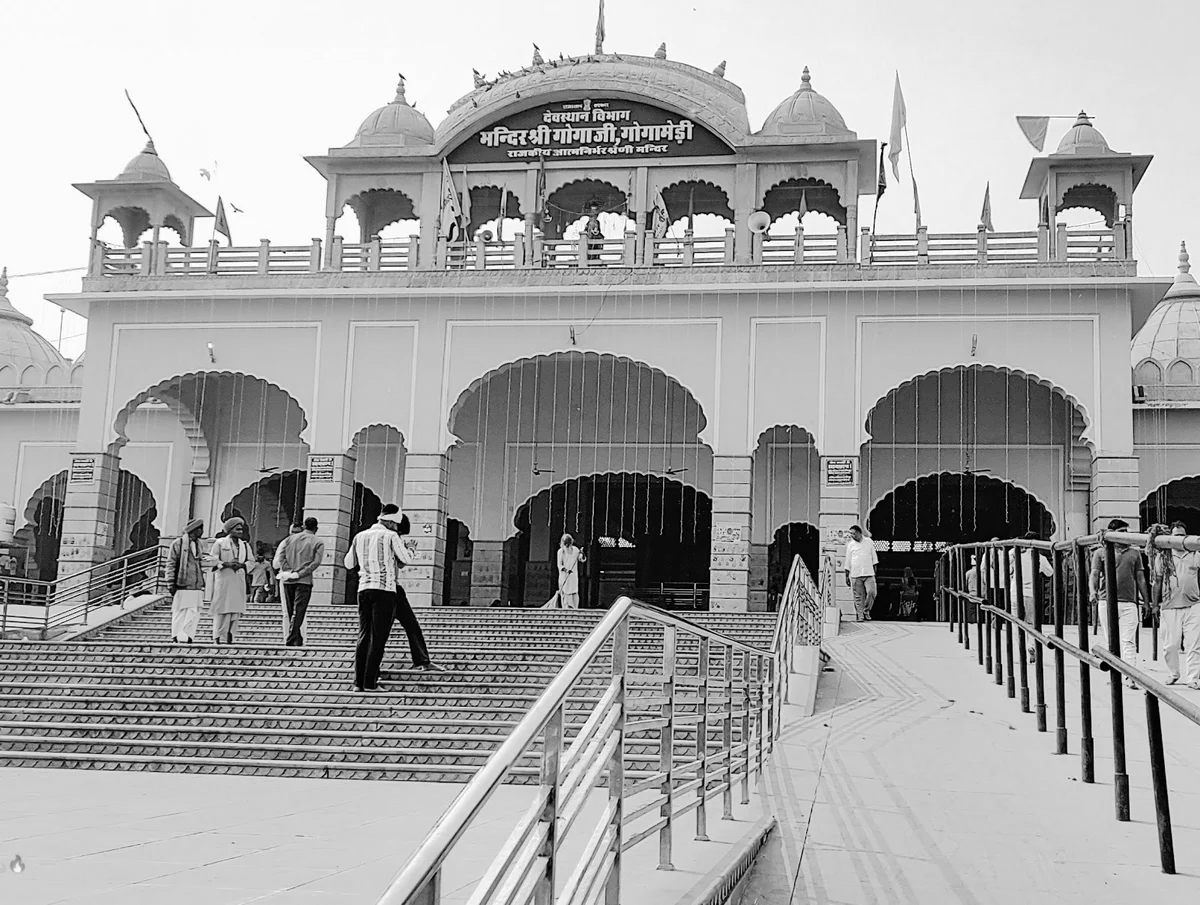
Locals defend historic Hindu-Muslim rituals at Gogaji temple amid online uproar
A centuries-old tradition of shared Hindu-Muslim worship at the Gogaji temple in Rajasthan’s Hanumangarh district has come under scrutiny following a social media controversy that has sparked debate over the shrine’s syncretic heritage. The dispute erupted after a video circulated online in which a local activist, identified as Sharma , called for the temple to be made “Muslim-free,” alleging that Muslims were performing meat and fish offerings at the site and branding the practice as desecration. The clip quickly gained traction on social media, drawing support from some users while also provoking strong opposition from local residents and devotees who said the allegations distorted the temple’s long-established customs.
Locals and historians pointed out that the Gogaji temple has for centuries been a shared space of devotion for both Hindus and Muslims, centred on Gogaji, also known as Jaharveer Gogaji , a folk deity revered across Rajasthan, Haryana and parts of western Uttar Pradesh . Gogaji is remembered as a warrior-saint and protector of cattle and the poor, and over time his shrine evolved into a place where religious boundaries blended rather than hardened. Muslim priests from the Chayal caste have traditionally served at the temple alongside Hindu caretakers, and rituals include both Hindu-style puja and the recitation of the Kalma, reflecting a unique form of joint worship rooted in local culture.
The temple’s architecture and practices mirror this shared legacy, combining elements associated with both Hindu and Islamic traditions. Annual fairs and pilgrimages draw thousands of devotees from different communities, many of whom seek blessings for protection from snakebites and for healing, a belief closely linked with Gogaji’s folk legend. Songs and ballads about the deity are sung in both Hindu and Muslim households, reinforcing the shrine’s role as a symbol of composite culture rather than sectarian identity.
Following the circulation of the video, other footage emerged showing villagers, including Hindus, defending the shrine’s syncretic rituals and rejecting calls to alter them. Several residents accused Sharma of attempting to provoke communal tension for online attention and political mileage. “This temple has always stood for harmony and shared faith. Turning it into a point of conflict goes against its very history,” said a member of the local temple committee.
Despite the controversy on social media, daily worship at the temple has continued uninterrupted, with devotees from all backgrounds visiting the shrine as they have for generations. Authorities have not yet issued any official statement on the matter. Observers note that the episode underscores how quickly digital platforms can amplify sensitive religious disputes, even at sites historically known for coexistence. Many locals have appealed for calm and respect for the temple’s centuries-old traditions, stressing that the Gogaji shrine has long been a living example of Hindu-Muslim unity in the region.