
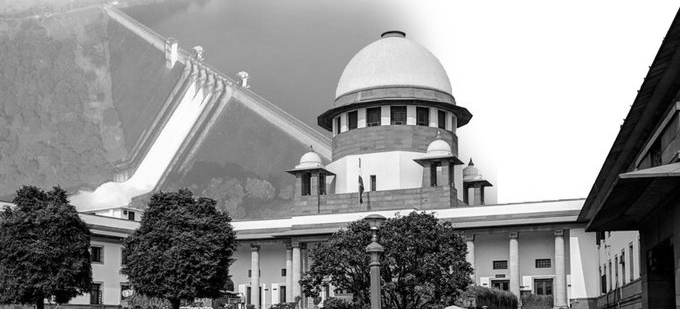
Lives at Stake: SC Intervenes in Mullaperiyar Dam Dispute
The Supreme Court on Monday issued notices to the Centre, Kerala and Tamil Nadu governments, and the National Disaster Management Authority (NDMA) on a Public Interest Litigation (PIL) seeking construction of a new dam to replace the 130-year-old Mullaperiyar dam.
A bench headed by Chief Justice B R. Gavai and Justice K Vinod Chandran was hearing the petition filed by the Save Kerala Brigade, which highlighted that over 10 million people live downstream of the dam in Kerala’s Idukki district.
“Some directions may be needed for strengthening the existing dam,” the Chief Justice observed, suggesting that an expert body evaluate both the safety of the current structure and the feasibility of constructing a new dam.
Historical and Technical Context
The Mullaperiyar dam, built in 1895 across the Periyar River, is physically located in Kerala but is operated by Tamil Nadu under a 999-year lease signed during the British colonial period. Tamil Nadu relies on the dam for irrigation and drinking water in several southern districts, including Coimbatore and Dindigul, while Kerala owns the land and bears the downstream risk.
Kerala has repeatedly raised concerns about the dam’s age, structural integrity, and vulnerability to seismic activity, while Tamil Nadu insists that regular maintenance and monitoring ensure the dam’s safety.
The Human and Environmental Stakes
Experts warn that a potential dam failure could lead to catastrophic flooding, endangering over 10 million people in downstream towns and villages in Kerala. Beyond human casualties, such a disaster would devastate property, agriculture, and the region’s ecology.
“The aging dam poses a serious threat to lives and property,” senior advocate V Giri, representing the petitioner, told the court, urging that a new dam be constructed to ensure public safety.
Political and Inter-State Dimensions
The dispute is not just technical but deeply political. Kerala argues that the dam is a ticking time bomb and that the lease arrangement leaves it vulnerable to risk. Tamil Nadu, on the other hand, stresses the dam’s critical role in water security and fears that construction of a new dam or reduction of water levels could impact millions of farmers and residents.
Past efforts to resolve the issue have stalled due to: The legal binding of the colonial-era lease granting TN operational control, political sensitivities affecting both state governments and repeated court battles over decades resulting in interim orders but no permanent solution.
Way Forward
The Supreme Court notice signals a potential turning point. By involving the Centre and NDMA alongside both states, the court appears poised to consider a comprehensive safety assessment, which could recommend either strengthening the existing dam or constructing a new one.
With millions at risk and Tamil Nadu’s water needs hanging in the balance, the decision will have wide-ranging implications for safety, governance, and inter-state water sharing.