
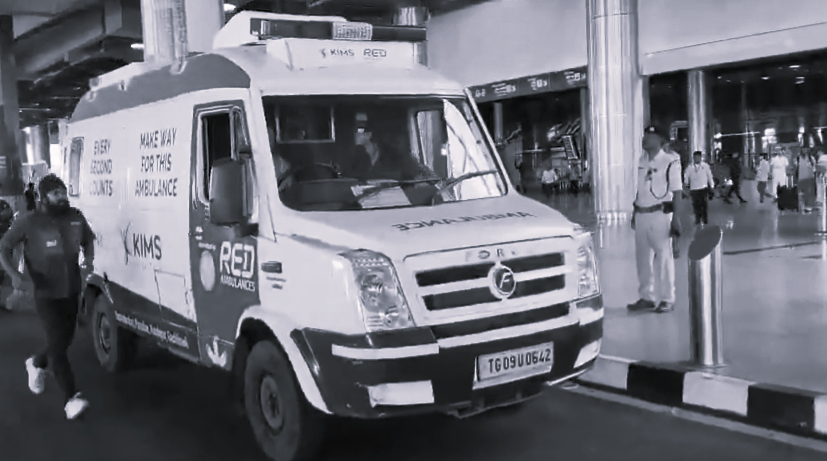
Lifeline on Wheels: Hyderabad Traffic Police Ensure Swift Organ Transport
Hyderabad Traffic Police on Monday created a special green corridor to transport donor lungs from Rajiv Gandhi International Airport to KIMS Hospital , enabling a critical transplant procedure and offering a patient a renewed chance at life.
The lungs, harvested in Bengaluru, were flown into the city and immediately transferred to a waiting ambulance at the airport. Given the extreme time sensitivity associated with lung transplants, authorities initiated a high-priority traffic operation to ensure the organ reached the hospital without delay.
To facilitate this, traffic police established a dedicated, signal-free route across key junctions in the city. Signals were manually regulated, traffic congestion was cleared in advance, and personnel were deployed strategically along the route to ensure uninterrupted passage of the ambulance.
Unlike a fixed-location system, Hyderabad’s green corridor mechanism operates through a dynamic, city-wide coordination network. At the centre of this system is the Traffic Command and Control Center, which plays a pivotal role in monitoring real-time traffic, mapping the fastest route, and synchronising field-level execution.The operation also highlights how multiple nodes function together rather than a single hub. While the airport often acts as the origin point for organs arriving from other cities, major transplant hospitals such as Apollo Hospitals Jubilee Hills and Yashoda Hospitals Secunderabad serve as critical endpoints depending on the recipient’s location.
With pilot vehicles escorting the ambulance and traffic cleared end-to-end, the lungs were transported in record time, significantly improving the chances of a successful transplant. Such swift execution underscores the importance of coordinated planning, rapid decision-making, and public cooperation during medical emergencies.
A green corridor is a specially designated, traffic-free route created to enable the swift transportation of organs. Gven that lungs and hearts have a narrow preservation window, often limited to just a few hours, these corridors play a crucial role in bridging distances within critical timelines.
Over the years, Hyderabad has witnessed numerous such operations, reflecting growing awareness around organ donation and increasing institutional efficiency. As urban traffic continues to pose challenges, such coordinated interventions are becoming an essential component of emergency healthcare delivery.
This latest effort once again demonstrates how timely intervention, technology-driven monitoring, and seamless coordination can come together to save lives when every second counts.