
Lebanon, Israel Take First Step With Direct Talks After Decades of Silence
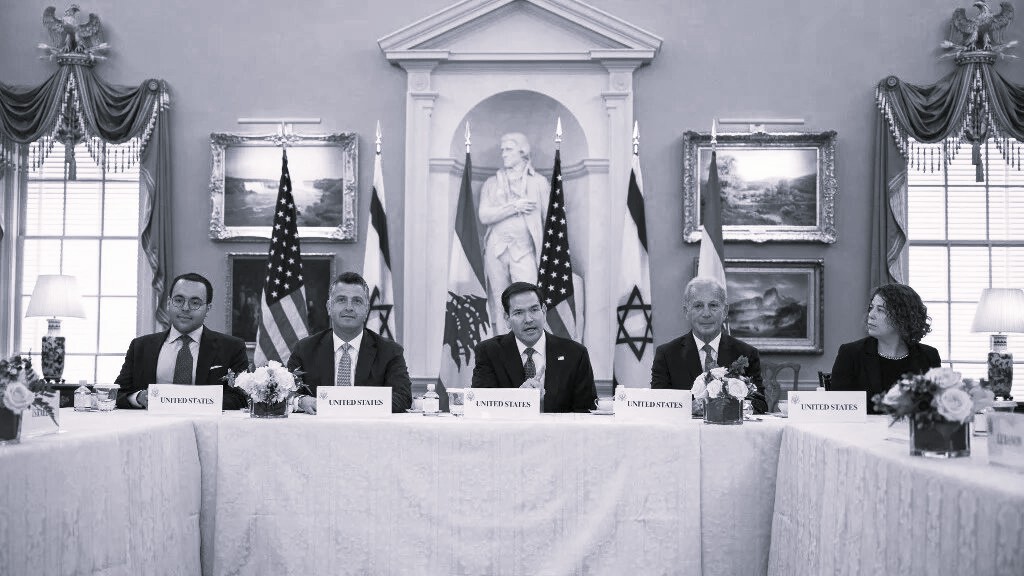
In a significant diplomatic development, Israel and Lebanon have held their first direct talks in more than three decades in Washington, marking a cautious step toward de-escalation even as conflict continues along their shared border. The US-brokered meeting, led by Secretary of State Marco Rubio, has been described as a “historic opportunity,” though officials made it clear that no immediate breakthrough is expected.
A key highlight of the talks was the complete absence of Hezbollah, the Iran-backed militant group that has been at the centre of the ongoing conflict. The United States emphasised that any agreement to end hostilities must be strictly between governments , rejecting parallel or indirect tracks involving armed non-state actors .
The exclusion of Hezbollah reflects a notable shift in Lebanon’s official position. Lebanese representatives, led by Ambassador Nada Hamadeh Moawad, used the platform to underscore state sovereignty , territorial integrity , and the authority of the Lebanese government over all armed activity within its borders. This signals an increasingly firm stance against Hezbollah’s independent military role, especially following internal criticism within Lebanon over the group’s decision to escalate tensions with Israel.
Lebanon also pressed for an immediate ceasefire , the return of displaced civilians , and urgent humanitarian relief , as the conflict has resulted in widespread destruction and displacement. Officials reiterated that diplomatic engagement not militia-led escalation remains the only viable path forward.
Israeli Ambassador Yechiel Leiter welcomed what he described as a “constructive exchange,” pointing to a possible convergence of views on reducing Hezbollah’s influence in Lebanon. Israel has consistently maintained that its conflict is not with the Lebanese state, but with Hezbollah, which it accuses of regional destabilisation .
However, the ground situation remains highly volatile . Even as talks were underway, Hezbollah intensified rocket and drone attacks on northern Israel, clearly signalling its rejection of the diplomatic process. Senior Hezbollah figures have stated they will not be bound by any outcomes of the Washington discussions.
Lebanon’s leadership, including President Joseph Aoun, has increasingly called for bringing all weapons under state control , aligning with broader efforts to reinforce government authority . The current approach reflects growing political pressure to distance national policy from Hezbollah’s military decisions, which many officials blame for triggering the latest escalation.
Despite the diplomatic engagement, major differences persist. While Lebanon is focused on an immediate cessation of hostilities , Israel continues to prioritise long-term security guarantees and the dismantling of Hezbollah’s military capabilities.
This marks the first direct engagement since 1993, ending decades of indirect communication. While expectations remain modest, the talks represent a rare diplomatic opening in a conflict long defined by hostility and proxy warfare.
For now, the absence of Hezbollah at the negotiating table underscores both an opportunity and a challenge highlighting Lebanon’s attempt to assert state control, even as the group continues to wield significant influence on the ground.