
Lashkar Bonalu: The Sacred Promise That Shaped Telangana's Grandest Festival
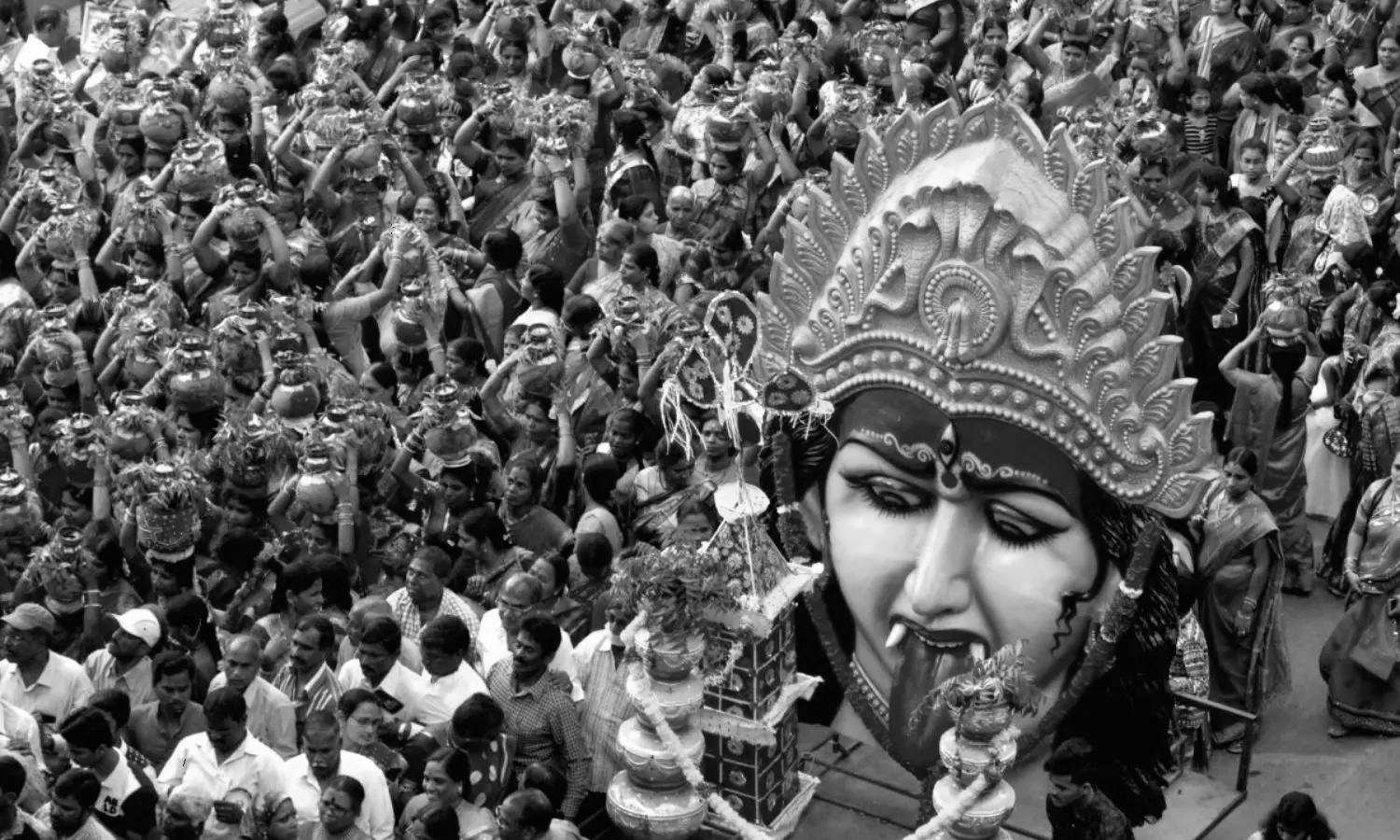
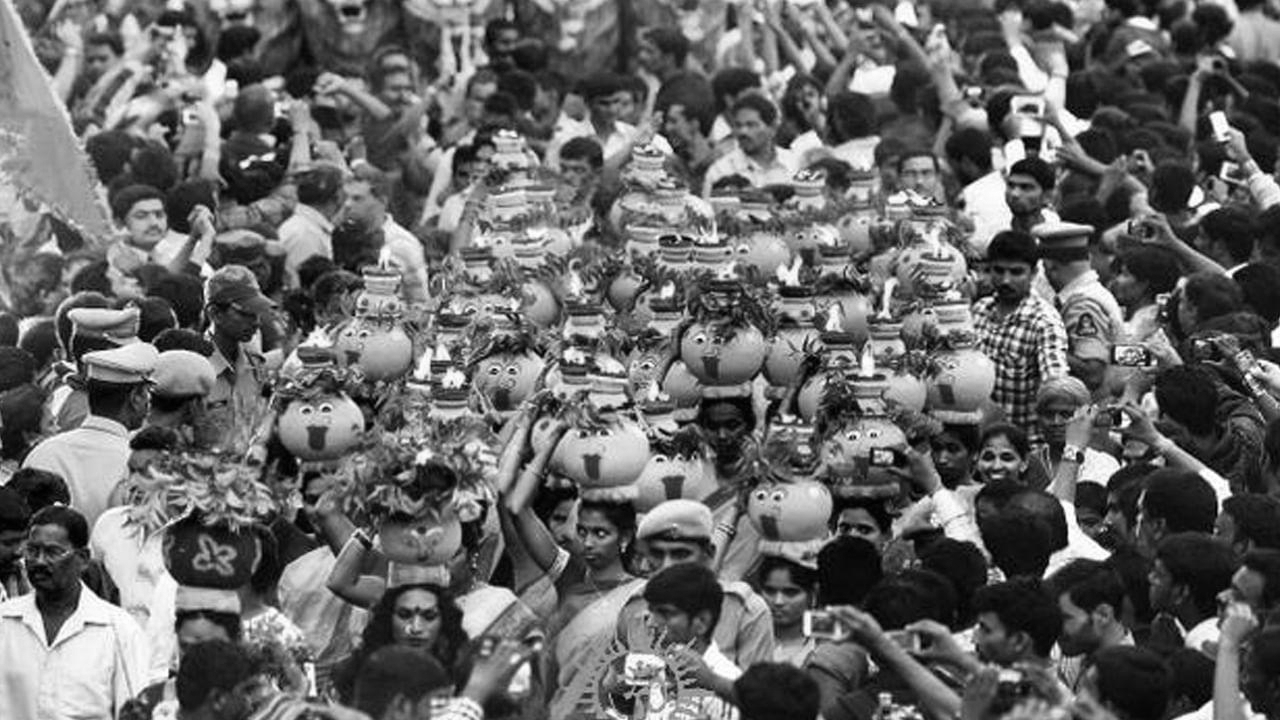
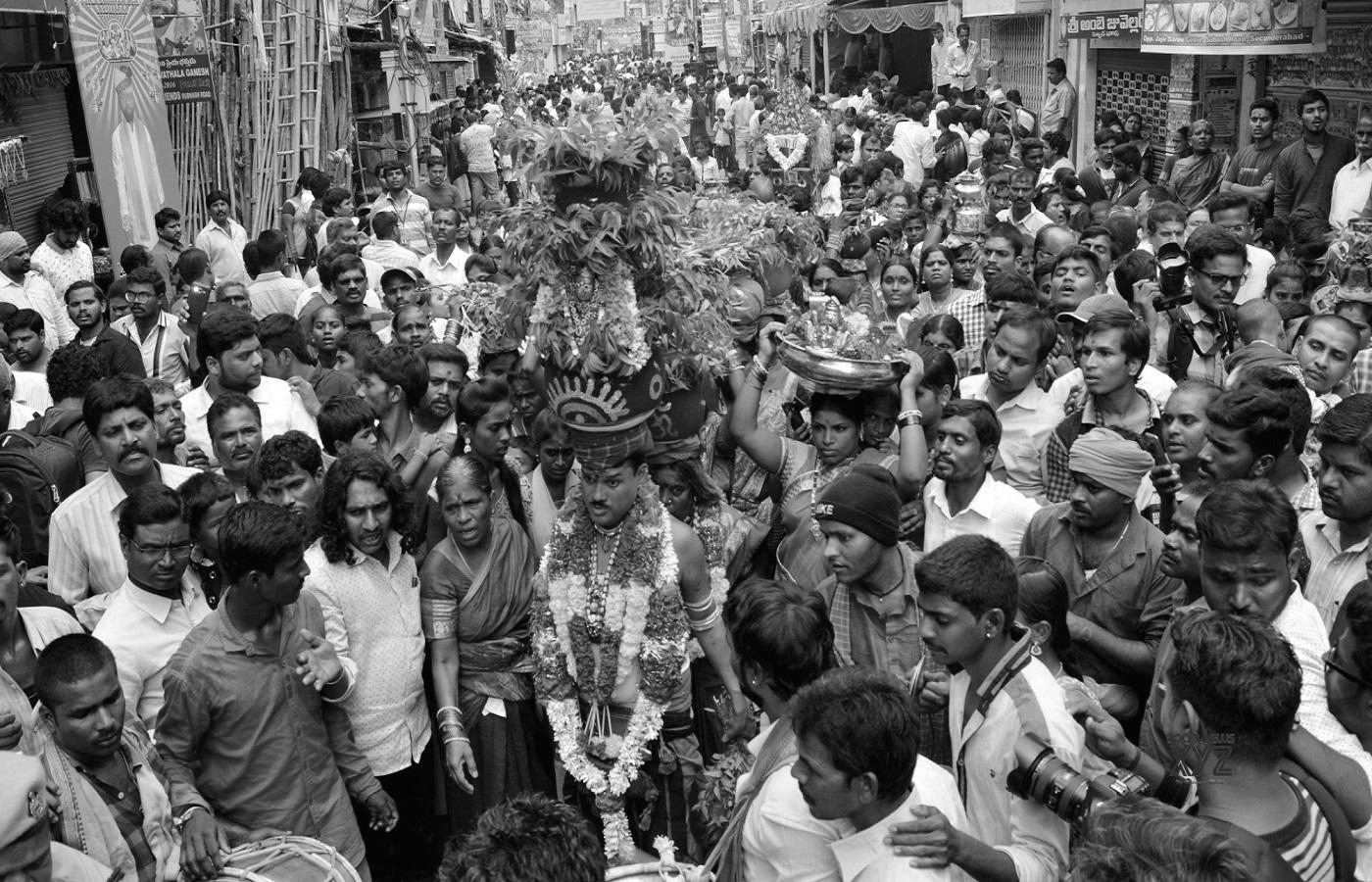
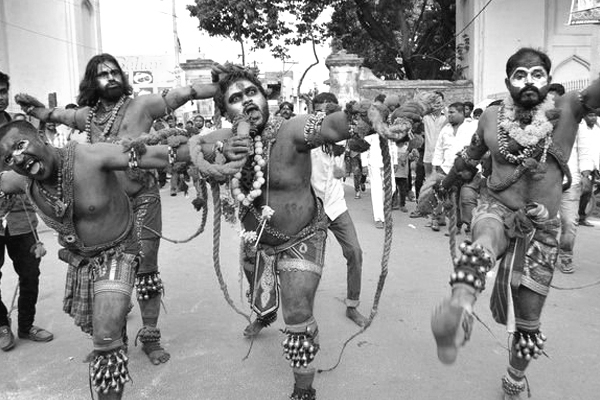
Every year, with the arrival of Ashada Masam, the historic streets of Secunderabad, fondly known as Lashkar, transform into a magnificent stage of faith, colour and devotion. The roads leading to the Ujjaini Mahankali Temple overflow with lakhs of devotees carrying offerings, while the rhythmic beats of dappu drums echo through the city. Women dressed in vibrant silk sarees balance beautifully decorated Bonam pots on their heads, Pothuraju dances with unmatched energy at the head of processions, and chants of " Jai Mahankali " fill the air. The celebration is not merely a religious event; it is the heartbeat of Telangana's cultural identity, preserving traditions that have survived for centuries.
The 2026 Lashkar Bonalu festivities begin with the traditional Ghatotsavam (Edurukolu) on July 19, symbolising the ceremonial welcome of the Goddess. The grand Bonalu celebrations at the Ujjaini Mahankali Temple are scheduled for August 2, when lakhs of devotees are expected to offer Bonam and seek the blessings of Mahakali. The festivities conclude on August 3 with the sacred Rangam oracle ceremony and Gajavahana Seva, bringing another chapter of one of Telangana's greatest spiritual celebrations to a close.
Popularly known as Lashkar Bonalu, the Secunderabad celebrations occupy a unique place in the history of the festival. Although Bonalu is celebrated across Telangana, nowhere does it carry the same historical significance as in Secunderabad, where military history, folklore, faith and archaeology come together to narrate a remarkable story of devotion.
The word Bonalu is derived from the Telugu word "Bhojanam," meaning food or meal. The offering, called Bonam, consists of rice cooked with milk, jaggery, curd and water in a new earthen or brass pot. Decorated with turmeric, vermilion, neem leaves, flowers and topped with a lit lamp, the Bonam is carried by women to temples dedicated to Goddess Mahakali. The offering symbolises gratitude to the Mother Goddess for protecting families from disease, misfortune and hardship.
The story of Lashkar Bonalu cannot be understood without understanding the history of Secunderabad itself. Established in 1806 as a British military cantonment under an agreement between the Nizam of Hyderabad and the British East India Company, the city soon became one of southern India's most important military centres. Because of its cantonment status, Secunderabad came to be known as Lashkar, a Persian word meaning "army" or "military camp." More than two centuries later, the name continues to survive in the popular description of the city's Bonalu celebrations as Lashkar Bonalu.
The defining chapter of this story begins in 1813, when a devastating cholera epidemic, commonly described in historical accounts as a plague, spread across Hyderabad and Secunderabad. Thousands lost their lives, and panic gripped the region. During this difficult period, a battalion of the Hyderabad State Army was stationed in Ujjain in present-day Madhya Pradesh.
Among the soldiers was Suriti Appaiah, a doli bearer whose devotion would forever become part of Telangana's cultural history. Concerned about the safety of their families back home, the soldiers visited the famous Mahakali Temple in Ujjain and prayed before the Goddess. They made a solemn vow that if the epidemic subsided and their loved ones remained safe, they would establish the Goddess in Secunderabad and offer Bonam every year as a mark of gratitude.
According to local tradition, the epidemic gradually came under control, strengthening the soldiers' belief that their prayers had been answered by Mahakali. Keeping their promise, they returned to Secunderabad and, in July 1815, installed a wooden idol of the Goddess. That modest shrine eventually grew into the present-day Ujjaini Mahankali Temple, which has become the spiritual centre of Lashkar Bonalu and one of Telangana's most revered temples.
The temple's importance increased further during later renovations, when workers reportedly discovered an ancient stone idol of Goddess Manikyaladevi beneath the premises. The idol was consecrated alongside Mahakali, enriching the temple's spiritual heritage and reinforcing its status as one of the state's most sacred shrines.
For generations, the story of the soldiers' vow was believed to mark the beginning of Bonalu itself. However, modern archaeological discoveries have added a fascinating new dimension to the festival's history. A 1516 CE Telugu inscription, discovered by the Archaeological Survey of India (ASI) at Gobbur on the Telangana-Karnataka border, mentions rituals such as Bonalu, Rangam, Kunamuggu and Gaddapattana during the reign of Sri Krishnadevaraya of the Vijayanagara Empire.
The inscription establishes that Bonalu was already being celebrated more than 500 years ago, centuries before the cholera epidemic of 1813. Historians now believe that while the soldiers' vow explains the origin of Secunderabad's unique Lashkar Bonalu, the Bonalu tradition itself has much deeper roots in the ancient worship of village goddesses across the Telugu-speaking region.
As the years passed, what began as a thanksgiving ceremony by a handful of soldiers evolved into one of Telangana's largest public festivals. With the growth of Secunderabad, Bonalu spread into neighbourhoods including Regimental Bazaar, Chilkalguda, Kalasiguda, Bhoiguda, Kummariguda, Pan Bazaar, Nallagutta, Mettuguda, Sikh Village and Old Mudfort. Every locality developed its own Mahakali temple and customs, yet all remained united through the shared spirit of Lashkar Bonalu.
One of the most remarkable aspects of the festival is the central role played by women. Unlike many religious festivals where priests conduct the principal rituals, Bonalu places women at the heart of the celebration. Dressed in colourful silk sarees adorned with traditional jewellery, they carry the sacred Bonam while singing devotional songs. Their participation represents the worship of Shakti, the divine feminine energy, making Bonalu, along with Bathukamma, one of Telangana's most significant women-centric festivals.
No Bonalu procession is complete without Pothuraju, believed to be the brother and guardian of Goddess Mahakali. His body is covered in turmeric, a bright vermilion mark adorns his forehead, bells ring around his ankles and a whip remains in his hand as he dances energetically through the streets. His vigorous performance symbolises strength, protection and the triumph of good over evil, captivating both devotees and visitors.
Another cherished tradition is the Rangam, one of the most eagerly awaited rituals of the festival. During this ancient oracle ceremony, a woman believed to be possessed by the Goddess stands atop an earthen pot and delivers predictions concerning rainfall, agriculture, prosperity and public welfare. Thousands gather each year to witness this spiritual ritual, believing it reflects the divine guidance of Mahakali.
The Ghatam procession marks the grand conclusion of the celebrations. The decorated copper pot representing the Goddess is carried through the streets amid devotional music, folk performances and enthusiastic crowds before being ceremonially immersed. The procession symbolises the Goddess blessing every locality before concluding the annual festivities.
Bonalu is much more than a temple festival. It is a living celebration of Telangana's folk traditions, sustaining the livelihoods of potters, flower sellers, drummers, artisans, weavers and folk performers. Every decorated Bonam, every beat of the drum and every procession reflects the artistic heritage that has been preserved through generations.
The cultural importance of Bonalu received official recognition following the formation of Telangana on June 2, 2014, when the state government declared it the State Festival. Since then, elaborate arrangements have been made every year to ensure the smooth participation of lakhs of devotees through improved security, infrastructure, cultural programmes and temple administration.
Today, Lashkar Bonalu is not simply a festival of devotion; it is a living symbol of Telangana's history and collective memory. It reminds people of the faith of soldiers who honoured a sacred promise, of women who continue to preserve centuries-old traditions, and of communities that have celebrated together across generations. It represents gratitude during times of crisis, resilience in the face of adversity and the enduring belief that the Mother Goddess protects those who approach her with faith.
As Ashada returns every year, the streets of Lashkar once again become a vibrant canvas of colour, music and spirituality. The sight of thousands of women carrying Bonam, the electrifying dance of Pothuraju, the divine atmosphere surrounding the Ujjaini Mahankali Temple and the spectacular Ghatam procession create an experience found nowhere else in India.
Empires have disappeared, rulers have changed and cities have modernised, but the spirit of Lashkar Bonalu has remained untouched by time. More than two centuries after the soldiers fulfilled their vow, and more than five centuries after the earliest recorded evidence of Bonalu, the festival continues to unite people across generations, communities and social backgrounds. In every Bonam carried with devotion, every prayer offered before Mahakali, and every drumbeat that echoes through the historic streets of Secunderabad lives an enduring legacy of faith, gratitude and Telangana's timeless cultural pride.