
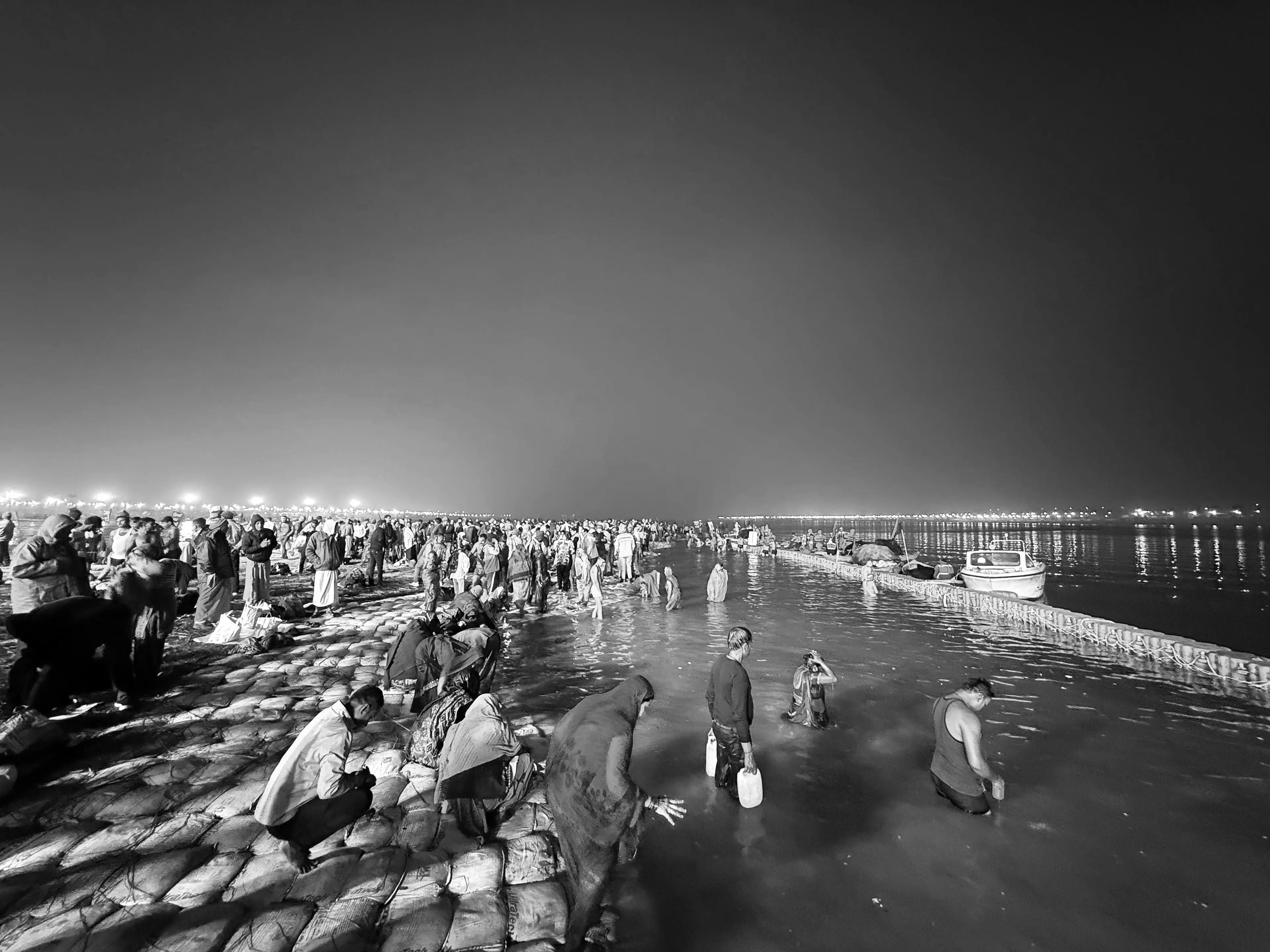
Lakhs take holy dip at Sangam as Magh mela begins on Paush Purnima
Prayagraj witnessed a massive influx of devotees on Saturday as the annual Magh Mela commenced with the auspicious Paush Purnima bath, drawing lakhs of pilgrims to the Triveni Sangam despite biting cold conditions.
Devotees from across the country, including elderly people and children, took a ritual dip at the confluence of the Ganga, Yamuna and the mythical Saraswati on Paush Purnima the full moon day of the Hindu month of Paush , which traditionally marks the start of the Magh Mela. The sacred bath also signalled the beginning of the month-long Kalpavas , a rigorous spiritual observance believed to cleanse sins and promote self-discipline through prayer, austerity and devotion.
According to Magh Mela authorities, around nine lakh pilgrims had taken the holy dip by 10 am , with numbers steadily rising as the day progressed. Religious leaders and organisers expect the turnout to swell significantly by evening. Acharya Rajendra Mishra, president of the Triveni Sangam Aarti Seva Samiti, said nearly five lakh devotees are expected to begin Kalpavas on the opening day.
Kalpavas is a central spiritual practice during the Magh Mela, during which devotees live austere lives on the riverbanks for an entire lunar month. Participants bathe twice daily in the Ganga, consume only one simple meal, and devote the rest of their time to meditation, prayer, and religious discourse.
Rajendra Paliwal, president of the Prayag Dham Sangh, said that nearly 20 lakh devotees , including Kalpavasis, are expected to bathe on Paush Purnima alone. The auspicious bathing period continues until 4 pm, after which Kalpavasis formally take vows before their priests and settle into their camps at the fairgrounds.
Prayagraj Divisional Commissioner Soumya Agarwal said official estimates place the total footfall for the day between 20 and 30 lakh devotees , highlighting the scale of the event.
The Magh Mela holds immense religious importance in Hindu tradition and is considered a precursor to the Kumbh and Maha Kumbh Melas. Bathing at the Sangam during the month of Magh is believed to yield spiritual merit equivalent to major pilgrimages. The festival has been observed for centuries and continues to attract saints, ascetics, scholars, and householders alike.
To manage the massive gathering, the Uttar Pradesh government has undertaken extensive preparations. Ten bathing ghats spread across 10,000 square feet have been constructed, along with nine pontoon bridges to ensure smooth movement across the riverbanks. For the first time, a dedicated township for Kalpavasis, named Prayagwal, has been developed over 950 bighas opposite the Nagvasuki Temple.
ADM (Magh Mela) Dayanand Prasad said the township has been equipped with basic civic amenities, sanitation facilities, healthcare services, and security arrangements to ensure the safety and comfort of pilgrims throughout the month-long event.
Devotees expressed satisfaction with the arrangements. Pooja Jha, who travelled from Kolkata with her family, said the relatively lighter crowd on the first bathing day allowed for a comfortable and fulfilling experience. Shivani Mishra from Madhya Pradesh’s Rewa district echoed similar sentiments, noting that the calmer atmosphere made the ritual more peaceful.
Apart from Paush Purnima, the major bathing dates of Magh Mela 2026 include Makar Sankranti (January 14), Mauni Amavasya (January 18), Basant Panchami (January 23), Maghi Purnima (February 1) and Mahashivratri (February 15), when the city is expected to witness even larger crowds.