
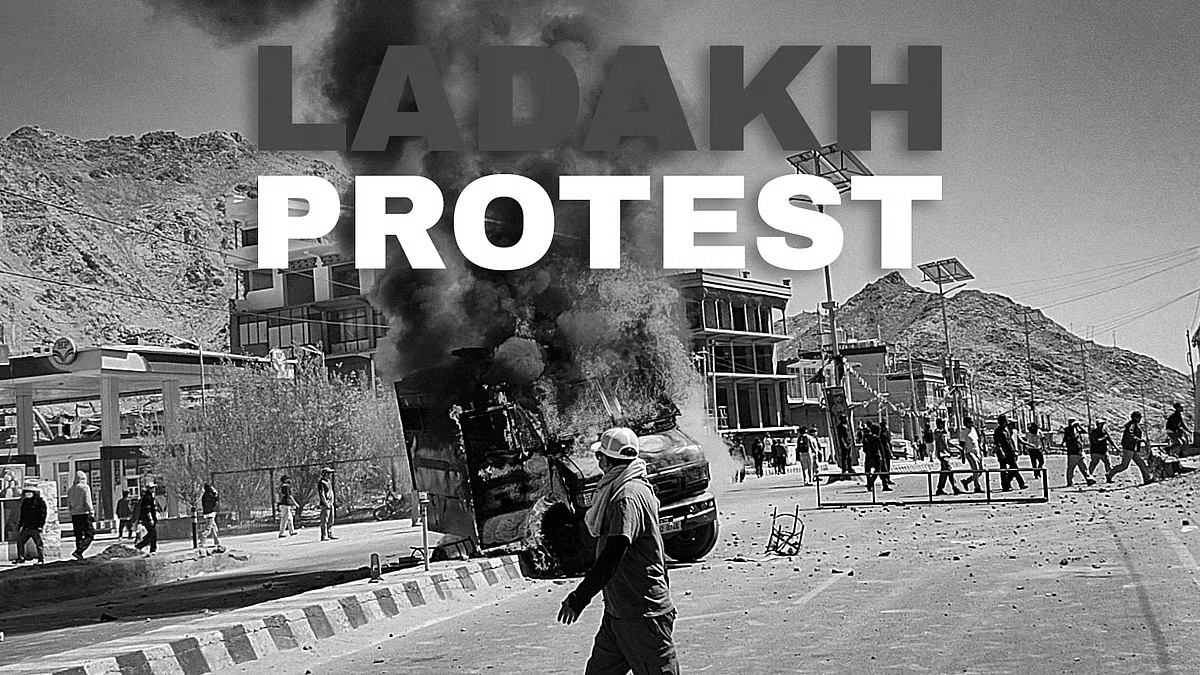
Ladakh on edge, unrest highlights urgent need for dialogue and autonomy
Ladakh has been shaken by violent protests demanding statehood and constitutional safeguards under the Sixth Schedule. On September 24, clashes between demonstrators and security forces left four people dead and more than 80 injured. Shops and government buildings were damaged, and curfews were imposed in Leh and Kargil while additional security personnel were deployed.
Hunger strikes and immediate triggers
The unrest was sparked by the collapse of two hunger strikers, Tsering Angchuk and Tashi Dolma, who had been fasting for over 35 days demanding stronger constitutional protections for Ladakh. Climate activist Sonam Wangchuk, who has long advocated Gandhian, non-violent protests for statehood and Sixth Schedule safeguards, had also played a prominent role in the movement, including a symbolic march from Leh to Delhi. However, political leaders like Farooq Abdullah clarified that Wangchuk was not responsible for the recent violence, which erupted after younger protesters, frustrated by unfulfilled promises,took a more confrontational path. The broader movement has centred on granting legislative powers to the Union Territory and extending Sixth Schedule safeguards to preserve tribal rights, local governance, and cultural identity.
Despite the significance of their fast, the protest remained largely unnoticed nationally. The strike’s peaceful and silent nature, coupled with Ladakh’s remote location and limited internet connectivity, meant few media outlets covered it. Authorities may also have restricted coverage, limiting public awareness. When both strikers were hospitalized, widespread anger among youth led to city-wide shutdowns and demonstrations, which quickly escalated into violent clashes with security forces. Farooq Abdullah also cautioned the Centre to learn from its unfulfilled promises in Jammu and Kashmir, including the delay in restoring statehood, warning that prolonged neglect of Ladakh’s demands could deepen discontent and instability in the region.
Political and legal context
Since its separation from Jammu and Kashmir in 2019, Ladakh has functioned as a Union Territory without a legislative assembly. Many residents feel politically sidelined. While there is no formal promise of statehood by the Centre, local leaders point to the BJP’s 2019 Lok Sabha election manifesto and the 2020 Ladakh Hill Council polls, which committed to including Ladakh in the Sixth Schedule. Youth frustration has been compounded by limited employment, slow development, and minimal local decision-making power.
The Sixth Schedule allows autonomous governance in tribal regions, giving district councils authority over land, forests, and local administration. Residents of Leh and Kargil have long demanded similar protections to safeguard their cultural identity and governance rights.
Strategic importance
Ladakh borders China along the Line of Actual Control, making stability in the region vital for national security. Prolonged unrest affects local administration, daily life, and defense preparedness, while also raising concerns about external attention to the region.
Government response
Immediate steps and path forward
Residents are demanding prompt political engagement and delivery on long-standing promises. Local participation in the protests shows deep dissatisfaction with governance, employment, and development issues. Authorities are expected to ensure inclusive dialogue with youth, women, and local leaders, while addressing socio-economic concerns and local administration gaps. Swift action is considered necessary to restore trust, prevent further escalation, and maintain both peace and national security.