
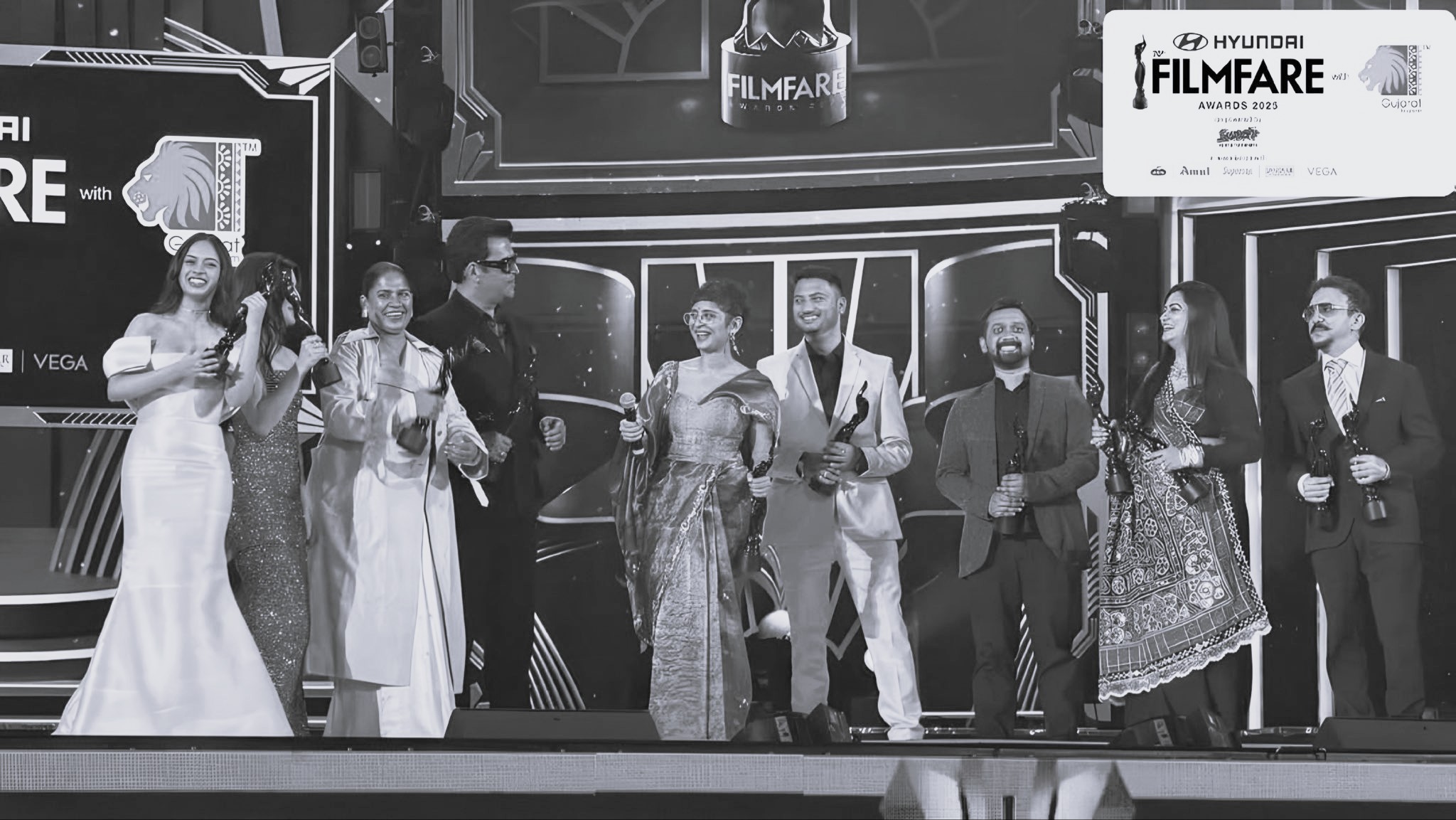
Laapataa Ladies sweeps Filmfare 2025 with 13 Wins, Kiran Rao clinches Best Director
Kiran Rao’s Laapataa Ladies emerged as the biggest winner at the 70th Filmfare Awards, bagging 13 trophies including Best Film and Best Director for Rao — at a glittering ceremony held on Saturday at EKA Arena in Ahmedabad. Hosted by Shah Rukh Khan, Karan Johar, and Maniesh Paul, this year’s Filmfare Awards celebrated the best of Hindi cinema, recognizing both established names and emerging talent across categories.
The socially charged comedy-drama led the night with a record-tying 13 awards, echoing the dominance of Gully Boy in 2020. The film’s stars, Pratibha Ranta and Nitanshi Goel, both won major acting honors Ranta bagged the Critics’ Award for Best Actor (Female), while Goel won Best Debut Actor (Female). Veterans Chhaya Kadam and Ravi Kishan were named Best Supporting Actors, rounding off the film’s acting triumphs. In music and technical categories, Laapataa Ladies continued its winning streak. Sneha Desai won both Best Screenplay and Best Dialogue, Ram Sampath took home Best Music Album and Best Background Score, while Prashant Pandey won Best Lyrics. The film also earned Arijit Singh the Best Playback Singer (Male) and Darshan Jalan the Best Costume Design award.
Released in March 2024, Laapataa Ladies (internationally titled Lost Ladies) marked Kiran Rao’s return to direction after more than a decade. Produced by Aamir Khan Productions and Kindling Productions, the low-budget film was based on a 2018 short story by Biplab Goswami, with screenplay by Sneha Desai. Set in 2001 in the fictional state of Nirmal Pradesh, the film follows two brides Phool Kumari (Goel) and Pushpa Rani/Jaya (Ranta) who accidentally get swapped on a crowded train journey. The mix-up becomes a journey of self-discovery and quiet rebellion against patriarchal norms. Phool, the naïve bride, finds freedom and self-worth while working at a roadside tea stall run by the fierce Manju Maai (Kadam). Meanwhile, the educated and independent Jaya disguises herself as a police constable to escape societal control and reclaim her dreams. Their paths converge in a moving finale that celebrates choice, courage, and identity without villains or melodrama.
Rao’s film stands out for its humor and humanity, avoiding preachiness while exposing how women are often “lost” figuratively erased by social expectations. The film challenges stereotypes of women as faceless or submissive, men as monolithic oppressors, early marriage as inevitable, and women confined to the domestic sphere. Through satire, it portrays women as multifaceted, resilient, and capable of shaping their destinies, with Phool gaining confidence running a tea stall and Jaya navigating male-dominated spaces like the police station.
Beyond the screen, Laapataa Ladies has sparked widespread conversations about gender equality and education in rural India. Aamir Khan Productions launched the Laapataa Ladies Challenge, encouraging families to support girls’ education and financial literacy, with over 500 community screenings in Uttar Pradesh and Bihar prompting grassroots discussions on delaying child marriage. Selected as India’s official entry for the 2025 Oscars, the film elevated small-town storytelling to a global platform and proved that relatable, character-driven cinema can resonate internationally. Its Filmfare dominance also signals a shift in Bollywood toward rewarding content-driven films, boosting newcomers like Goel and Ranta while honoring veterans like Chhaya Kadam.
With its record-tying 13 Filmfare Awards, Laapataa Ladies cements its legacy as both a critical and cultural triumph. By blending humor, humanity, and heartland realism, Kiran Rao has crafted a film that entertains while enlightening. Just like its heroines who were once “lost”, Indian cinema too seems to have rediscovered something essential: the power of storytelling with soul.