
Kyiv claims deep strike on fuel network supplying Russian army
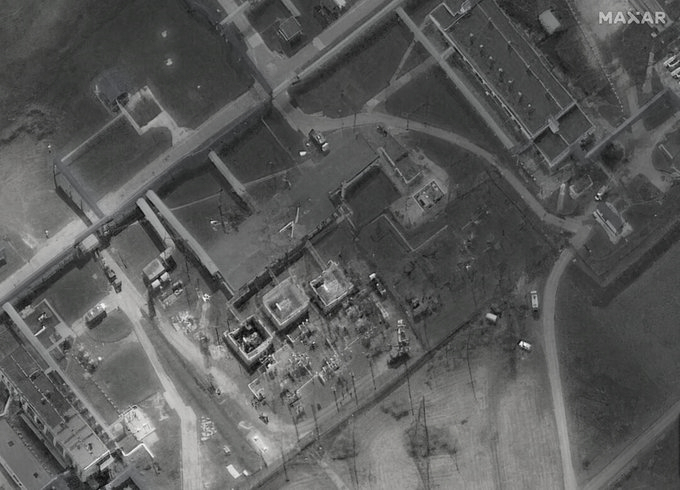
Ukraine’s military intelligence agency on Saturday claimed it carried out a precision strike that crippled a major fuel pipeline near Moscow, a lifeline for the Russian army’s logistics network.
According to a statement by the Main Intelligence Directorate (HUR), the late-Friday operation dealt a “serious blow” to Russia’s military supply routes. The Koltsevoy pipeline, stretching roughly 400 kilometres (250 miles), transports gasoline, diesel, and jet fuel from refineries in Ryazan, Nizhny Novgorod, and Moscow.
The targeted section in the Ramensky district was “completely destroyed,” HUR said, adding that the line had the capacity to move millions of tons of vital fuel annually.
“Our strikes have had more impact than sanctions,” said Kyrylo Budanov, head of HUR, suggesting that Ukraine’s long-range attacks on Russian energy infrastructure are biting harder than Western economic penalties.
Meanwhile, Russia continued its own wave of retaliation. A ballistic missile strike in Ukraine’s southern Mykolaiv region killed one civilian and injured 15 others, including a child, regional governor Vitaliy Kim reported. He said an Iskander missile was used in the attack.
Elsewhere, a Russian strike triggered a massive fire at a gas facility in central Poltava, while the Ukrainian air force said it shot down 206 out of 223 drones launched overnight. Seventeen drones still found their mark, hitting targets across seven regions.
In northern Chernihiv, an agricultural facility was also struck, injuring a 66-year-old woman, according to regional head Viacheslav Chaus.
Kyiv has accused Moscow of waging “systematic energy terror” - a campaign designed to freeze and exhaust Ukraine by targeting its power grid and fuel reserves ahead of winter.
A strike at Russia’s doorstep
The Ramensky district, where the pipeline was hit, lies just southeast of Moscow, barely 50 kilometers from the Kremlin. Strikes reaching this close to the Russian capital remain rare but increasingly frequent as Ukraine expands its drone and intelligence capabilities.
Previous incidents have mostly targeted industrial zones, refineries, or airfields outside the city. But this latest operation marks one of the boldest attacks yet near the heart of Russia’s power base, signaling that no region is entirely beyond Ukraine’s reach.
The drone revolution fueling the war
Behind these audacious strikes lies Ukraine’s fast-evolving drone program - a quiet revolution that has changed the face of modern warfare.
Ukraine began acquiring combat drones before Russia’s full-scale invasion, first securing Turkish-made Bayraktar TB2 drones in 2019. But after February 2022, Kyiv’s drone arsenal exploded in size and sophistication.
By late 2024, Ukraine had reportedly procured over 1.2 million drones, with massive contributions from Western allies including Turkey, the United States, and the European Union. Smaller nations like Latvia have also joined the “drone coalition,” sending hundreds of domestically produced models.
At the same time, Ukraine’s domestic drone industry surged - now producing up to 96 percent of drones used on the front line, according to government data. Production is expected to reach 4 million drones annually, a staggering leap that allows Ukraine to strike targets deep inside Russian territory using cheap, locally built long-range drones.
With every attack, these low-cost machines are rewriting the playbook - turning economics into a weapon and proving that a few thousand dollars’ worth of technology can inflict million-dollar damages.
A war of fuel, fire, and fatigue
The latest strike underscores a dangerous trend: Ukraine is hitting Russia’s economic arteries while Western sanctions choke them from abroad. Oil depots burn; budgets bleed. Each drone that slips past Russian defenses isn’t just a weapon - it’s a message.
With both sides trading blows in an unending cycle, the war has become a grim contest of endurance. Neither President Volodymyr Zelenskyy nor Vladimir Putin shows any sign of surrender, even as civilians bear the brunt of their stalemate.
“This war has turned into a game of attrition,” one analyst said. “One explosion there, one retaliation here - yet no one wins.”
In this high-stakes struggle fought with steel, sanctions, and drones, victory feels as distant as peace and the fire burns closer to Moscow than ever before.