

Kumararamam: A Thousand-Year Legacy of Chalukyan Brilliance and Sacred Tradition
In the quiet town of Samarlakota, just a short drive from Kakinada, stands a temple that does more than invite prayer it invites curiosity. At first glance, the Kumar Bhimeswara Swamy Temple appears like many ancient shrines across South India. But spend time here, and it reveals something deeper: a place where mythology, science, architecture, and history intersect with remarkable precision.
This is Kumararamam, one of the revered Pancharama Kshetras, and a living monument that has endured for more than a thousand years.
The Story That Begins Before the Temple
Long before chisels touched stone, the story of Kumararamam was already woven into mythology. One legend traces its origin to the battle between Lord Shiva and the demon Tripurasura. After Shiva destroyed the demon, the powerful Shiva Lingam associated with him shattered into five pieces. These fragments fell across different parts of Andhra Pradesh, each becoming a sacred shrine. Together, they came to be known as the Pancharama temples.
Another legend offers a different perspective one that gives Kumararamam its name. It speaks of Lord Kartikeya, also known as Kumara, who defeated the demon Tarakasura. The demon possessed a divine Lingam that, upon his death, broke into pieces. Kartikeya is believed to have installed one of those fragments here, sanctifying the site and giving it the name Kumararamam.
These stories form the spiritual identity of the temple and connect it to a wider sacred landscape that continues to attract pilgrims.
A Vision Carved by Kings
Centuries later, the Eastern Chalukyas transformed this sacred ground into a grand architectural creation. Between the late 9th and early 10th centuries, King Chalukya Bhima I commissioned the temple, a project that took decades to complete.
What emerged was not just a place of worship, but a demonstration of engineering skill and artistic ambition. Built using massive sandstone blocks, the temple reflects a deep understanding of structure, symmetry, and durability. Its walls have stood firm through centuries, preserving the legacy of its builders.
Later, during the Kakatiya period, the temple received further enhancements. These additions enriched the structure, blending two architectural traditions into a unified design. Today, Kumararamam stands as a rare example of continuity in temple architecture.
A Walk Through Stone and Silence
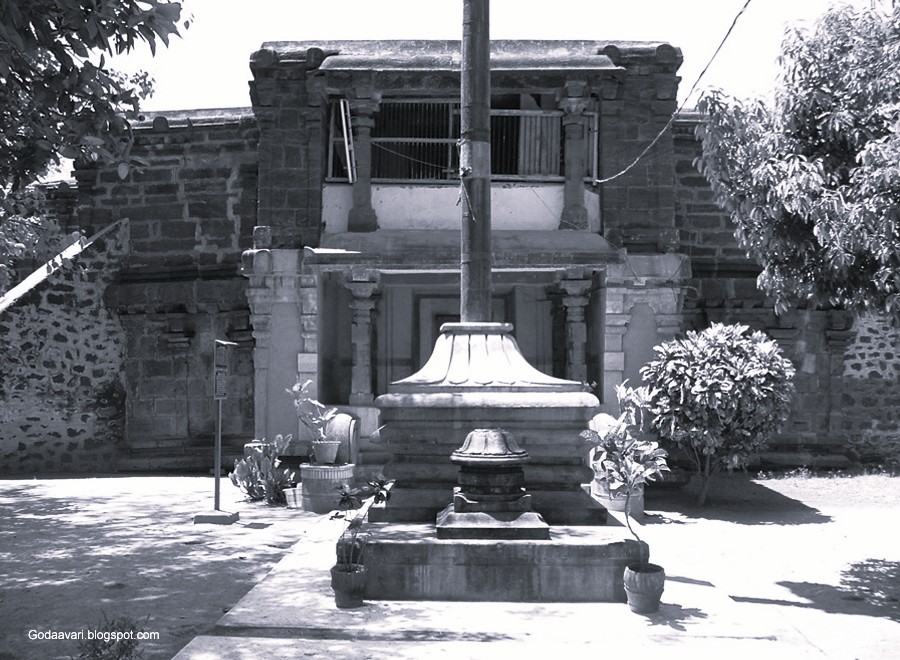
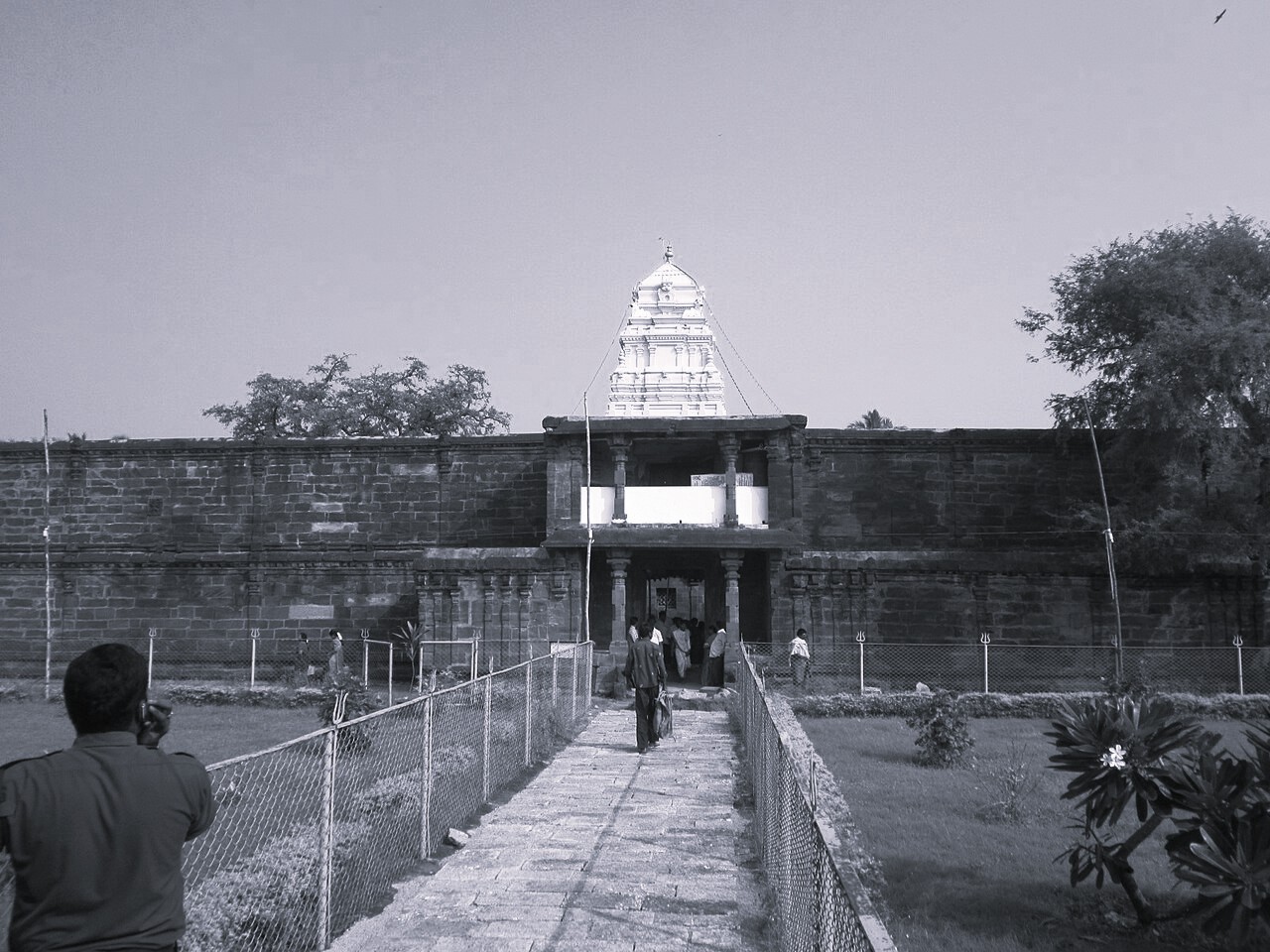
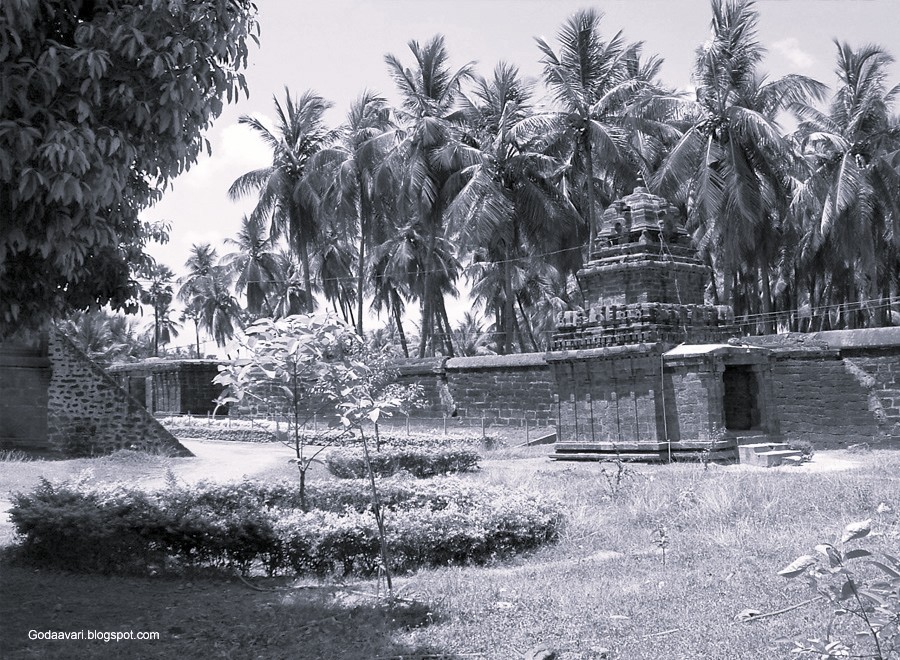
Approaching the temple, visitors pass through tall gateways that open into a large enclosed area. The outer walls, made of strong stone, create a sense of entering a protected and sacred space. The main entrance, known as the Surya Dwaram, hints at a deeper alignment with nature.
Inside, the artistry becomes striking. Pillars are adorned with finely carved figures celestial dancers, floral patterns, and mythological forms. A grand hall supported by one hundred pillars stands as a reminder of the temple’s scale and elegance.
Every surface reflects careful craftsmanship. Every carving carries meaning.
The Sanctum That Defies Convention
At the heart of Kumararamam lies its most unique feature a two-storey sanctum. Inside rises a towering Shiva Lingam, about 14 feet tall, extending across both levels of the structure.
This design transforms worship into a journey. Devotees first move to the upper level to view the upper portion of the Lingam, then descend to the lower level to offer prayers at its base. This movement reflects a symbolic connection between the divine and the human.
Facing the sanctum is a monolithic Nandi, carved from a single block of stone. Around the temple complex are smaller shrines dedicated to Ganapati, Kalabhairava, Veerabhadra, Mahakali, and other deities, creating a complete sacred environment.
When Architecture Meets Astronomy
Among the temple’s many wonders, one stands out for its precision. During the months of Chaitra and Vaishakha, a remarkable event takes place.
At sunrise, the sun’s rays pass through the entrance and reach the feet of Lord Bhimeswara. By evening, the same light illuminates the feet of the goddess.
This alignment is not accidental. It reflects the advanced understanding of solar movement and geometry possessed by ancient temple architects. Without modern tools, they created a structure that interacts with natural light in a meaningful way.
For visitors, this moment feels extraordinary as if nature itself participates in worship.
A Temple That Still Lives
Despite its age, Kumararamam remains active and vibrant. Mondays attract a steady flow of devotees, each seeking blessings.
During Maha Shivaratri, the temple becomes a center of celebration. Rituals continue throughout the night, and the atmosphere fills with devotion and energy. Festivals such as Navaratri and the Kartika month celebrations add further significance.
During Kartika, thousands of lamps illuminate the temple grounds, creating a deeply spiritual experience. These traditions ensure that the temple remains a living place of worship, not just a historical structure.
History Preserved in Stone
Kumararamam also holds great historical importance. The temple complex contains numerous stone inscriptions dating from the 12th to the 15th centuries. These inscriptions record donations, royal contributions, and social practices.
They are particularly valuable for understanding the early development of the Telugu language. For historians and researchers, the temple serves as an important source of information about the region’s past.
In many ways, it is not just a temple, but a record of history preserved in stone.
A Journey Worth Taking
Located close to the Samarlakota railway junction on the Chennai–Howrah line, the temple is easily accessible. It is well connected by road to nearby cities, making it convenient for visitors.
Yet, reaching Kumararamam feels like stepping into another time. The surroundings remain calm, and the temple retains its ancient character.
Where Everything Comes Together
Kumararamam is remarkable because it brings together many elements into one space. Mythology gives it meaning. Architecture gives it form. Astronomy gives it precision. History gives it depth.
It is a place where ancient knowledge continues to reveal itself through structure, light, and tradition.
In a fast-moving world, Kumararamam stands still—and in that stillness, it continues to tell its story.