
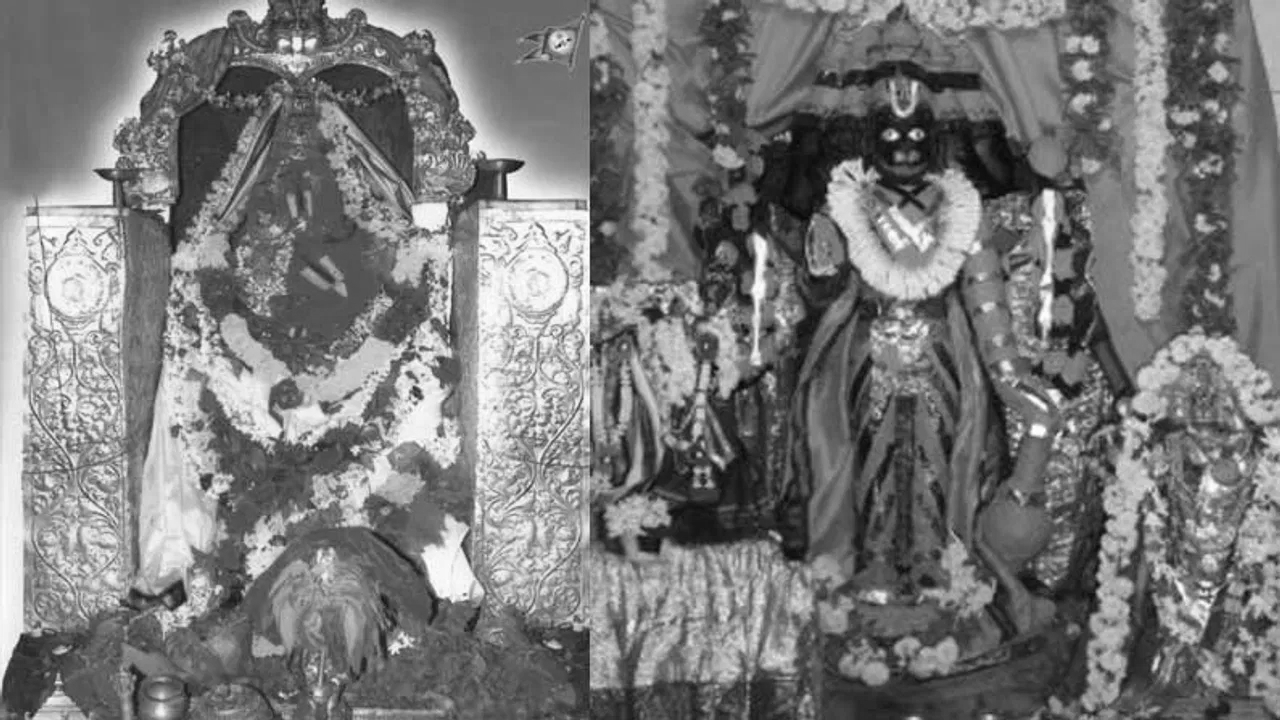
Kondagattu Anjanna: A Divine Spiritual Journey
"When the ocean of life’s hardships becomes overwhelming and one feels lost, the first name that resonates in the heart is 'Ramaduta' (The Messenger of Rama). Kondagattu Anjanna is the personification of that unwavering faith. Like a fragrance carried by the wind, the chanting of 'Rama Namam' echoing through the hills provides immense strength to the devotees. He is the savior who protects his children like the eyelid protects the eye, possessing the essence of Lord Venkateswara and the radiance of Lord Narasimha. For over 400 years, this deity, perched atop the hills, has been more than just a God, he is the lifeline and the 'Sanjeevani' (life-restorer) for millions of families. He is the compassionate Lord of Kondagattu, who melts with mercy even before a tear can fall from a devotee's eye." Let us explore the divine significance of this Lord.
The Sacred Abode and its Origins
The Sri Anjaneya Swamy Temple is nestled amidst dense forests and scenic hills in the Jagtial district of Telangana. With a history spanning approximately 400 years, this temple is not merely a place of worship but a symbol of faith for thousands. Located 40 km from Karimnagar and 16 km from Jagtial, the air here constantly vibrates with the sacred chant of ‘Jai Bajrangbali’ .
Legend of the Self-Manifested Deity (Swayambhu)
The idol of Kondagattu Anjanna is a "Swayambhu" (self-manifested) deity, not carved by human hands. According to local lore, about 400 years ago, a cowherd named Singam Sanjeevudu from Kodimyal village lost a cow while grazing his cattle in the forest. Exhausted from searching, he fell asleep under a tree.
Lord Hanuman appeared in his dream and revealed that He resided on that very hill. Upon waking, Sanjeevudu discovered the magnificent idol of Anjaneya Swamy, adorned with a conch (Shankhu), a discus (Chakra), a mace (Gada), and a Narasimha face. Subsequently, Sanjeevudu and his wife Ashamma built a small temple, marking the beginning of a legacy of devotion that continues today.
Another legend connects this site to the Ramayana. It is believed that while Hanuman was carrying the Sanjeevani mountain to revive Lakshmana, a small fragment fell at this location, now known as Kondagattu. While the original temple was built centuries ago by Sanjeevudu, the current structure was renovated about 160 years ago by Krishna Rao Deshmukh. The guardian deity of this shrine is Sri Betala Swamy , whose temple is also located on the hill.
Unique Iconography: The Three-Faced Hanuman
The idol at Kondagattu is exceptionally rare. While Hanuman is typically depicted in his vanara (monkey) form, here He embodies the essence of Lord Shiva and the ferocity of Lord Narasimha (an avatar of Vishnu).
The deity features the face of Lord Narasimha. He holds the Shankhu and Chakra, symbolizing Vaishnava traditions. The North-facing Narasimha aspect is a unique spiritual feature of this temple.
Sanjeevani Chandanam: The Divine Grace
The most sacred offering at this temple is the Sanjeevani Chandanam (Sandalwood paste). This paste is taken from the bowl held in the Lord’s left hand and distributed to devotees. It is firmly believed that applying this paste on the forehead grants mental peace and cures ailments. Thousands of devotees attest that childless couples have been blessed with children after visiting the shrine and receiving this sacred Chandanam.
Rituals and Religious Significance
The temple follows the strict traditions of the Chatada Sri Vaishnava Agama . Alongside Lord Anjaneya, the temple complex houses sub-shrines for Lord Venkateswara, Goddess Lakshmi, and the Alwars.
The Anjanna Deeksha is a prominent tradition here, similar to the Sabarimala Ayyappa Deeksha. Devotees undertake a rigorous 11, 21, or 41-day penance involving walking barefoot, sleeping on the floor, practicing celibacy, and maintaining a strict vegetarian diet. The deeksha concludes with a visit to the temple for a sacred 'Abhishekam'.
Beliefs and Vows
Planetary Doshas:
Devotees visit to seek relief from the effects of Saturn (Shani Dosha). Healing: Special 'Betala Pujas' are performed for those suffering from mental illnesses or negative energies.
Abhishekam:
Performing Abhishekam with water to the Lord (an avatar of Shiva) is believed to fulfill all worldly desires.
Visitor Information, Temple Timings: Daily, 4:00 AM to 8:30 PM.
Afternoon Break:
1:30 PM to 3:00 PM (for decoration and rest). Timings are extended on Hanuman Jayanti, Tuesdays, and Saturdays due to the heavy rush.
How to Reach
By Bus:
Frequent buses are available from Hyderabad, Warangal, and Karimnagar to Jagtial. Every bus on the Karimnagar-Jagtial route stops at the Kondagattu stage. Autos and RTC buses are available from the base to the hilltop.
By Train:
The nearest railway station is Jagtial (Lingampet), with Karimnagar being the major railhead nearby.
By Air:
Rajiv Gandhi International Airport, Hyderabad (approx. 220 km).
Accommodation:
The temple committee provides affordable cottages. Private hotels are available in Jagtial (16 km away). Free 'Annadanam' (meals) is provided to devotees in the afternoon. Laddu and Pulihora are available as prasadam at the counters.
Tips for Pilgrims
Sacred Paste:
Do not forget to collect the Chandanam from the Lord’s left hand.
Holy Dip:
It is customary to bathe in the temple pond (Koneru) before darshan.
Monkeys:
As it is a hilly area, be cautious with your belongings and prasadam, as there are many monkeys around.