
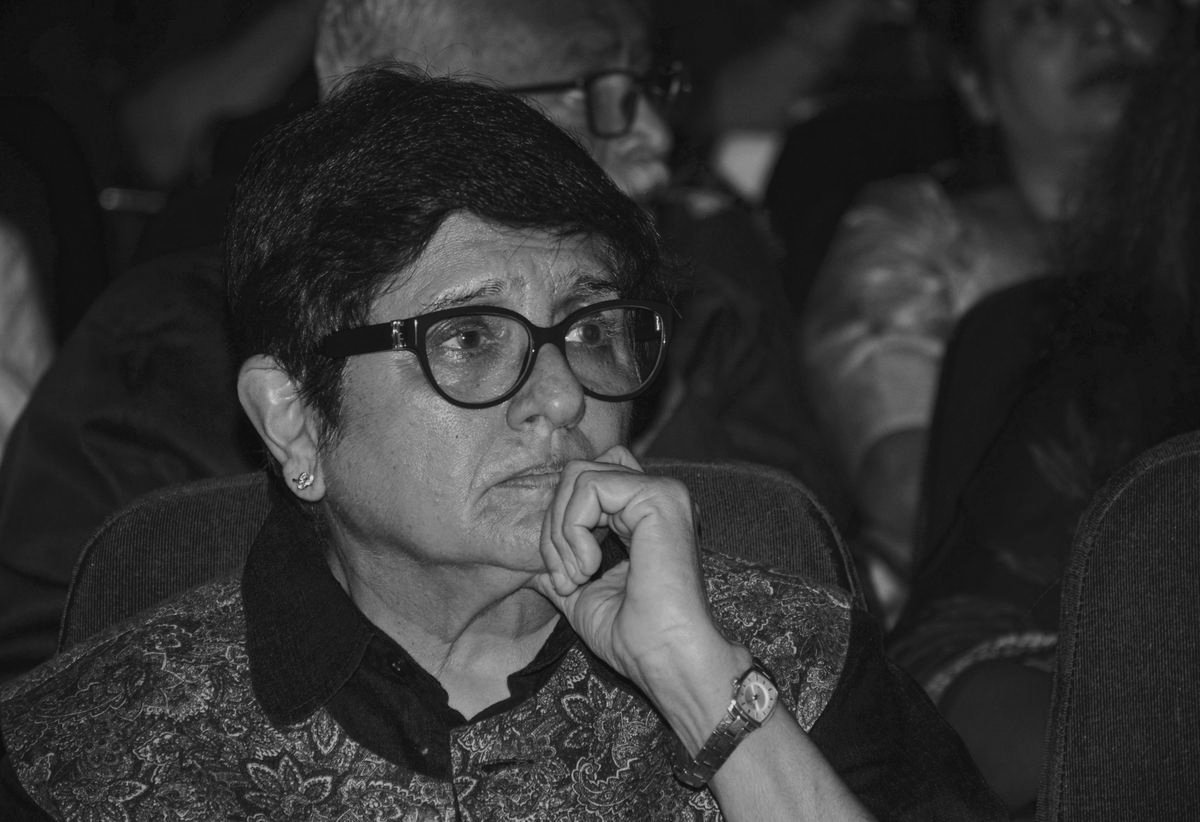
Kiran Bedi calls for major institutional reforms to tackle India’s air pollution crisis
Former IPS officer and Puducherry Lieutenant Governor Kiran Bedi on Wednesday emphasized the urgent need for structural reforms to address India’s persistent air pollution, warning that the crisis “won’t respond to half-measures.”
In a blog titled “Five Reforms India Needs for Clean Air”, Bedi stressed that India must move from reactive measures to systemic change. It was written by her that the system must be fixed and breathable air, the most basic public good, must be delivered by strong institutions in India.
Bedi highlighted weaknesses in the Commission for Air Quality Management (CAQM), noting that its current leadership, a retired official, lacks the administrative and political authority to enforce change effectively. She recommended appointing a serving secretary-level officer to coordinate across states and ministries and integrating CAQM into the Ministry of Environment, Forest and Climate Change (MoEFCC) so that clean air becomes a core governance function.
She outlined five key reforms to tackle the crisis:
• Strengthen CAQM : Appoint a serving secretary-level officer with administrative and political authority and integrate the commission into MoEFCC.
• Create a Five-Year Clean Air Mission Fund : Ensure stable, multi-year financing for air quality monitoring, enforcement teams, district clean-air cells, scientific modelling, and public health communication.
• Build a Dedicated Enforcement Wing : Establish a district-level inspectorate under CAQM empowered to inspect, penalize, and shut down violators, reducing reliance on overstretched state agencies.
• Set up a National Council of Environment Ministers : Chaired by MoEFCC, this council would align standards, coordinate fuel and transport reforms, manage cross-border pollution, and ensure shared accountability across states.
• Develop a National Clean Air Data Centre : An AI-enabled, real-time data system integrating industrial, vehicular, agricultural, meteorological, and satellite data to enable predictive governance.
Delhi-NCR continues to grapple with high air pollution year-round, which worsens in winter due to vehicular emissions, crop burning, firecrackers, and unfavourable meteorology. On December 1, the Supreme Court directed the central government and CAQM to revisit their action plan, stressing that air pollution cannot be treated as a seasonal problem and requiring evaluation of the effectiveness of existing measures like GRAP.
Experts and environmental groups have long argued that emergency curbs alone cannot substitute for a long-term structural plan addressing the root causes of Delhi’s chronic pollution, a concern reflected in Bedi’s recommendations.