
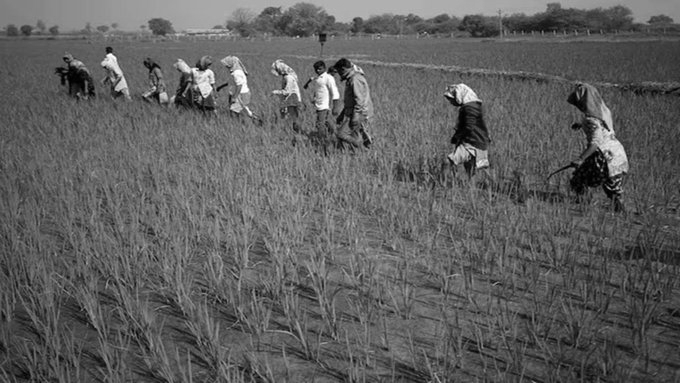
Kharif Sowing Declines 21% Amid Weak Monsoon, Raising Food Security Concerns
India’s kharif crop sowing area has witnessed a sharp decline of 21 per cent due to delayed progress of the southwest monsoon and inadequate rainfall, raising concerns over agricultural output, rural incomes and food security. According to data released by the Agriculture Ministry , total kharif sowing stood at 350.85 lakh hectares as of July 6, compared with 442.8 lakh hectares during the same period last year.
The decline reflects the impact of deficient and uneven rainfall , which has delayed planting activities in several agricultural regions. The southwest monsoon plays a crucial role in India’s farming sector, with a large number of farmers depending on seasonal rains for crop cultivation. A delayed monsoon can affect sowing decisions, reduce acreage and create uncertainty over production levels.
Among major crops, paddy cultivation recorded a 13 per cent decline in acreage. Paddy sowing fell to 60.24 lakh hectares from 69.3 lakh hectares last year. Since rice is a key staple crop and an important component of India’s food supply system, a continued reduction in cultivation area could raise concerns over future availability and price stability.
The decline was also seen across other important kharif crops. Pulses sowing dropped to 37.15 lakh hectares from 47.49 lakh hectares last year. The area under Shri Anna and coarse cereals decreased to 60.12 lakh hectares , compared with 71.86 lakh hectares during the corresponding period.
The most significant fall was reported in oilseed cultivation , with acreage declining sharply to 66.31 lakh hectares from 109.27 lakh hectares last year. Cotton sowing also fell to 63.18 lakh hectares , against 82 lakh hectares in the previous year.
The decline in sowing has heightened concerns about the potential impact on food grain production, inflation and farmers’ earnings if rainfall conditions fail to improve. Lower output of key crops could put pressure on domestic supplies and affect prices, particularly for essential food items.
However, the final impact on the kharif season will depend on rainfall performance in the coming weeks. Improved monsoon coverage could help farmers recover some of the lost acreage, while continued rainfall shortages may deepen challenges for agricultural production.