
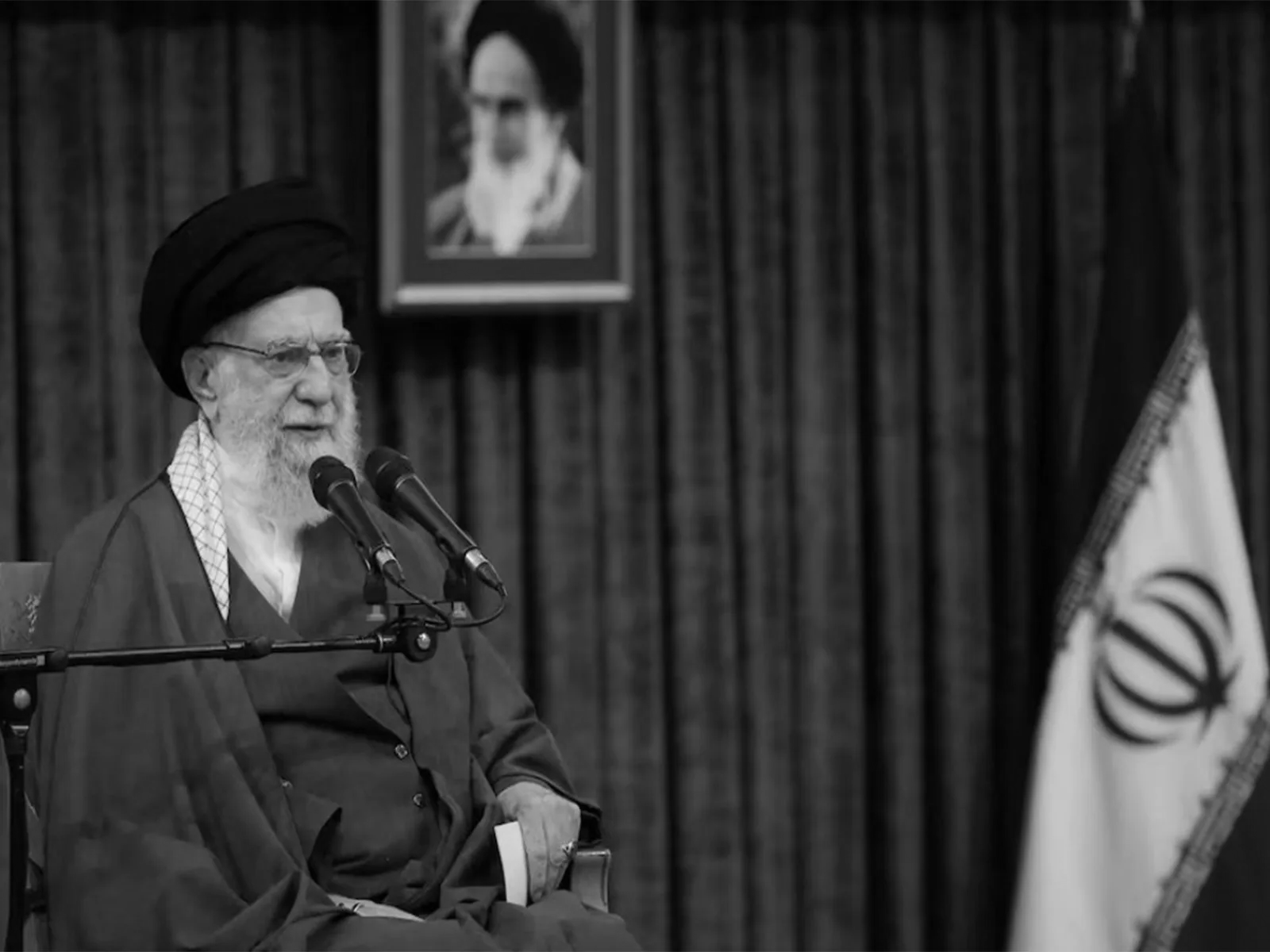
Khamenei signals limits to Iran-US cooperation amid Israel tensions
Iran’s Supreme Leader Ayatollah Ali Khamenei said the country cannot cooperate with the United States as long as Washington continues its support for Israel, maintains military bases in the Middle East, and interferes in regional affairs. His remarks, made during a meeting with students in Tehran to mark the anniversary of the 1979 US Embassy takeover, underscore the ongoing strain in Iran-US relations.
“The Americans sometimes say they would like to cooperate with Iran. Cooperation with Iran is not possible as long as the US continues to support the accursed Zionist regime, maintains military bases, and interferes in the region,” Khamenei said, adding that engagement could only be considered if the US ends its backing of Israel, withdraws its troops, and stops meddling in the Middle East.
Khamenei also criticized the US for its “arrogant nature,” saying it accepts nothing other than submission, reflecting Tehran’s longstanding mistrust of Washington.
The statement comes against the backdrop of heightened tensions over Iran’s nuclear program. While Tehran insists its nuclear activities are for peaceful purposes, previous uranium enrichment close to weapons-grade levels raised international concern. Israel has previously launched strikes citing an “immediate existential threat,” and Iran has responded with missile and drone attacks on Israeli targets. A ceasefire between the two countries has been in place since June 24.
Iranian President Masoud Pezeshkian recently said Tehran plans to rebuild its nuclear facilities “with greater strength,” reiterating that the country does not seek nuclear weapons. Foreign Minister Abbas Araghchi indicated that Iran is “not in a hurry” to resume nuclear talks with the United States but is open to indirect negotiations if Washington approaches as an equal partner. He also suggested that a “shared understanding” about Israel is emerging among countries in the region.
Khamenei’s statement highlights the role of Israel as a key deterrent in Iran-US relations and reflects the broader geopolitical impasse, with Washington and Tehran continuing to navigate decades of tension, sanctions, and mistrust.