
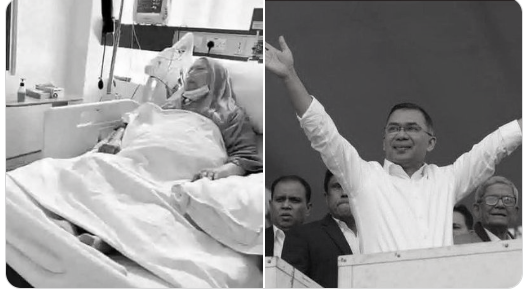
Khaleda Zia’s critical condition may influence upcoming Bangladesh elections as Tarique Rahman leads BNP
Bangladesh’s former prime minister Khaleda Zia, 80, is in an “extremely critical” condition, her personal physician has confirmed. The BNP chairperson has been receiving treatment at Dhaka’s Evercare Hospital since November 23 for multiple health complications. On December 11, she was placed on ventilator support to give her lungs and other vital organs a rest.
“It cannot be said that her condition has improved. She is passing through an extremely critical phase ,” Dr AZM Zahid said during an unscheduled briefing outside the hospital shortly after midnight on Saturday. He appealed to the nation to pray for her recovery. “If, by Allah’s mercy, she can get through this critical period, we may hear something positive,” he added.
Zia’s son and BNP acting chairperson, Tarique Rahman , spent more than two hours at the hospital before leaving shortly before midnight, party members said. Her treatment involves both local and foreign doctors, with her daughter-in-law, Dr Zubaida Rahman, also actively participating in her care. Although the BNP had expressed a preference for advanced medical treatment abroad, her current condition prevents air travel, and she continues to receive care in Dhaka.
Khaleda Zia’s political journey is inseparable from her late husband, Ziaur Rahman , the founder of the Bangladesh Nationalist Party . A decorated army officer, Ziaur Rahman rose to prominence during Bangladesh’s liberation war and later became the country’s president . In 1978, he founded the BNP to provide a nationalist alternative to the Awami League, emphasizing law, order, and economic development. His leadership style combined strong governance with mass appeal, leaving a lasting legacy that Khaleda Zia carried forward after his assassination in 1981. Under her stewardship, the BNP became one of Bangladesh’s two dominant political forces, with Ziaur Rahman’s vision and ideology continuing to shape the party’s direction.
Zia’s prolonged illness has created a leadership vacuum in the BNP, which her son Tarique Rahman is now stepping in to fill. The party had historically allied with Jamaat-e-Islami , both often seen as radical forces in Bangladesh’s political landscape. Yet the two differ sharply: Jamaat follows a strict Islamist ideology , while the BNP is rooted in Bangladeshi nationalism . Jamaat-e-Islami has also been linked to protests and political unrest, with authorities accusing it of organizing rallies and inciting violence during student demonstrations and other unrest.
These ideological and political differences became more pronounced after 2024, when Tarique Rahman ended the BNP’s alliance with the Jamaat and made a veiled reference to their opposition to Bangladesh’s liberation in 1971 . Today, the BNP appears to be repositioning itself around a more liberal and nationalistic ideology , with Tarique at the helm, guiding the party through turbulent times.
Khaleda Zia’s critical condition adds an emotional dimension to the political landscape. Once a formidable prime minister alongside her late husband, she now lies frail, symbolizing both a personal and political struggle. Tarique’s growing role as the party’s acting chairperson has highlighted his emerging leadership while drawing public sympathy- an emotional factor that may influence voter sentiment ahead of the February 12 elections.