
Kerala’s High-Speed Rail Ambition Becomes Centre–State Flashpoint
Kerala’s long-running ambition to secure a high-speed rail corridor has resurfaced at the centre of a fresh political and technical debate, with Chief Minister Pinarayi Vijayan asserting that the state is willing to back any viable proposal, regardless of its origin. His remarks come even as veteran engineer E Sreedharan , popularly known as the Metroman, has begun preparatory steps toward drafting a Detailed Project Report for a separate high-speed corridor concept, despite the absence of a formal public clearance from the Union government. The parallel narratives have created an unusual situation where political urgency, expert initiative, and administrative uncertainty intersect.
Vijayan has accused the Centre of sidelining Kerala while announcing multiple high-speed rail initiatives in other states, questioning why the state remains excluded despite its dense population and transport pressures. According to him, the government had earlier pursued the SilverLine semi-high-speed project through K-Rail , but the proposal stalled amid environmental concerns, land acquisition resistance, and lack of central sanction. While waiting for a response, Sreedharan emerged with an alternative high-speed vision, claiming that groundwork such as a project office and DPR planning had already begun. The Chief Minister has dismissed these moves as premature, suggesting they risk creating the impression of official momentum where none has yet been declared.
At the heart of the issue lies a larger policy choice between different models of fast rail. A full HSR corridor promises drastic reductions in travel time with Sreedharan projecting a Thiruvananthapuram-to-Kannur journey of nearly three hours but such systems demand high capital investment, extensive elevated or tunneled stretches, and complex clearances. Kerala’s geography, hemmed between the Arabian Sea and the ecologically fragile Western Ghats, amplifies concerns about land acquisition , environmental clearance, and geotechnical safety. These realities contributed to resistance against SilverLine and continue to shape public opinion.
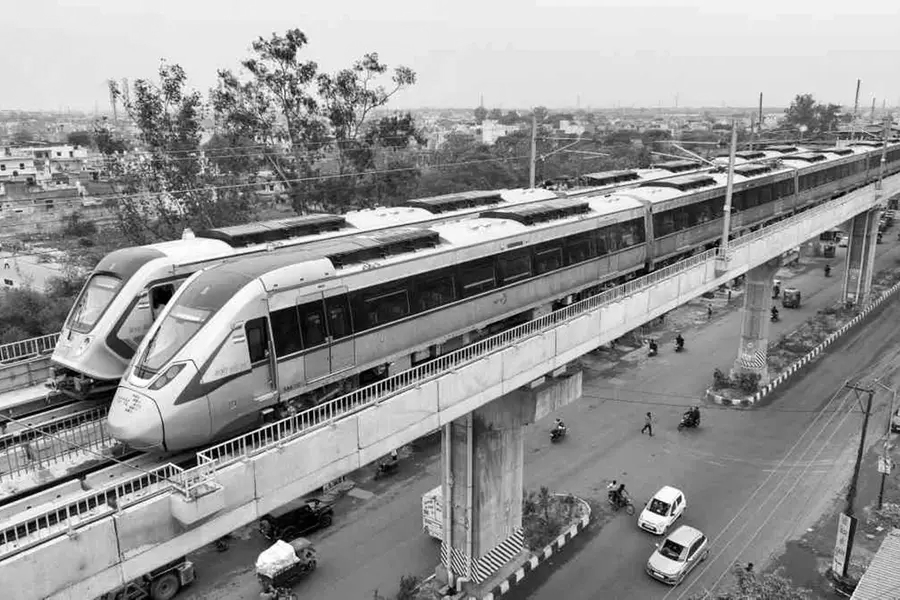
In response, the state has shown interest in a long-distance RRTS model, seen as more adaptable and potentially less disruptive, though it offers lower peak speeds than true high-speed systems. Financial feasibility is another constraint, as projects of this scale typically require central backing and international funding partnerships. For now, Kerala’s rail future appears caught between ambition and approval, with competing visions seeking legitimacy while formal decisions remain pending.