
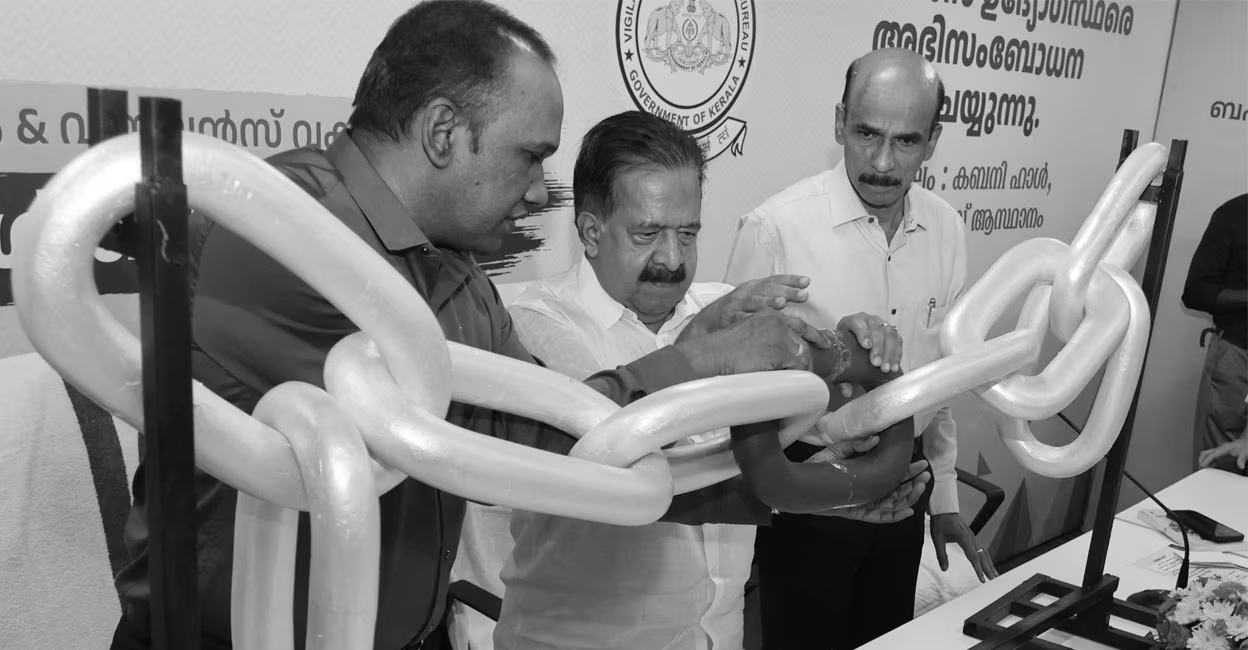
Kerala Unveils Citizen-Led Anti-Corruption Drive With Cash Rewards for Evidence
Kerala has launched an ambitious anti-corruption initiative titled ‘Project Zero’ , introducing a public-driven surveillance and accountability system that rewards citizens for exposing bribery involving government employees. The campaign, unveiled by Kerala Home Minister Ramesh Chennithala , marks one of the state’s strongest anti-graft measures in recent years and reflects a growing reliance on technology-based vigilance and citizen participation to combat corruption.
Under the initiative, people can upload video evidence of government officials allegedly demanding or accepting bribes through the official vigilance portal. If the footage is verified and found genuine, the complainant will receive a reward of Rs 5,000 , while their identity will remain confidential. Launching the programme at the headquarters of the Vigilance and Anti-Corruption Bureau (VACB) in Thiruvananthapuram, Chennithala said the government was adopting a strict “zero tolerance” policy toward corruption.
The minister said the initiative aims to ensure citizens receive government services without paying illegal bribes, adding that corruption had become deeply embedded in routine administrative processes. “Even certificates are sometimes issued only after paying bribes. That will be strictly curbed,” he said, warning that no corrupt official or influential figure would be spared from scrutiny.
A major feature of Project Zero is its focus on digital surveillance and technology-assisted enforcement . Authorities plan to strengthen cyber vigilance systems, deploy AI-assisted monitoring tools, and introduce faster digital complaint mechanisms to identify emerging forms of corruption, including cyber-enabled financial misconduct. Officials believe such systems can help detect bribery more effectively and act as a deterrent within government offices.
The initiative also mirrors a broader global trend where governments increasingly rely on citizen whistleblowing and crowdsourced evidence to improve transparency in public administration. However, experts have also raised concerns about privacy, misuse of surveillance systems, and the possibility of false accusations if adequate safeguards are not maintained.
As part of the reforms, the Kerala government will revise the outdated 1969 Vigilance Manual to align it with present-day administrative and technological realities. The state also plans to intensify vigilance operations, increase trap cases, and strengthen anti-corruption enforcement mechanisms.
The launch of Project Zero comes days after Kerala introduced ‘Operation Thoofan – The Narco Hunt’ , a statewide anti-drug campaign led by Kerala Police, signalling the government’s broader push for high-intensity enforcement initiatives across sectors.