
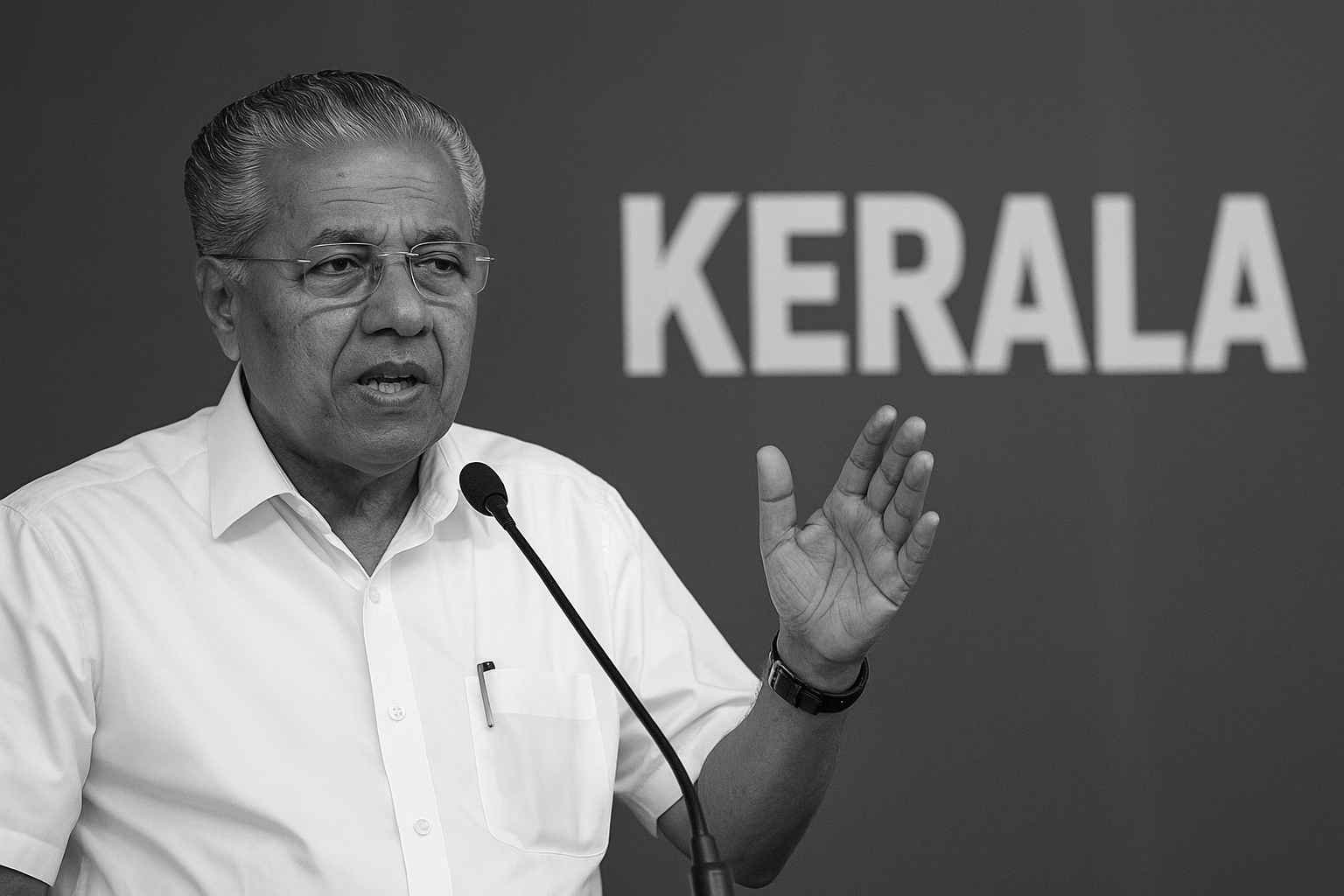
Kerala set to become first state free of extreme poverty on Nov 1: CM Vijayan
Kerala is set to make history on November 1, its formation day, by becoming the first state in India free from extreme poverty, Chief Minister Pinarayi Vijayan announced on Saturday. Extreme poverty refers to a condition where individuals are unable to meet the most basic needs for survival, such as food, clean water, shelter, and healthcare. Poverty can generally be classified as extreme, moderate, or relative, depending on the level of deprivation and income.
As of the latest data, Kerala has a population of approximately 35.8 million and boasts the lowest poverty rate in India, with just 0.55% of its population classified as multidimensionally poor (NITI Aayog, 2023). In comparison, the national average is 11.28%, meaning Kerala’s poverty rate is roughly 1/20th of the national average, highlighting the state’s exceptional progress through universal education, healthcare, and targeted poverty eradication initiatives like the Extreme Poverty Eradication Project (EPEP).
By contrast, states like Bihar, Jharkhand, Meghalaya, Uttar Pradesh, and Madhya Pradesh still face high levels of multidimensional poverty, with over 20–30% of their populations living under severe deprivation, underscoring the regional disparities across India.
The EPEP, launched in 2021, targets families living in extreme poverty by addressing their specific needs across multiple dimensions. The program provided daily meals, medical treatment, housing, land, essential documents, and livelihood support to thousands of vulnerable families. Each family received a custom micro-plan, ensuring aid reached those most in need and effectively addressed food, health, housing, and income security simultaneously.
The project has involved a significant investment of over Rs 1,000 crore, funded through state budget allocations, central government schemes, community-managed funds, and partnerships with NGOs and corporate initiatives. Key interventions under EPEP include:
• Daily food for 20,648 families, including 2,210 receiving hot meals
• Medical treatment and medicines for 85,721 individuals
• Housing support with 5,400+ new homes built or under construction, 5,522 homes repaired, and 2,713 landless families allocated land
• Distribution of essential documents like ration cards, Aadhaar, and pensions to 21,263 people
• Livelihood projects for 4,394 families
Vijayan credited the success to a joint effort by local self-governments, Kudumbashree, and various state departments, calling it the Kerala model of social justice, equity, and compassionate governance under the #NavaKeralam vision.
India’s progress beyond Kerala
While Kerala is set to be the first state to eradicate extreme poverty, other states are making significant strides toward similar goals.
• Uttar Pradesh launched the Zero Poverty Uttar Pradesh Campaign in October 2024, aiming to eliminate extreme poverty by 2027. Within the first ten months, the state identified over 1.33 million poor families, with more than 372,000 already receiving support. The initiative provides multidimensional aid, including housing, healthcare, education, clean water, employment, and women’s empowerment, leveraging data tracking and local volunteers for effective implementation.
• Telangana has also made notable progress, achieving the second-highest score (91 points) on the ‘no poverty’ goal for 2023-24, reflecting strong government initiatives, economic growth, and enhanced access to social security for vulnerable populations.
• Odisha, Madhya Pradesh, and Bihar are similarly implementing targeted poverty alleviation programs. Odisha focuses on housing and women’s empowerment through the Biju Pucca Ghar Yojana and Mission Shakti, Madhya Pradesh provides financial aid through the Mukhyamantri Antyodaya Parivar Yojana, and Bihar emphasizes education, healthcare, and employment opportunities.
Kerala’s Kottayam district, already declared the first zero-poverty district in the state, serves as a model for comprehensive implementation, showing that multi-dimensional interventions at the local level can create sustainable outcomes.
Why the Kerala model works and its lessons
Kerala’s approach goes beyond short-term financial aid. By combining immediate relief with long-term empowerment, the government addresses multiple dimensions of poverty, ensuring families have stable foundations to meet basic needs while providing housing, legal documents, and livelihood opportunities that build long-term resilience.
The model is effective because it:
• Creates assets and income sources through housing, land, and livelihoods
• Engages local communities for monitoring and adaptability
• Buffers families against economic shocks and natural disasters
• Generates long-term social and economic benefits, including education and healthcare participation
While Kerala can realistically claim freedom from extreme poverty, families may still face risks from economic fluctuations, health emergencies, or natural disasters. However, the targeted support, continuous monitoring, and multidimensional interventions make regression unlikely.
Kerala’s success demonstrates that with data-driven identification, community-based implementation, and comprehensive support, extreme poverty can be systematically reduced. Other states adopting these principles, tailored to local contexts, could become the next leaders in poverty eradication, contributing to a broader national goal of leaving no one behind