
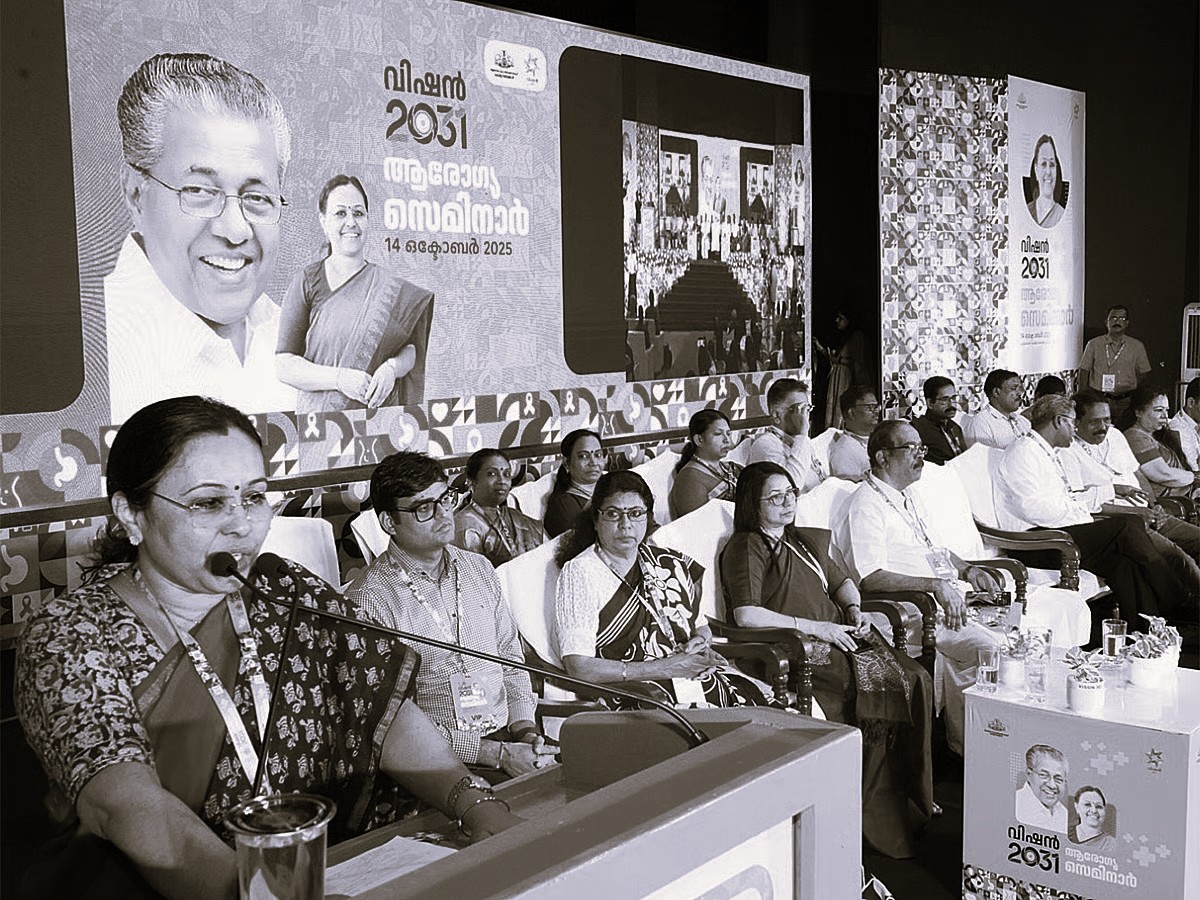
Kerala expands health coverage, Targets quality care for all by 2031
Kerala Health Minister Veena George on Tuesday outlined the state’s ambitious goal to achieve universal healthcare coverage by 2031, unveiling the policy document “Kerala’s Health Sector Vision 2031” at the Vision 2031– Health Seminar. The minister emphasized that specialty medical services would be decentralised, trauma care and emergency response systems strengthened, and equality in access to healthcare ensured across all regions.
Detailing initiatives already in place, George highlighted the Karunya Arogya Suraksha Padhathi (KASP), which integrates multiple health schemes and provides coverage to 42.2 lakh families, offering each family medical treatment worth ₹5 lakh. Alongside KASP, the Karunya Benevolent Fund (KBF) provides financial assistance for treatments not covered under the main scheme, including dialysis and cancer care, benefiting over 25 lakh individuals. These flagship programs reflect Kerala’s focus on accessible, cashless healthcare for all.
Kerala has also launched the ‘Aardram Janakeeya’ campaign, which screens citizens above 30 years for lifestyle diseases during home visits and provides medical care for those diagnosed. To prevent cancer, the “Aarogyam Anandam Akattam Arbutham” (Health and Happiness, Drive Away Cancer) campaign has screened over two million people so far, while advanced cancer treatment facilities have been established across the state. These initiatives demonstrate Kerala’s commitment to early detection, prevention, and treatment of major health conditions.
The minister acknowledged new challenges in the health sector, including the rise of lifestyle diseases and rare infections like amoebic meningoencephalitis, a potentially deadly brain infection caused by free-living amoebae in freshwater sources. To address this, Kerala is developing an epidemic intelligence system and preparing local-level micro-plans for preventive measures. The state is also recognized as a national model in antimicrobial resistance (AMR) control, highlighting its emphasis on evidence-based healthcare and public health vigilance.
Kerala’s healthcare system is distinguished by several best practices, including decentralized healthcare delivery through a network of family health centres, community health centres, and district hospitals; integration of AYUSH (Ayurveda, Yoga, Unani, Siddha, Homeopathy) with conventional medicine; and rigorous quality assurance, with over 240 institutions certified under the National Quality Assurance Standards (NQAS). Regular immunization campaigns, disease screening drives, and health awareness programs further reinforce the state’s commitment to preventive and promotive health. While exact numbers vary, Kerala conducts numerous health drives every year to cover lifestyle diseases, maternal and child health, cancer prevention, and public health awareness.
Minister George stressed that the ultimate goal is to transform Kerala into a global health hub and urged citizens to rely on scientific information, avoiding the spread of unverified health claims. The Vision 2031 initiative, she added, is part of a broader effort to position Kerala as a national and international model in healthcare, promoting both innovation and accessibility.