
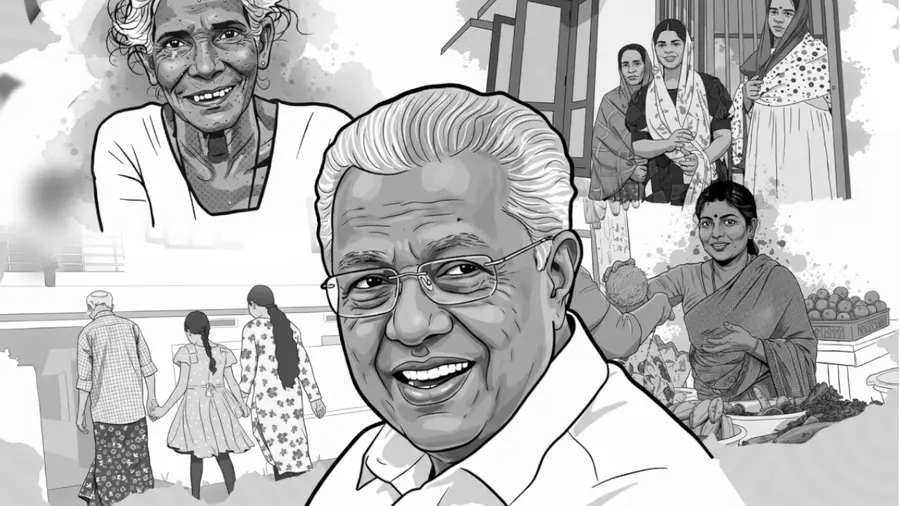
Kerala becomes India’s first state to wipe out extreme poverty, sets national benchmark
Kerala has made history on its formation day, becoming the first state in India to be free from extreme poverty, Chief Minister Pinarayi Vijayan announced in the Legislative Assembly on Saturday. Delivering a statement under Rule 300, a provision allowing ministers to make official announcements on matters of public importance with the Speaker’s permission, Vijayan described it as “a defining moment in Kerala’s journey of social progress.”
“Every Kerala Piravi we celebrate with joy, but this one marks a place in history. We have succeeded in making Kerala the first state in India without extreme poverty,” the Chief Minister said, attributing the achievement to decades of social reform, people’s participation, and the state’s commitment to inclusive governance.
Understanding extreme poverty
Extreme poverty refers to a condition where individuals are unable to meet even the most basic needs for survival, food, clean water, shelter, and healthcare. It represents the lowest level of deprivation and is distinct from moderate or relative poverty. Globally, it aligns with the United Nations definition of living on less than $2.15 a day, but in India, it is measured through the Multidimensional Poverty Index (MPI), which evaluates deprivations across health, education, and standard of living.
As per the latest data, Kerala has a population of approximately 35.8 million (3.58 crore) and the lowest poverty rate in India, with just 0.55 percent of its people classified as multidimensionally poor (NITI Aayog, 2023). In contrast, the national average stands at 11.28 percent, making Kerala’s poverty rate about one twentieth of the Indian average. This success is often credited to its decades-long focus on education, healthcare, and decentralized local governance.
How Kerala achieved it: The EPEP model
The Extreme Poverty Eradication Project (EPEP), launched in 2021 as one of the first decisions of the second Vijayan government, played a central role in achieving this milestone. The program identified 64,006 families living in extreme poverty and developed tailored micro plans for each household to address their most urgent needs, food security, housing, healthcare, land access, and sustainable income generation.
The project involved a massive mobilization of local bodies, Kudumbashree collectives, social workers, and volunteers, coordinated by the Kerala Institute of Local Administration (KILA). It was implemented through community-level planning, ensuring that every family was identified, supported, and tracked until they achieved stability. The effort received funding of over ₹1,000 crore, sourced from state allocations, central schemes, NGO partnerships, and corporate social initiatives.
Under the project, over 20,000 families received daily food supplies, including 2,210 families who were provided with hot cooked meals. Healthcare reached more than 85,000 individuals, who received free treatment and medicines through primary health centers and mobile medical units. In housing, the government built or began construction of over 5,400 new homes, repaired 5,522 existing ones, and allotted land to 2,713 landless families. Additionally, 21,263 people were issued essential documents such as ration cards, Aadhaar, and pensions, ensuring access to welfare schemes. Around 4,394 families were supported through livelihood programs, empowering them with small enterprises and steady income sources.
A model rooted in social justice
Vijayan credited the success to a joint effort by local self-governments, Kudumbashree, and various state departments, calling it part of the Nava Keralam vision, Kerala’s roadmap for social justice and equity-driven growth. “This declaration is not symbolic. It is the result of structured, continuous work by thousands of people who believed that no family should be left behind,” the Chief Minister said.
National context and future outlook
While Kerala leads the nation, other states are now following similar paths. Uttar Pradesh launched the Zero Poverty Campaign in 2024, targeting complete eradication of extreme poverty by 2027. Telangana, which ranks second nationally on the No Poverty index with a score of 91, has expanded its social protection coverage, while Odisha, Madhya Pradesh, and Bihar are focusing on housing, women’s empowerment, and skill development through their respective welfare programs.
Kerala’s model stands out because it integrates immediate assistance with long-term empowerment. Instead of offering short-term cash relief, the state built permanent support systems, housing, land ownership, health access, and income generation programs, to prevent families from slipping back into poverty. It also involves community monitoring, ensuring transparency and adaptability.
Experts note that while Kerala can realistically claim to have eradicated extreme poverty, continued vigilance is essential. Economic fluctuations, health emergencies, or natural disasters could still affect vulnerable groups. However, the state’s robust safety net and local governance framework make regression unlikely.
Kerala’s achievement is a powerful demonstration that with data-driven identification, decentralized implementation, and compassion-centered policy, poverty eradication is not just a political slogan, it can become a measurable, sustainable reality. The milestone now challenges the rest of India to follow suit, transforming welfare promises into tangible progress that truly leaves no one behind.