
Kerala Assembly Election Results 2026: Congress Led UDF Sweeps to a Historic 102, Crushes LDF to a Mere 35, CM Race Begins
Kerala has spoken, and it has spoken with unmistakable clarity. As votes were counted across all 140 constituencies, what unfolded was not merely an election result, it was a sweeping civilisational verdict on a decade of Left governance, delivered with the kind of resounding finality that reshapes political landscapes for a generation.
The United Democratic Front secured a historic 102 seats in the 140-member Kerala Assembly, while the LDF, which had won 99 seats in 2021, crashed to a devastating 35 seats . The BJP won three seats for the first time in the history of the state. 79.63% of Kerala's 2.71 crore voters had turned out on April 9, an engaged, determined electorate that had clearly made up its mind long before counting day.
After ten years in the wilderness, Congress is set to return to power in Kerala. But to read this purely as a triumphant homecoming would be incomplete. At its rawest, this was an eruption of anti-incumbency , a state exhausted by what many perceived as an increasingly insular, nepotism-tinged administration. Anti-incumbency ran deeper than anticipated, compounded by a growing perception of insularity around the Chief Minister , a leadership style seen as reliant on a close inner circle and inattentive to dissent. Allegations of nepotism, including the elevation of his son-in-law Mohammed Riyas, and charges of corruption dented the government's image.
But beyond anger, this election carried a deeper ideological message, a strong, unapologetic pitch for secular Kerala . And nobody made that case more forcefully than V D Satheesan . Right at the start of the campaign, Satheesan reset the entire narrative by alleging a secret CPM-BJP deal, clearly mobilising minority votes by articulating the community's fear of the BJP's growing footprint. The Congress called out the CPM loudly and consistently for what it described as unprincipled and unsecular conduct and the most damning exhibit was the CPM's handling of the SDPI question . The CPM, which had itself termed the SDPI extremist and fundamentalist, reserving for them the same volume of revulsion it ostensibly had for the RSS, appeared to quietly seek their electoral support, accepting it unapologetically when it became public. The contradiction was glaring and the UDF hammered it relentlessly.
Equally potent was the UDF's targeting of Velapundidan Narayanan , the CPI(M) leader who had repeatedly portrayed anti-Muslim sentiment and whose statements had become a symbol of the Left's perceived ideological drift. His defeat at the hands of the UDF was seen not just as an electoral result but as a moral statement by Kerala's voters. The message was unambiguous: this state will not tolerate the weaponisation of communal fear from any direction.
The result, seen through this prism, is also Kerala asserting something it holds dear above all else, keeping the BJP out . The Indian Union Muslim League (IUML) contested 27 seats and won an extraordinary 23 of them, a performance that was the spine of the UDF's majority. The League's near-perfect strike rate was not accidental. It reflected a deeply coordinated consolidation of Muslim votes behind the UDF, driven by the calculation that a Congress-led government is Kerala's most reliable secular shield. By voting UDF, Kerala is simultaneously keeping two political formations alive and meaningful while systematically diminishing the BJP, a strategic democratic choice that speaks volumes about the electorate's sophistication.
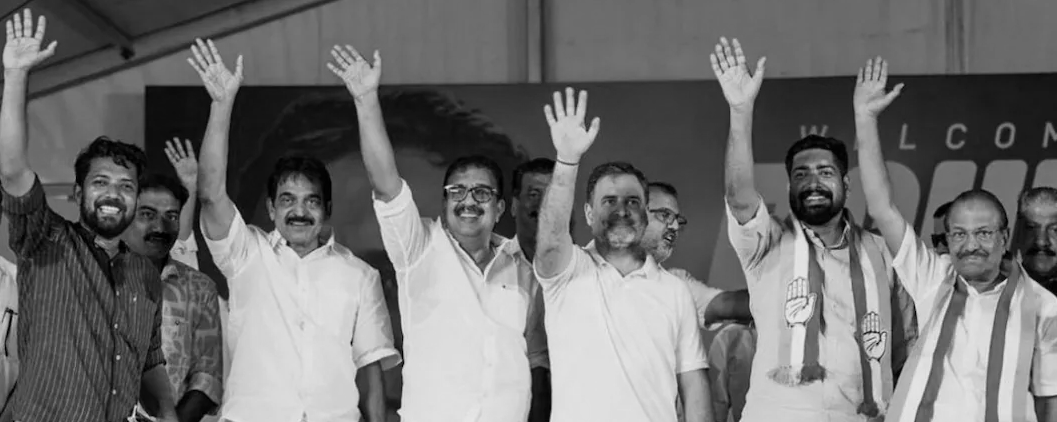
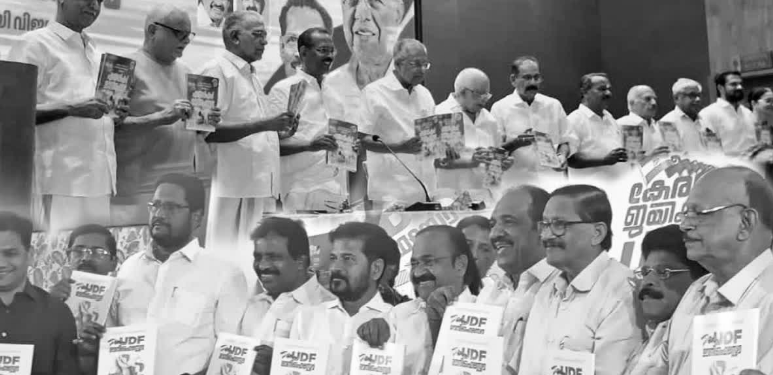
The UDF's campaign architecture was also a masterpiece of coalition management. Satheesan's " Puthuyuga Yathra " (March into a New Era) launched in February, traversed the state from Kumbla to Thiruvananthapuram, and was inaugurated by Rahul Gandhi . Crucially, sensing the undercurrents of internal CPI(M) rebellion, the UDF showed rare pragmatism, setting aside its own party flags to back CPI(M) rebels in key seats. Three rebels (V. Kunhikrishnan in Payyannur, T.K. Govindan in Taliparamba, and G. Sudhakaran in Ambalapuzha) won their seats, bleeding the Left in its own strongholds. It was a masterstroke of political instinct. The UDF manifesto, built on "Indira Guarantees," promised the Oommen Chandy Health Insurance Scheme worth ₹25 lakh per household , free bus travel for women in KSRTC buses, and a dedicated department for senior citizens, a welfare vision that resonated far beyond Congress's traditional base.
Hovering over the campaign was the spirit of the late Oommen Chandy , Kerala's most beloved Congress leader. This was the first Assembly election since his passing, yet OC remained a powerful presence, candidates began campaigns at his tomb in Puthuppally. His son Chandy Oommen won Puthuppally by a stunning 52,907 votes , one of the most emotionally resonant results of the day.
The scale of the LDF's collapse was geographical as much as numerical. In Kottayam, Idukki, Ernakulam, Wayanad, and Malappuram, the LDF was left with zero seats , and 13 ministers lost their constituencies . Chief Minister Pinarayi Vijayan , who once won Dharmadam by 50,000 votes, survived with 19,247 votes and promptly resigned . The LDF had put up over 2,000 hoardings of the 81-year-old leader across the state, running an unmistakably presidential campaign, but the gamble didn't click . V T Balram reclaimed Thrithala from M B Rajesh in one of the most-watched personal rematches of the election.
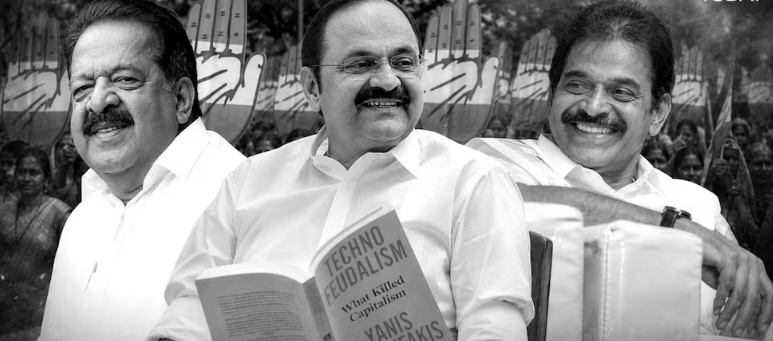
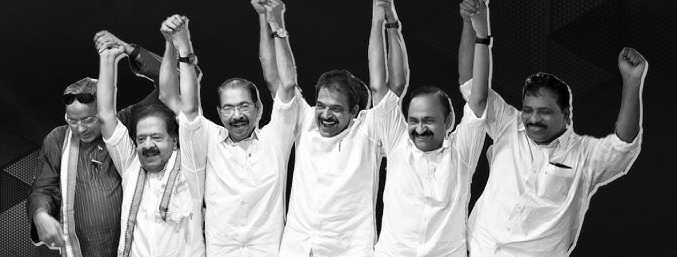
Congress MP Shashi Tharoor , reacting to the results, called for a " new kind of politics " and stressed the need for development, jobs, and investment to stop youth migration, describing Kerala's fiscal situation as "disastrous." Tharoor called for a broader "revival of Kerala" , a change of government, a change of policy, and a reimagining of the state's future. On who becomes Chief Minister, he indicated the Congress high command would consult newly elected MLAs before taking a call, with V D Satheesan as the frontrunner, alongside veterans Ramesh Chennithala and K C Venugopal.
Meanwhile, across India on the same counting day, the BJP swept West Bengal, crossing 200 seats and ending Mamata Banerjee's long reign and retained Assam comfortably, asserting its dominant national footprint. Yet in Kerala, India's most literate state , the saffron wave could not find more than three seats. That juxtaposition is telling. Where education is deepest and civic consciousness sharpest, the BJP's narrative found the least purchase.