
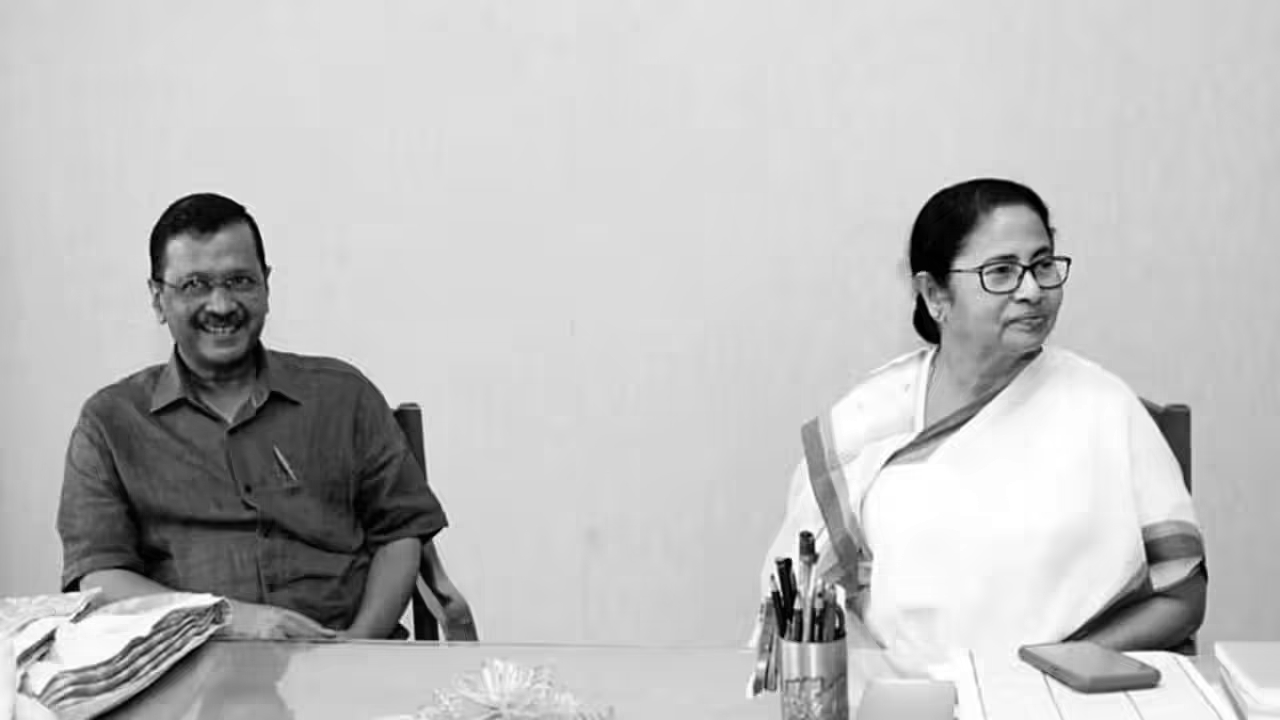
Kejriwal Campaigns for Mamata Ahead of Crucial Bengal Phase 2, Record 92% Turnout in Phase 1
In a significant political development during the ongoing assembly elections in West Bengal, Arvind Kejriwal is set to campaign for Chief Minister Mamata Banerjee and her party, the All India Trinamool Congress (TMC), on April 26 and 27. The visit comes at a critical juncture, just days before the decisive second phase of polling on April 29, and reflects a broader pattern of opposition coordination under the umbrella of the INDIA bloc.
Kejriwal’s campaign will include public rallies, roadshows, and grassroots outreach programmes , aimed at energizing voters and reinforcing TMC’s electoral messaging. His recent statement expressing “complete solidarity and support” to Banerjee calling her fight one of the most important battles for Indian democracy has added national political weight to the contest.
The elections have already witnessed an extraordinary first phase of polling , held on April 23 across 152 constituencies in 16 districts . The phase recorded a historic voter turnout of over 91–92% , with official estimates ranging between 91.3% and 92.7% , placing it among the highest ever in the state’s electoral history. Out of approximately 3.6 crore eligible voters , more than 3.2 crore votes were cast , reflecting unprecedented public participation . Polling day trends showed turnout rising from about 18–19% by 9 AM , to nearly 78–79% by 3 PM , crossing 89–90% by 5 PM , before closing above 91% .
This surge in voter engagement highlights the high stakes and intense political polarization surrounding the election. However, the process has not been without challenges. The first phase witnessed sporadic violence, clashes, and allegations of voter intimidation , prompting authorities to deploy thousands of central security personnel across sensitive constituencies to ensure orderly voting.
The 2026 West Bengal Assembly election is being conducted in two phases April 23 and April 29 to elect all 294 seats , making the upcoming second phase crucial in determining the final outcome. The contest is widely seen as a high-stakes political battle with national implications , drawing attention from across the country.
Key issues shaping voter sentiment include electoral roll controversies, identity politics, governance performance, welfare delivery, and anti-incumbency debates . Disputes over voter list revisions have particularly intensified political rhetoric, adding another layer of complexity to an already charged environment.
Kejriwal’s entry into the campaign introduces a strategic and symbolic dimension . While the Aam Aadmi Party has limited organizational presence in West Bengal, his political brand centered on education reforms, healthcare improvements, and governance efficiency could resonate with urban, middle-class, and first-time voters . Analysts suggest his involvement may influence small but crucial vote shares , particularly in tightly contested constituencies.
At the same time, his campaign strengthens the perception of opposition unity , signaling to voters a consolidation of anti-BJP forces and potentially reducing vote fragmentation. However, experts caution that his impact is likely to be incremental rather than transformative , given his limited grassroots base in the state. The move could also trigger counter-mobilization by rival parties , further intensifying political polarization.
More broadly, this development reflects evolving dynamics in Indian politics , where opposition parties are increasingly adopting flexible, state-specific collaborations rather than relying on rigid nationwide alliances. It also underscores the continued national relevance of regional leaders like Mamata Banerjee and signals early positioning for future national electoral contests.
As West Bengal heads into the decisive second phase, the combination of record-breaking turnout, massive voter participation, heightened security concerns, and strategic political alliances has turned the election into a defining moment. Kejriwal’s campaign may not dramatically alter the statewide outcome, but in an election where many seats are decided by narrow margins , even a 1–2% shift in votes could prove decisive making his presence a potentially significant factor in shaping the final verdict.