
Kaziranga Reopens for 2026 - 27 Tourist Season After Monsoon Closure
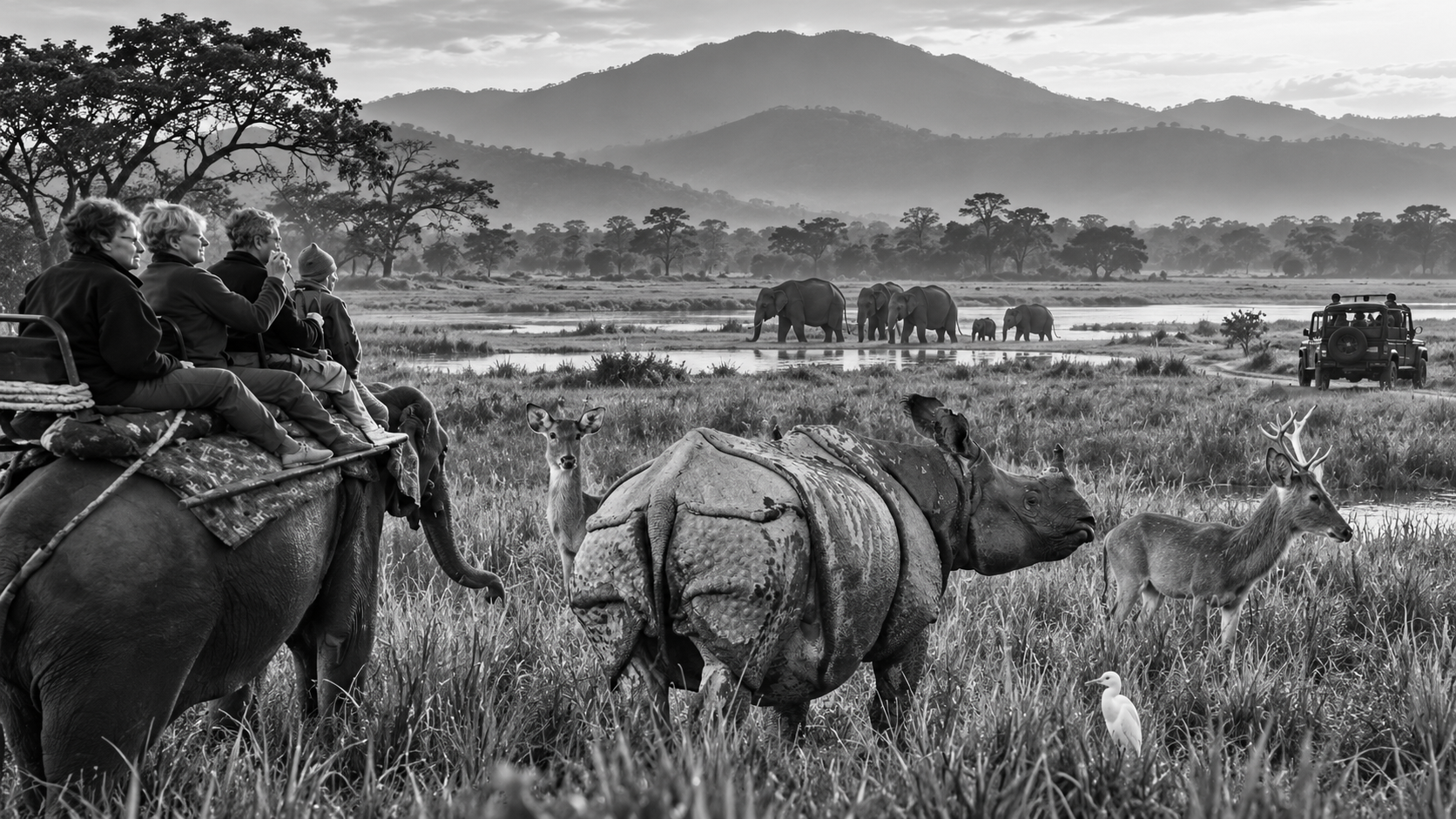
Kaziranga National Park and Tiger Reserve reopened on Saturday for the 2026–27 tourist season following its annual monsoon closure, marking the return of wildlife tourism to one of India's most important conservation landscapes. The park was formally reopened by Assam Environment and Forest Minister Jayanta Mallabaruah at the Central Kohora Range, with visitors and wildlife enthusiasts from across the country and abroad returning to the UNESCO World Heritage Site. Jeep safaris resumed from the opening day, while elephant safaris are expected to resume from November 1.
The reopening comes amid strong growth in Kaziranga's tourism sector. During the 2025–26 season, 4,68,147 tourists visited the park, the highest-ever recorded footfall, including 4,37,673 domestic tourists and 30,474 foreign visitors. This was up from 4,06,564 visitors in 2024–25. Tourism has expanded sharply over the past decade, with visitor numbers rising from around 1.55 lakh in 2016–17. The park generated ₹10.90 crore in tourism revenue during 2024–25.
Safari entry for the new season is available in two daily slots, from 7.30 am to 10 am and 1.30 pm to 3 pm. Authorities are also working to improve infrastructure, upgrade visitor facilities and introduce new attractions as demand grows. The government is exploring tourism circuits linking Kaziranga with nearby destinations to encourage visitors to spend two to four days in the region.
Kaziranga's appeal is closely linked to its conservation success. Of Assam's 2,895 greater one-horned rhinoceroses, 2,613 are found in Kaziranga, while the park houses 104 of the state's 229 tigers. Its wetlands, grasslands and forests also support elephants, wild water buffalo, swamp deer and numerous migratory bird species.
The park's annual monsoon closure is linked to its location in the Brahmaputra floodplain. Seasonal flooding replenishes wetlands and sustains grasslands but can also force wildlife towards higher ground and areas outside the protected landscape. UNESCO identifies poaching, riverbank erosion, invasive species, tourism pressure, highway traffic and human-wildlife conflict among the park's continuing challenges.
Kaziranga was declared a national park in 1974, became a Tiger Reserve in 2007 and received UNESCO World Heritage status in 1985. Authorities are now seeking to balance rising tourism with ecological protection.
The reopening is also expected to benefit safari operators, guides, hotels, resorts, hospitality workers and small businesses around the park. Mallabaruah said tourism growth should create greater economic opportunities for local communities while ensuring that conservation remains central to Kaziranga's future.