
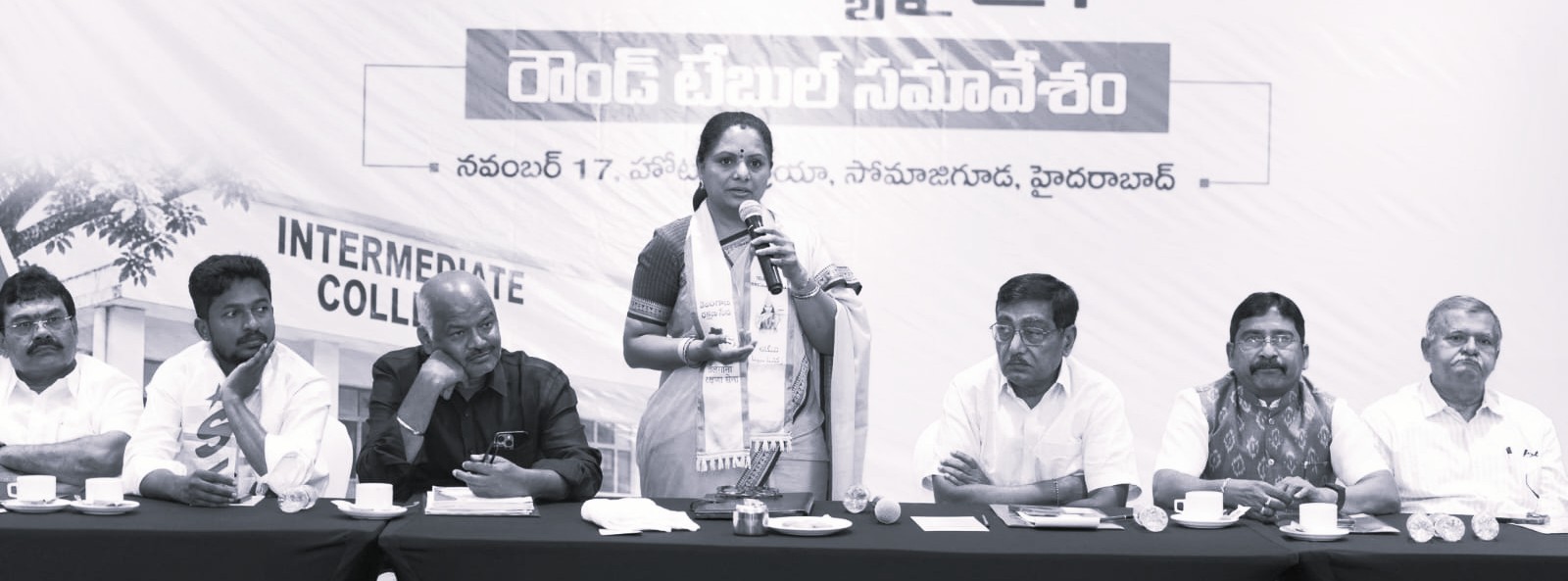
Kavitha Demands Rollback of Telangana Intermediate Board Abolition Decision
Telangana Rashtra Sena (TRS) president Kalvakuntla Kavitha has demanded that the state government immediately withdraw its decision to abolish the Intermediate Education Board, warning that the move could jeopardise the academic future of lakhs of students across Telangana.
Speaking at a round-table conference organised by the Telangana Rakshana Sena at Somajiguda in Hyderabad, Kavitha said the government could not dismantle a 55-year-old institution without consulting education experts, teachers, lecturers and other stakeholders. The meeting, titled 'Abolition of Intermediate Board – Its Impact on Telangana Education', brought together prominent personalities to examine the consequences of the proposed decision.
Kavitha accused Chief Minister A. Revanth Reddy of taking arbitrary decisions without considering their long-term impact on the education sector. She warned that abolishing the board could affect the local-status rights of Telangana students. Allowing institutions to offer classes from ninth to 12th standard could enable students from neighbouring Andhra Pradesh to seek admissions and appear for examinations in Telangana, potentially putting local students at a disadvantage.
She also alleged that corporate educational institutions entering Telangana were failing to provide adequate employment opportunities to locals. Their expansion, she said, could force families to spend lakhs of rupees on education.
Questioning the government's intentions, Kavitha alleged that Revanth Reddy was taking decisions favourable to Andhra Pradesh and failing to strongly defend Telangana students' interests in matters concerning local status. She pointed out that the government had announced a similar proposal last year but subsequently appeared to retreat from it, reflecting a lack of coordination between the Chief Minister and officials.
Describing the proposed merger with school education as a failed experiment, she cited Andhra Pradesh's experience and pointed to Maharashtra's separate education boards. She also noted that Kerala had taken nearly a decade to implement educational reforms in phases.
Kavitha demanded public hearings and consultations with all political parties, educationists, teachers and private school managements before introducing any legislation. She urged the government to improve government-school infrastructure instead of undertaking major structural changes.
Highlighting the Intermediate Board's contribution to SC, ST and BC students, she warned that its abolition could weaken educational opportunities for disadvantaged communities. She also questioned the future of junior lecturers and criticised the government's handling of long-pending teachers' issues.