
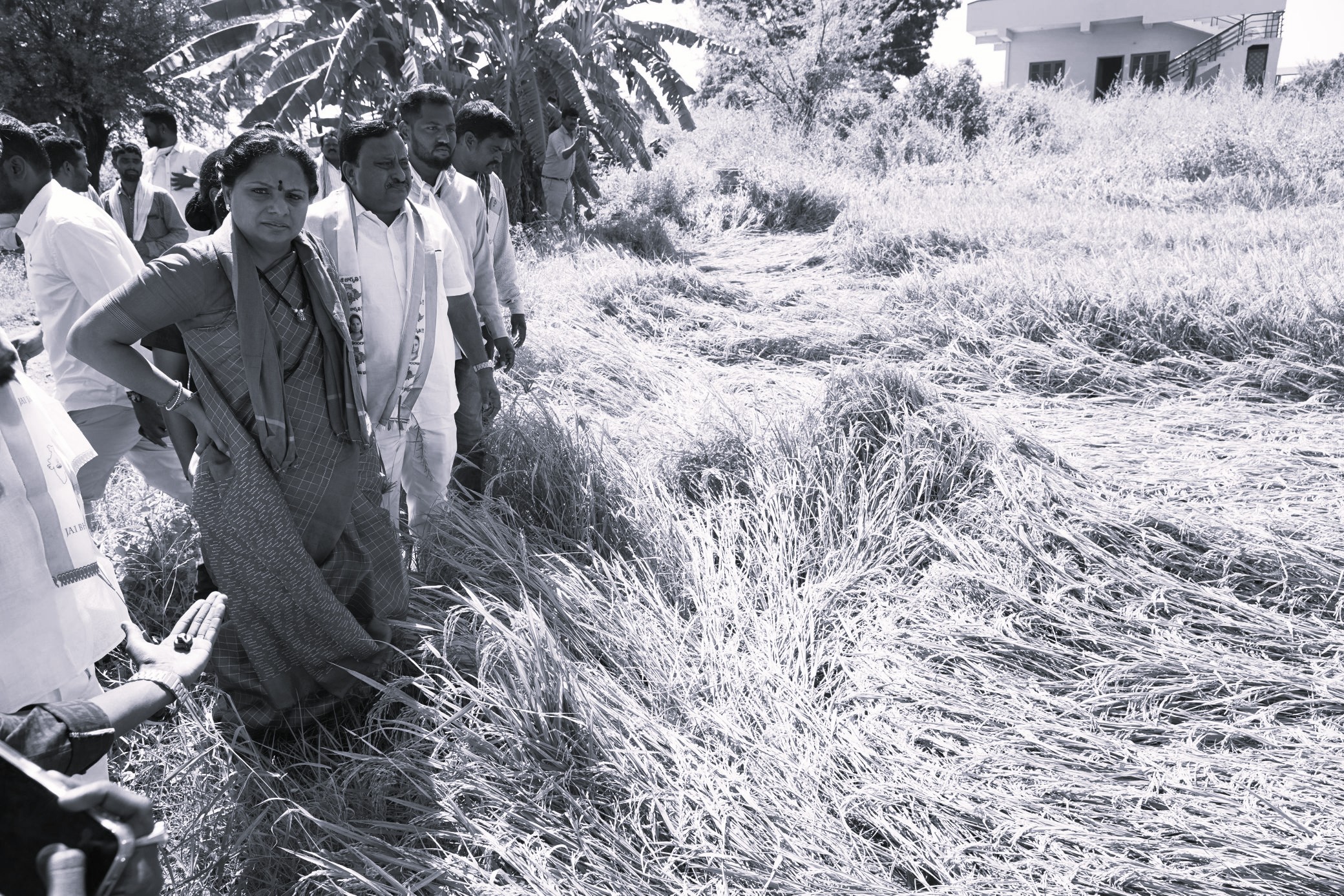
Kavita demands ₹50K/acre for flood-hit farmers
During the Jagriti Janambata program, Kavita, president of Jagriti, visited the rice procurement center in Maktapalli village, Timmapur mandal, Karimnagar district. She reviewed the issues faced by farmers and personally listened to their grievances.
Farmers have been struggling because grain procurement at government centers has been delayed for several months, she noted. Recent unseasonal rains damaged wheat and paddy crops, affecting the quality and leaving farmers in heavy losses. Kavita urged the government to respond with a humane approach and support the affected farmers.
Demand for higher compensation Although the government currently provides ₹10,000 per acre as compensation, Kavita said this amount is far below the actual losses suffered by farmers. Considering the costs of seeds, fertilizers, labor, and transportation, she demanded that farmers whose crops were completely destroyed should receive at least ₹50,000 per acre.
Immediate procurement, regardless of moisture content Kavita also appealed that the government should purchase all rice, including crops with higher moisture content or partially sprouted grains, as farmers currently have no market to sell them. She emphasized that genuine support from the government is the only way to fulfill its responsibility towards farmers.
Reasons behind delays in government procurement The delays in government grain procurement are caused by several factors, including administrative gaps, financial constraints, and technical or organizational issues. Key reasons include:
• Delayed fund release: Funds from the central or state government to procurement agencies such as The Telangana State Co-operative Marketing Federation Ltd. (MARKFED) or Civil Supplies Corporations are often delayed, resulting in postponed payments to farmers.
• High moisture content: Unseasonal rains or lack of sufficient drying conditions increase grain moisture. According to central guidelines, rice with over 17% moisture cannot be purchased, causing procurement to halt.
• Technical issues: Registration of farmers, grain sample testing, and online procurement entries can take considerable time. Internet or software problems in some regions further delay the process.
• Transport problems: Shortages of lorries, tractors, weighing machines, and poor coordination with mills result in delays in moving the grain.
• Policy differences between centre and state: Disagreements over minimum support prices (MSP) or grain quality standards between central and state authorities sometimes stall purchases or exports through Food Corporation of India (FCI).
Kavita’s visit highlighted the urgent need for immediate government action to support farmers facing crop losses due to unpredictable weather and systemic delays in procurement.