
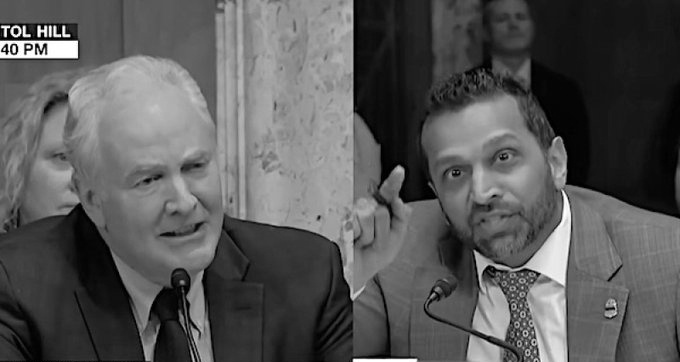
Kash Patel Clashes With Democratic Senator Over Drinking Allegations: Categorically False
A heated US Senate budget hearing turned into a sharp political confrontation on Tuesday after Kash Patel strongly denied allegations of excessive drinking on duty and claims that he was sometimes unreachable to staff , calling them “unequivocally, categorically false.”
The allegations were raised by Democratic Senator Chris Van Hollen during questioning based on a report published by The Atlantic, which had accused Patel of “conspicuous inebriation,” unexplained absences, internal communication failures, and broader leadership concerns within the FBI. Patel rejected all claims outright, insisting they were politically motivated and stating, “I will not be tarnished by baseless allegations,” while repeatedly interrupting lawmakers during the hearing.
The confrontation escalated further when Patel accused Van Hollen of “slinging margaritas in El Salvador,” referencing the senator’s past visit linked to Kilmar Abrego Garcia. Van Hollen strongly rejected the accusation, and the exchange quickly became personal, with both sides engaging in repeated interruptions and direct accusations during the session.
Reports from the hearing also confirm an unusual moment in which both Patel and Van Hollen were challenged on whether they would take alcohol-use tests to address the allegations raised in the discussion. Patel stated he was willing to take any test to disprove the claims, while Van Hollen also agreed to be tested, further intensifying the unusual nature of the exchange.
The hearing formed part of a broader Senate Appropriations Committee review of the FBI’s budget request, where Patel also defended the bureau’s performance and pointed to improvements in operational effectiveness, including crime reduction and enforcement outcomes. However, Democratic lawmakers continued pressing him on internal management issues, staffing concerns, and transparency, all of which he denied.
Patel has also filed a $250 million defamation lawsuit against The Atlantic , which has stood by its reporting and said it will vigorously defend itself against what it called a baseless case. The dispute has since become part of a wider political and legal battle over media reporting and accountability at the top levels of US law enforcement.